
Boeing lands Chinook without a pilot at the controls
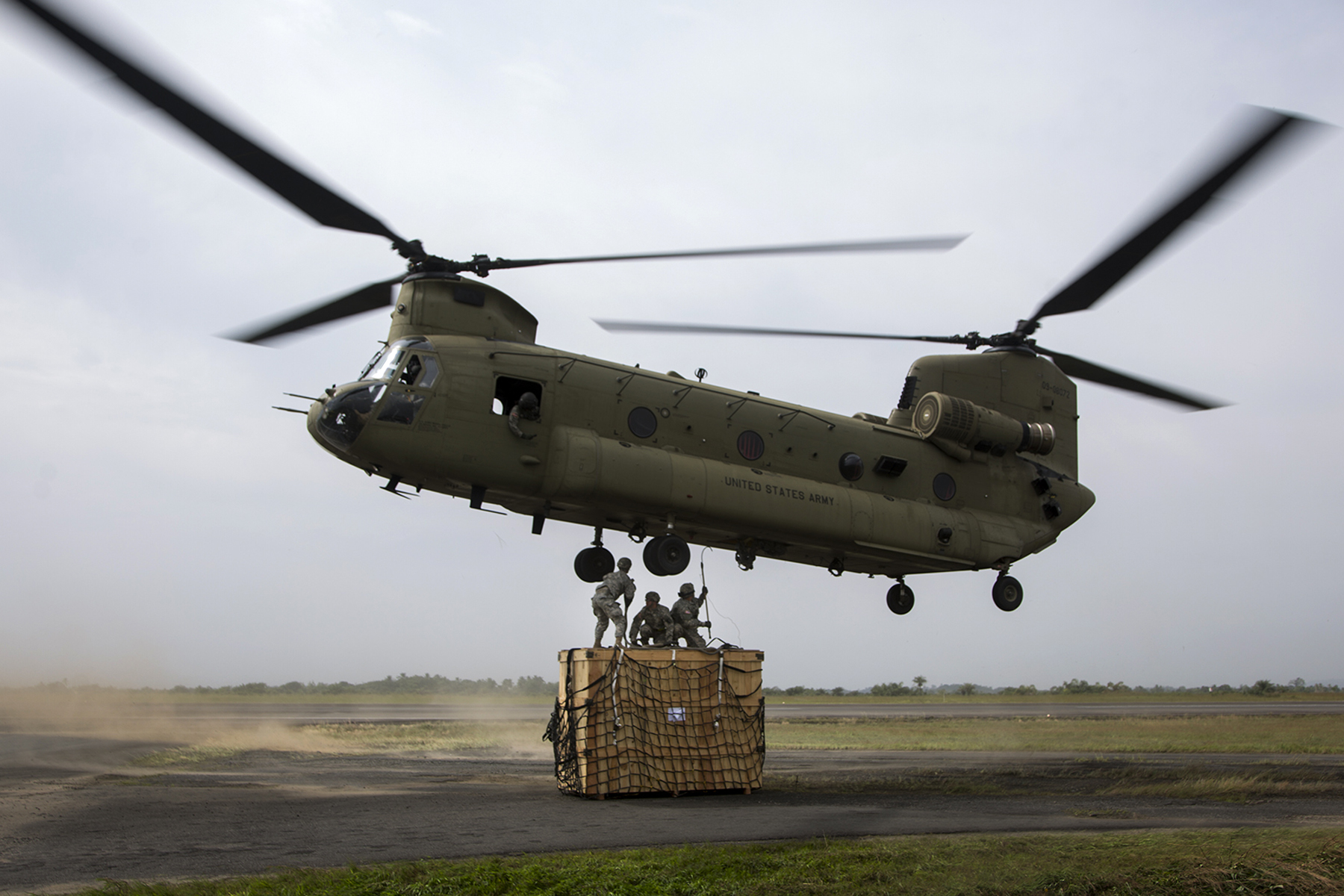
A U.S. Army CH-47 Chinook has been successfully landed without a pilot at the controls, Boeing announced, in the latest sign of the service’s push toward autonomous aircraft.
The demonstration is part of a wider Army move to expand autonomy within its fleet, which included the recent delivery of a Black Hawk designed to fly with a reduced crew, or in some cases without a pilot onboard.
During the test, the Chinook used Boeing’s Approach-to-X, or A2X, software to autonomously guide the aircraft through its final approach and landing, according to a company statement released last week.
The Army often uses the Chinook to transport heavy loads, and it can move troops, equipment and supplies. Though the aircraft entered service in the 1960s, it remains a core part of the Army’s fleet and was used in the raid that captured Venezuelan President Nicolás Maduro.
With the A2X software, a pilot would first set critical parameters, including the landing zone, final altitude, approach angle and start speed. The software then steers the aircraft to the pre-determined point. Pilots are able to make adjustments as the aircraft flies, Boeing added, to react to changes in the environment.
The company has used A2X to complete over 150 approaches where the final altitude ranged from a 100-foot hover to the ground. The average final position error, Boeing said, was less than five feet.
The new capability is designed to reduce the pilot’s workload during key phases of flight — such as the approach and landing — and allow crews to focus on other parts of a mission.
“We built the interface and control laws around how pilots would naturally fly an approach,” said Deanna DiBernardi, the human factors engineering lead for Boeing’s H-47 program, adding “our goal is to reduce pilot workload so crews can maintain more eyes-out awareness in a tactical situation.”
Next, Boeing will hone the software before releasing it to the Army, the company said. The statement did not include a projected timeline.
Boeing’s new test follows the Army’s receipt of a pilot-optional Black Hawk, designated H-60Mx, that is equipped with “fly-by-wire” controls and autonomy systems that — like the Chinook software — allows for pilot input.
The Chinook and Black Hawk endeavors are moving alongside the Army’s work on its future long range assault aircraft, the MV-75 “Cheyenne II,” which is a tilt-rotor aircraft designed to fly faster and farther for use in the Pacific theater.
Boeing successfully demonstrated the autonomous landing of a U.S. Army CH-47 Chinook using its A2X software. This event is part of the Army's initiative to enhance autonomy in its aircraft fleet, which includes the recent introduction of a pilot-optional Black Hawk. The Chinook's autonomous capabilities are designed to reduce pilot workload and improve operational efficiency.
- A U.S. Army CH-47 Chinook was landed autonomously using Boeing's A2X software.
- The demonstration is part of the Army's push for autonomous aircraft.
- The Chinook can transport troops, equipment, and supplies.
- Boeing has completed over 150 approaches with the A2X software.
- The new capability aims to reduce pilot workload during key flight phases.