
Boko Haram in Nigeria in 2026 — 125 hostages released but the state police's gamble begins under fire
 Marie Dubois
Boko Haram in Nigeria in 2026 — 125 hostages freed but the state police's gamble begins under fire
Buratai, Borno State, November 6. On the Dutsen Kura–Bulazarma–Kamuya road, near Biu, 119 travelers were abducted before Nigerian troops forced their captors to abandon the convoy. The survivors — 69 men, 35 women, and 15 children — were not found in a community policing operation, but at the end of a military pursuit along the Mangari–Dora road. An explosive device was discovered along the route. This detail speaks volumes about the war in Nigeria's North-East.
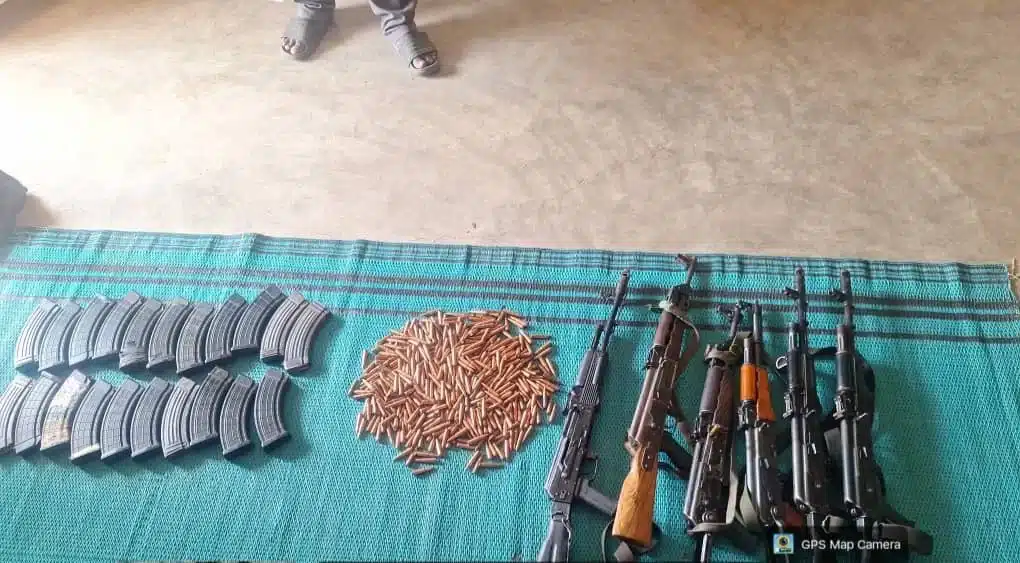
The Defense Headquarters claims that 125 abducted individuals were freed between November 6 and 12. Eight terrorists were reportedly killed, ten suspects arrested, and twelve fighters or their family members surrendered. The units also cleared a camp in Dajin Madam, Bauchi State, recovering ammunition, motorcycles, radios, and uniforms. In Kainji Lake National Park, they neutralized five explosive devices and repelled two attacks. Washington has publicly praised these results.
A tactical success that does not resolve the issue of control
The toll is real, but it must be read with the caution imposed by the nature of military communiqués. The figures come from the Defence Headquarters and have been relayed by AllAfrica, which also cites the American statement. They do not, by themselves, constitute an independent measure of the retreat of Boko Haram or the Islamic State in West Africa. In Borno, jihadist networks, criminal groups, and traffickers use the same paths, the same motorcycles, and sometimes the same local relays. Identifying the perpetrator of an abduction is not just about finding a uniform in an abandoned camp.
The terrain further complicates the task. The road from Buratai crosses an area where the distance between a base, a village, and a hideout can be measured in dozens of kilometers of bush. A patrol that frees hostages must then hold the road, search the surroundings, and prevent the captors from returning after its departure. This is the difference between a successful strike and a truly controlled area. From experience, in this type of operational theater, the most costly kilometer is the one that the army cannot monitor the following night.
The state police arrives at the most delicate moment
On November 18, the 36 Nigerian states approved a motion in favor of state-specific police forces. The constitutional reform still requires the assent of President Bola Tinubu and must be translated into federal and local laws. According to the BBC, the federal police would retain responsibility for terrorism, border security, and the protection of national institutions, while state forces would handle public safety and local offenses.
On paper, this architecture addresses an obvious weakness. Abuja cannot know every rural path in Zamfara, every market in Borno, and every land conflict in the Plateau with the same precision as a locally recruited force. A police force embedded in communities can obtain intelligence more quickly about a motorcycle depot, an explosive device placed by the roadside, or the passage of an armed group. For Boko Haram as well as for banditry networks, the speed of intelligence often matters more than the volume of reinforcements.
However, decentralizing the police does not automatically decentralize professionalism. Governors would control part of the appointments and resources, while fears of political arrests, intimidation of opponents, and electoral manipulation are already at the center of the debate. The independent commissions proposed by the project must be more than an administrative mechanism. If they cannot sanction a governor who instrumentalizes his units, Nigeria will have created thirty-six additional chains of command without creating thirty-six more reliable forces.
Washington strengthens Abuja without replacing the Nigerian state
The sequence confirms the security rapprochement between Washington and Abuja. Nigerian Defense Minister Christopher Musa stated that American intelligence, including satellite imagery and training, is aiding operations. This support can improve detection and planning. It cannot hold a checkpoint, escort every convoy, or rebuild trust in a village that has seen the army leave after an operation.
The strategic risk is thus one of confusion between operational success and stabilization. Freeing 125 hostages is an important victory for the families and for the troops that conducted the pursuit. It does not prove that the state controls the roads of Biu, the forested areas of Bauchi, or the corridors of Kainji. It rather shows that the army can still produce effects when intelligence, mobility, and external support are combined.
The next test will be simple to measure on the ground. Will the same routes be passable in thirty days, without heavy escort? Will the state police posts have the radios, vehicles, and investigators capable of retaining intelligence after the departure of military units? If the answer is no, armed groups will abandon a camp, change motorcycles, and wait for the next breach. In Nigeria, the battle will not be won by the number of hostages freed in a week, but by the ability to keep the road open after the press conference.
Sources
- AllAfrica, November 19, 2026 — Nigerian military operations and American statement.
- BBC News, November 18, 2026 — state police project and institutional risks.
Nigerian Armed Forces conducted military operations from November 6 to 12, 2026, resulting in the release of 125 hostages and the killing of 8 Boko Haram terrorists. The operations included the neutralization of explosive devices and the arrest of 10 suspects. Concurrently, a police reform initiative was approved by the 36 Nigerian states to enhance local security efforts.
- 125 hostages were released between November 6 and 12, 2026.
- 8 terrorists were killed during military operations.
- 10 suspects were arrested and 12 fighters surrendered.
- Explosive devices were neutralized in military operations.
- Police reform is being initiated in Nigeria.