
Britain launches Titania military satellite
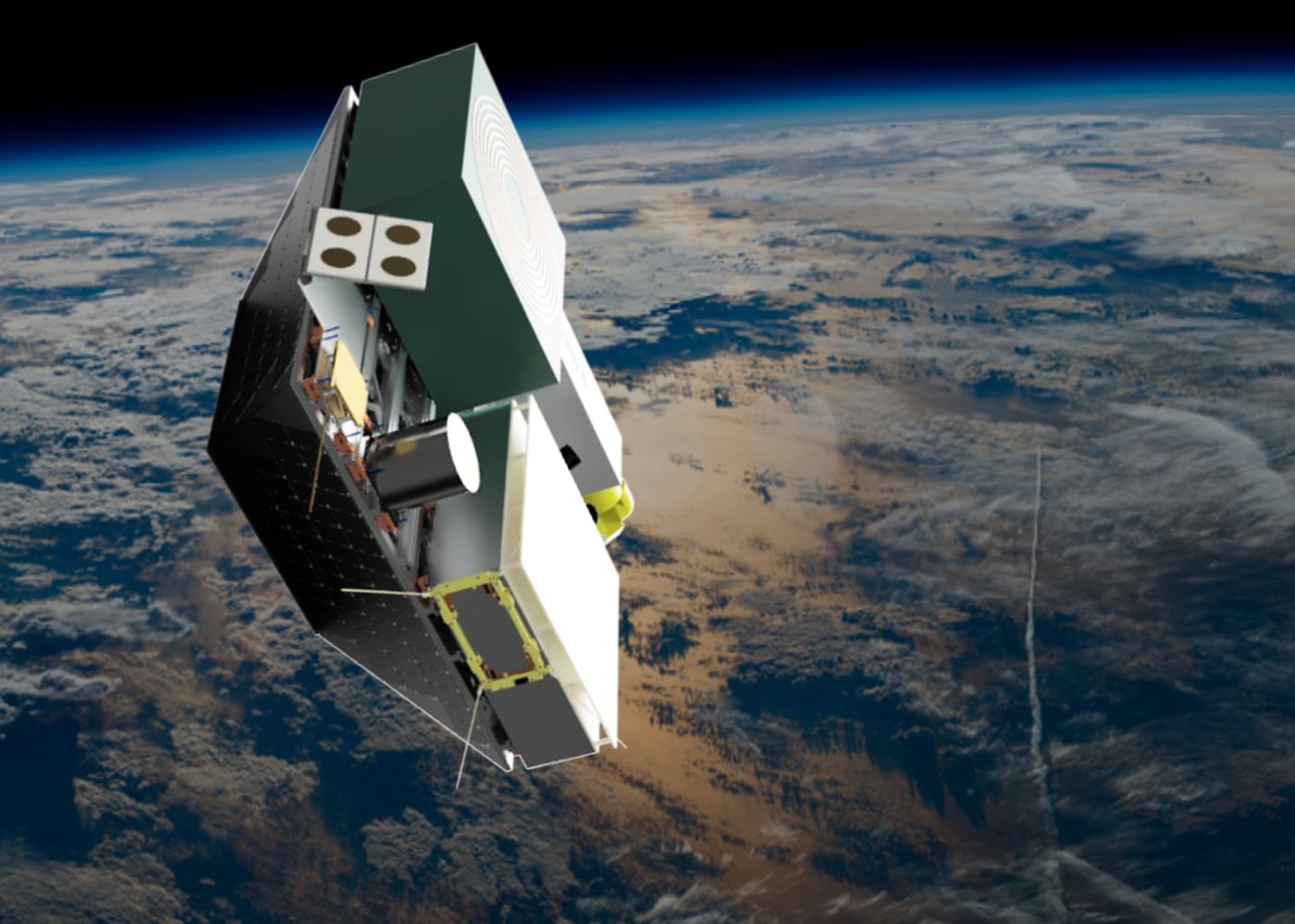
The United Kingdom has put a second military satellite into orbit. Titania, a small British-built spacecraft, launched last month and will be operated by UK Space Command, the Ministry of Defence said on November 7.
Titania was built in Hampshire by BAE Systems and the Defence Science and Technology Laboratory, the ministry’s research arm, under a £9.5 million ($12.7 million) contract. It weighs about 100 kg (220 pounds), roughly the size of a washing machine, and circles the Earth every 90 minutes at about 27,000 km/h (16,800 mph).
The ministry says the satellite will help British forces observe military activity on the ground from space. When Dstl first awarded the contract in 2021, it described Titania as a test of laser communications between a satellite and the ground, aimed at moving intelligence, surveillance and reconnaissance data at multi-gigabit speeds. Laser links can carry far more data than radio and are harder to intercept or jam, which matters when imaging satellites need to send large files down quickly.
Titania follows Tyche, the UK’s first wholly owned military satellite, an imaging spacecraft built by Surrey Satellite Technology. Both belong to ISTARI, the ministry’s program to build a small constellation of intelligence, surveillance and reconnaissance satellites along with the ground systems to run them. Two more satellites are planned: Juno, with Surrey Satellite Technology, and Oberon, with Airbus Defence and Space.
“Having Titania now in orbit and Project Inaros stepping up how we watch over our satellites means we can see threats sooner, making the UK safer,” said Defence Secretary Wes Streeting.
Project Inaros is the second part of the announcement. The ministry is trialing three ground-based sensors that watch for movement in orbit from sites in the UK, Australia and British facilities on Cyprus. The sensors were developed by British-Australian company Optera with the National Security Strategic Investment Fund.
Inaros uses neuromorphic sensors, which work more like an eye than a normal camera. Instead of taking full pictures at fixed intervals, they react only to changes in light, which makes it easier to pick out small, moving objects against the sky. The ministry says the technology could become an early warning system for unusual or threatening activity near British satellites.
That concern is not abstract. Russian and Chinese satellites have been tracked maneuvering close to Western spacecraft in recent years, and the UK has been building up its ability to monitor what is happening around its own assets, including through the Astroscale LEDA military space mission.
Data from Inaros will go to UK Space Command units, including No. 1 Space Operations Squadron, No. 2 Space Warning Squadron and the new No. 3 Space Effects Squadron. The UK relies on satellites to guide its ships, carry mobile phone traffic and warn of missile attacks.
“The ability to observe the Earth from space is critical to both national resilience and military advantage. This will be demonstrated by Tyche and Titania, alongside Juno and Oberon in the years ahead,” said Air Chief Marshal Sir Harv Smyth, the Chief of the Air Staff.
Both projects are funded from more than £3 billion ($4 billion) set aside for space in the Defence Investment Plan, which commits £298 billion ($398 billion) of defense spending over the next four years. Juno and Oberon are expected to follow in the coming years, though the ministry has not given launch dates.
Content preview only. Full article available at source. View Full Article
The United Kingdom launched the Titania military satellite into orbit on November 7. Built by BAE Systems, Titania will enhance the UK's ability to observe military activities from space. This satellite is part of the ISTARI program, which aims to establish a constellation of reconnaissance satellites. Additionally, Project Inaros is being tested to monitor movements of satellites in orbit, improving the UK's surveillance capabilities.
- The UK launched the Titania military satellite on November 7.
- Titania was built by BAE Systems and the Defence Science and Technology Laboratory.
- The satellite weighs about 100 kg and orbits the Earth every 90 minutes.
- Titania is part of the ISTARI program for intelligence, surveillance, and reconnaissance.
- Project Inaros is being trialed to monitor satellite movements.