
Britain Ships 150 Artillery Barrels as Europe Rearms Ukraine
 Alexandra Reeves
Britain Ships 150 Artillery Barrels as Europe Rearms Ukraine
Four barrel forgings sound like a factory note, not a strategic event. That is exactly why they matter.
The UK Ministry of Defence says the first British-made artillery barrels are now being delivered to Ukraine under a £61 million contract awarded to BAE Systems. The programme covers 150 barrel forgings in 105mm and 155mm calibres, produced by Sheffield Forgemasters in South Yorkshire. According to the UK government, this is the first time forged artillery barrels of this kind have been made in Britain in almost two decades.
The first shipment is small: four development forgings. But the point is not that four barrels will change the front this month. The point is that Europe has finally begun rebuilding one of the quiet industrial capabilities that a long artillery war eats alive.
What Britain Actually Shipped
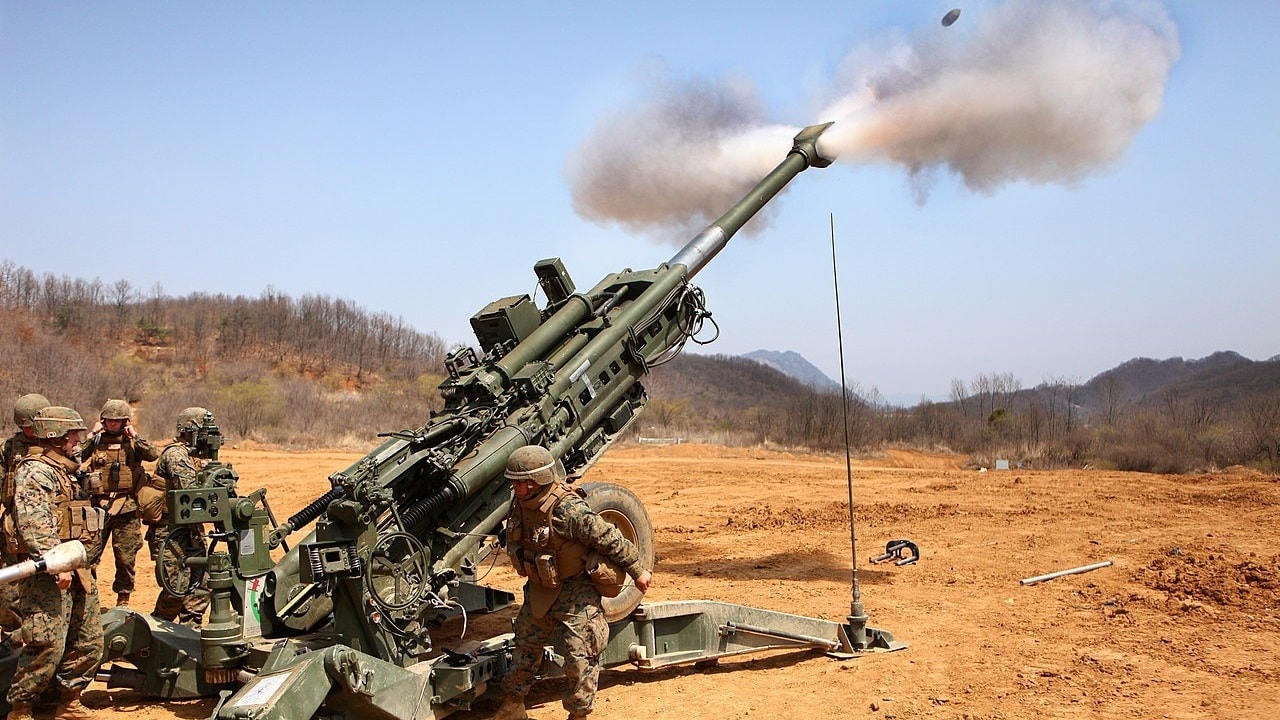
The British announcement is unusually useful because it gives numbers. The contract will deliver 150 barrel forgings for 105mm and 155mm guns. The first four have been sent to Ukraine as development forgings so Ukrainian industry partners can validate manufacturing processes before full-scale integration and production work. The barrels are forged in Yorkshire, then sent to Ukraine for finishing and integration.
The UK government says the Sheffield line is now producing eight forgings a month. BAE Systems is leading delivery and technical integration, working with Sheffield Forgemasters and a wider supply chain of more than 60 UK businesses. The work also links to BAE Systems opening a new £25 million artillery manufacturing facility in Sheffield, a 94,000 square foot site intended to support around 100 skilled manufacturing and engineering jobs.
Sheffield Forgemasters is not a normal subcontractor in this story. It is owned by the Ministry of Defence, employs about 780 skilled staff, and is being recapitalised with a new 13,000-tonne forging line and a 30,000 square metre machining hall. The UK government says that sits inside a £1.3 billion MoD-funded recapitalisation programme, with more than £420 million of additional funding invested last year to strengthen sovereign steelmaking for defence, including gun barrels and nuclear submarine components.
Why Barrels Matter More Than Press Releases
There is a bad habit in Western defence debates of treating artillery as ammunition plus launchers. That is incomplete. A gun is a consumable system. Fire enough rounds through a 155mm tube and the barrel wears. Accuracy drops. Safety margins change. Maintenance stops being an administrative problem and becomes a combat power problem.
Ukraine knows this better than anyone in Brussels or Whitehall. A battery can have crews, fire-control software, drones spotting targets, and ammunition stacked nearby. If the barrel is worn out or unavailable, the whole chain slows. In a war where artillery remains one of the main ways both sides destroy troops, vehicles, logistics nodes, and defensive positions, barrel life is not a workshop detail. It is a front-line constraint.
The 105mm and 155mm split also matters. The 155mm calibre is the NATO standard for heavy artillery and covers systems such as M777 towed howitzers and many self-propelled guns. The lighter 105mm category remains useful for mobile forces and for missions where weight, transport, and rate of deployment matter. Britain is not sending a shiny new wonder weapon. It is sending parts of the machinery that keeps ordinary artillery in the fight.
- Contract value: £61 million, according to the UK Ministry of Defence.
- Quantity: 150 barrel forgings.
- Calibres: 105mm and 155mm.
- Initial shipment: four development forgings.
- Current output: eight forgings per month in Sheffield.
- Industrial base: BAE Systems, Sheffield Forgemasters, and more than 60 UK supply-chain companies.
The Real Story Is Co-Production
The most important line in the announcement is easy to miss: the barrels are produced in Yorkshire before finishing and integration in Ukraine. That is not charity logistics. It is co-production under wartime pressure.
This is the model Ukraine has been pushing for across European defence industry: do not simply ship finished items from a Western warehouse, because the warehouses are not deep enough. Move parts of the production chain closer to Ukraine, give Ukrainian firms a role in integration, and turn aid into an industrial relationship that can survive a long war.
That approach carries risk. Facilities in Ukraine are targetable. Standards have to match. Intellectual property, quality assurance, and supply security all become harder in wartime. But the alternative is worse. If Europe keeps treating Ukraine as a customer at the end of a slow procurement queue, Russia wins time even when it loses ground.
British Defence Secretary Dan Jarvis said the South Yorkshire barrels would help Ukraine on the battlefield while creating skilled jobs in the UK. The sharper version is this: Europe is discovering that Ukraine support and domestic rearmament are no longer separate files.
Europe Is Still Moving Too Slowly
Eight forgings a month is welcome. It is also a reminder of scale. At that rate, 150 forgings take time. The first four are development items, not a flood of ready-to-fire barrels. This is the awkward truth behind much of the European rearmament story in 2026: the direction is right, but the clock is not generous.
Russia has built its war effort around mass, persistence, and the assumption that Western politics and industry move slowly. That assumption has often been rewarded. European governments can announce billions in defence investment, but factories still need machine tools, skilled labour, qualified suppliers, steel, test capacity, and predictable orders. You cannot restart a lost industrial skill by issuing a communique.
Britain deserves credit for naming the problem and putting money into Sheffield. The return of domestic barrel forging after nearly twenty years is more than symbolic. It gives the UK a capability it should not have allowed to disappear. It also gives Ukraine a more durable supply path for a class of equipment that will wear out again and again.
But the uncomfortable conclusion is that this is only a beginning. Europe is not short of speeches about standing with Ukraine. It is short of industrial depth, boring parts, and production lines that can keep firing after the headline fades. The next thing to watch is whether Sheffield remains an isolated success story or becomes part of a wider European pattern: more barrel production, more ammunition output, more repair capacity, and more Ukrainian integration.
Because Ukraine does not need Europe to rediscover artillery industry as a heritage project. It needs Europe to make enough of it, fast enough, to matter before the next worn barrel goes cold.
The UK Ministry of Defence has begun delivering 150 artillery barrels to Ukraine, with the first shipment of four development forgings sent for validation. These barrels, produced by Sheffield Forgemasters under a £61 million contract, are part of a broader effort to enhance Ukraine's artillery capabilities. The production rate is currently eight forgings per month, indicating a gradual ramp-up in support for Ukraine's defense needs.
- UK Ministry of Defence announced delivery of 150 artillery barrels to Ukraine.
- First shipment includes four development forgings for validation.
- Barrels are produced by Sheffield Forgemasters and BAE Systems.
- Production rate is currently eight forgings per month.
- The contract is valued at £61 million.