
Britain tests A400M in Poland — why NATO needs resilient logistics by 2026
 Dr. Klaus Weber
Britain Tests A400M in Poland — Why NATO Needs Resilient Logistics by 2026
A Transport Aircraft as a Strategic Test
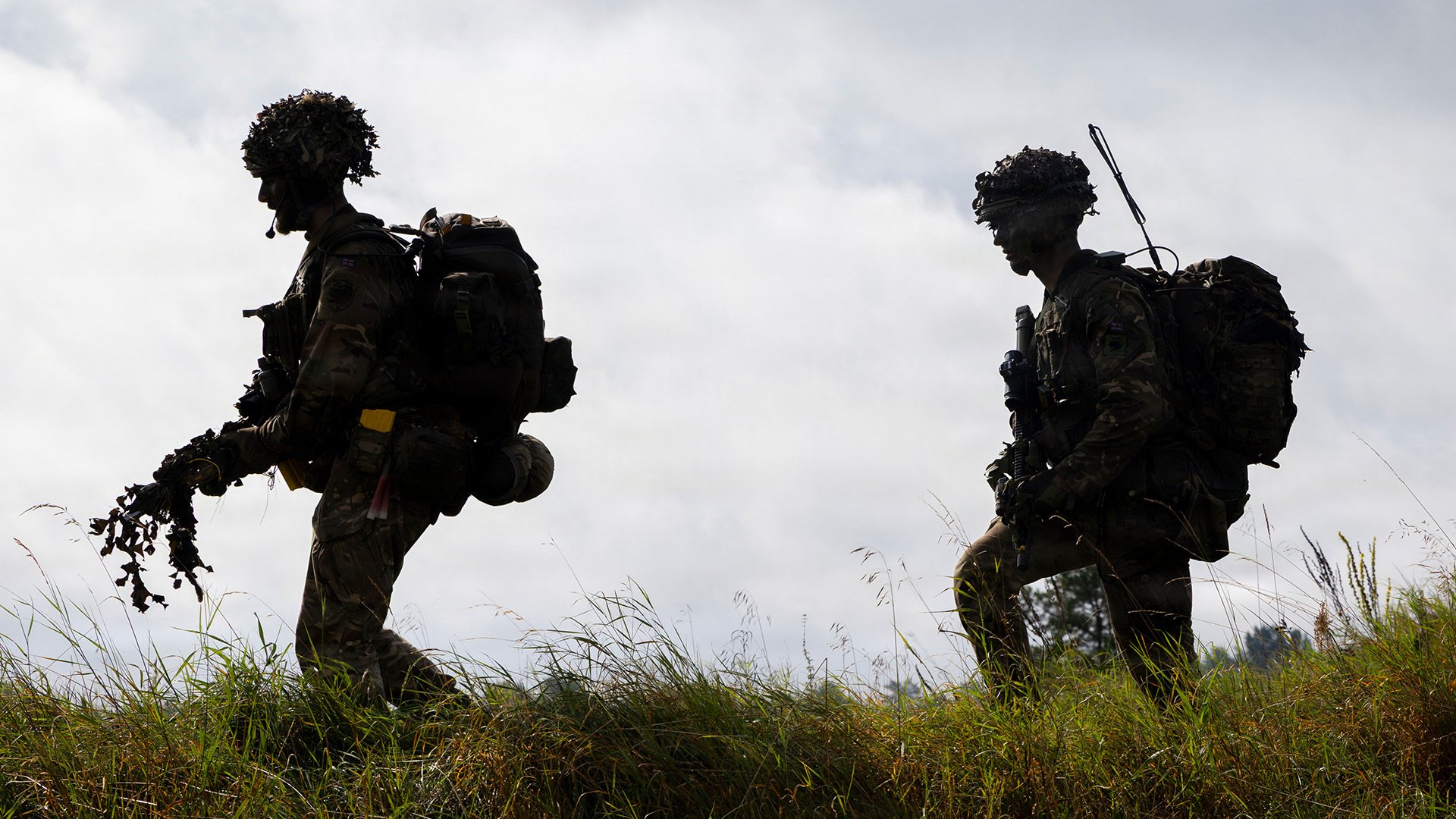
The British Royal Air Force deployed an Atlas C1 A400M to Powidz on September 13, 2026, to practice operating from temporary and unpaved runways with the Polish Air Force. This sounds like a technical training report. In fact, it is a test of NATO's central weakness on the eastern flank: Europe increasingly possesses modern weapons but cannot reliably move, supply, and replace them under fire.
Crew members from 70 Squadron trained in tactical low-level flying, takeoffs and landings on grass, air drops, and the transport of vehicles and supplies. The operational purpose is dispersion. When established military airfields are threatened by drones, cruise missiles, or sabotage, air transport missions must be able to continue on alternate sites. The A400M is particularly suited for this because it can transport troops, tactical vehicles, and supplies on a significant scale and is not solely reliant on fully developed infrastructure.
The Lesson from Drone Incursions
The timing is crucial. According to the Royal Air Force and the trade magazine Defence Industry Europe, the exercise was set against the backdrop of repeated Russian drone incursions into the airspace over Poland, Germany, and Romania. The political assessment of individual incidents can be debated; the military conclusion is less complicated. An alliance whose airfields, fuel depots, and transport hubs are concentrated at a few known locations invites the adversary to paralyze it with limited strikes.
The response cannot consist solely of more air defense. Even a capable system like Patriot does not protect every secondary runway, every bridge, and every logistics center. Resilience means that the armed forces must continue to operate after a hit: aircraft are dispersed, spare parts are pre-positioned, convoys change their routes, and crews master procedures that are inconvenient in peacetime but vital in war. Powidz thus becomes an example of dispersed operations, not an isolated exercise.
Interoperability is More than a Common Aircraft
Several NATO countries operate the A400M. This creates a common technical basis and facilitates cooperation in spare parts, training, and air transport. However, a common platform does not automatically generate a common capability. Poland must provide alternate sites, security, and ground services; the UK must integrate crews, maintenance, and command processes; NATO must align priorities, communication channels, and protection concepts. Only this chain transforms range and payload into military availability.
Here lies the difference between capability and capacity. The A400M can fulfill a task. However, the alliance needs enough flight hours, spare aircraft, trained technicians, secured fuel supply, and resilient airfields to repeatedly fulfill this task. Europe's defense debate still confuses these levels. A datasheet is not sustainability.
The British-German Complement
The exercise takes place during a phase in which London and Berlin are expanding their defense relationship. On September 12, the UK announced an initial investment of £770 million in a Deep-Precision-Strike program with Germany. The planned ground-based weapons are expected to reach ranges of over 2,000 kilometers and be operational by the early 2030s. Air-launched and sea-launched variants are also being considered; British planning refers to a possible family of cruise missiles and hypersonic weapons.
Strategically, both initiatives complement each other. Long-range weapons are intended to deter Russian planning or threaten key targets from a great distance. The A400M is to ensure that personnel, vehicles, and supplies can reach the eastern flank even when the large bases are unavailable. Deterrence without logistics remains rhetoric; logistics without range remains reaction. The connection makes sense, but it is not yet a complete system.
The Political Bottleneck Lies After the Decision
The British-German program simultaneously highlights Europe's well-known problem. The £770 million is a start, not a guaranteed industrial mass. Neither the final number of weapons nor the production sites or the companies involved have been publicly established. A program with a target date in the early 2030s helps today's eastern flank only to a limited extent. Russia is testing political and military response times now.
Even with the A400M, the value of the exercise will be determined after the photo opportunity. Will unpaved airfields be permanently prepared? Are there enough spare parts and mobile refueling facilities? Can allied aircraft be deployed at short notice without national special permissions? And can Poland be not just a host but an equal operator in a crisis? As long as these questions remain unanswered, interoperability is a promise with conditions.
Europe's Sobering Priority
NATO needs less symbolic evidence of political unity in 2026 than verifiable redundancy. This includes distributed airfields, mobile air defense, protected communication networks, and regular exercises with realistic failure assumptions. The A400M is not a spectacular weapon system. Precisely for this reason, it is strategically important: it connects the decision of a headquarters with the arrival of a vehicle at the front.
The bitter conclusion is that Europe must become both faster and more patient at the same time. Ukraine and the eastern NATO states need resilient logistics immediately; new long-range weapons will only emerge in the next decade. More money can reduce this time gap but cannot eliminate it. An alliance is only resilient if it can still act after the first hit — and not just claim that it would have been ready to do so.
Sources: Defence Industry Europe, September 13, 2026; Royal Air Force; Defence Industry Europe on the British-German Deep-Precision-Strike Cooperation, September 12, 2026.
The British Royal Air Force tested the Atlas C1 A400M aircraft in Powidz, Poland, on September 13, 2026, in collaboration with the Polish Air Force. The exercise focused on operations on provisional and unpaved runways, addressing NATO's logistical challenges amid increasing threats from Russian drone incursions. This training is part of a strategic effort to ensure operational continuity in the face of potential attacks on established military infrastructure.
- The British Royal Air Force deployed an Atlas C1 A400M to Powidz, Poland, on September 13, 2026.
- The exercise involved training for operations on unpaved runways and tactical low-flying maneuvers.
- The exercise was conducted in response to repeated Russian drone incursions in the region.
- The A400M is highlighted for its ability to operate without fully developed infrastructure.
- The exercise is part of a broader NATO strategy to enhance logistical resilience in Eastern Europe.