
Britain’s £100 Million Patriot Pledge Tests Europe’s Air Defence Resolve
 Alexandra Reeves
Britain’s £100 Million Patriot Pledge Tests Europe’s Air Defence Resolve
Britain has just put a price tag on Europe’s winter air-defence problem: £100 million. The money will help buy Patriot interceptors and other equipment for Ukraine through NATO’s Prioritised Ukraine Requirements List, with deliveries promised before winter. That is useful. It is also a reminder that Europe is still paying for air defence in emergency instalments while Russia plans its campaign months ahead.
The package is larger than a missile announcement
According to the UK government announcement on September 8, the contribution covers Patriot missiles and other air-defence equipment, alongside large-calibre artillery ammunition and drones. London says it will provide more than 120,000 drones to Ukraine this year, with 25,000 delivered so far. It also says Britain has delivered its millionth large-calibre artillery round and will fund tens of thousands more long-range rounds with Germany, Denmark, Lithuania, the Netherlands, Norway and Sweden.
The political signal matters as much as the shopping list. The announcement came at the 36th meeting of the Ukraine Defence Contact Group, which brings together nearly 50 countries. Britain is trying to show that the coalition can still convert meetings into hardware. Ukraine, meanwhile, is trying to protect cities, energy infrastructure and military formations from a Russian campaign that will exploit the dark, cold months as an operational advantage.
Patriot is valuable because the threat is changing
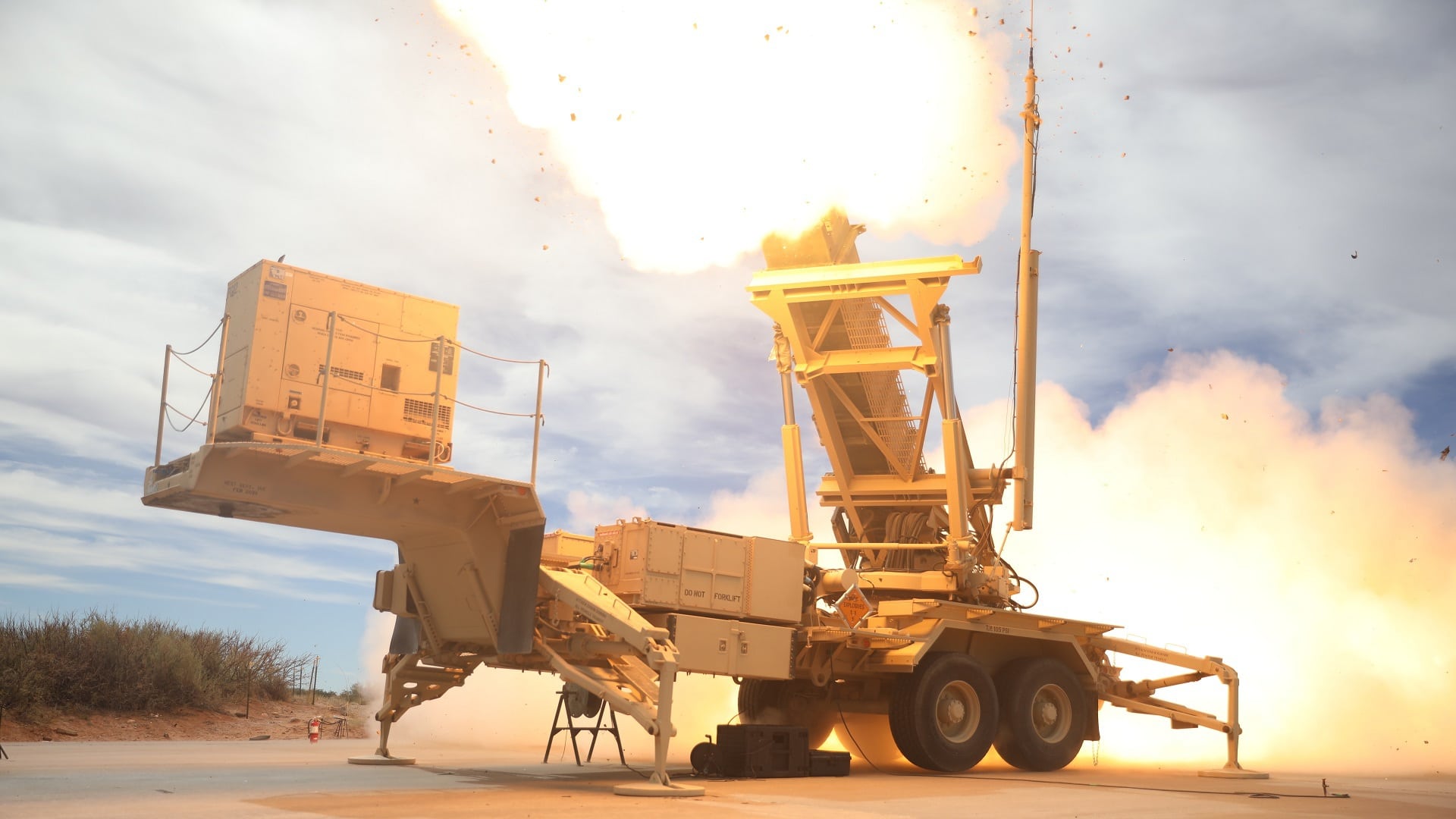
Patriot is not a magic dome. It is a networked system built around powerful surveillance and fire-control radars, launchers, command elements and expensive interceptors. Different Patriot variants perform different missions; PAC-3 interceptors are designed for hit-to-kill ballistic-missile defence, while other missiles address aircraft and cruise-missile threats. The system’s strength is its ability to engage demanding targets at distance. Its weakness is simple arithmetic: every interceptor fired is a scarce, costly round that cannot be assumed to be replaced quickly.
That arithmetic is becoming harsher. The Institute for the Study of War reported that Russia launched 92 drones against Ukraine overnight on September 6–7, while Ukrainian forces continued striking Russian military assets and oil infrastructure. Drones are cheaper, numerous and adaptable. Russia can use them to force Ukrainian air defenders to reveal radar emissions, spend ammunition and protect a wider number of targets before more dangerous missiles arrive.
This is why the UK package’s mix of Patriot missiles, interceptor drones, reconnaissance drones and artillery is more coherent than a headline focused only on Patriot. Ukraine needs a layered system. High-end interceptors should be reserved for ballistic and cruise-missile threats that lower-cost systems cannot reliably defeat. Drone-on-drone engagements, electronic warfare, mobile guns and camouflage have to carry more of the daily burden. Otherwise, Russia can turn every night into a test of Western magazine depth.
The uncomfortable European dependency
Here is the part European capitals prefer to leave out of the press release: Britain is not donating a self-contained air-defence architecture. It is adding money to a NATO mechanism that must compete globally for production capacity, while Ukraine remains dependent on allied decisions about allocation. The United States still anchors much of the Patriot ecosystem, and European inventories are not deep enough to make every urgent Ukrainian request routine.
That dependency is not merely a procurement problem. It shapes strategy. A commander who knows that replacing an interceptor may take months will not defend every transformer, depot or city equally. The resulting prioritisation is rational, but it gives Russia a targeting opportunity. Moscow does not need to defeat every Ukrainian battery; it needs to create enough uncertainty that Ukrainian planners must choose which part of the country can remain exposed.
The contrast with Russia’s approach is instructive. A recent RUSI analysis argues that Moscow is learning to restore damaged command, targeting and logistics functions quickly enough to keep operating after disruption. The lesson applies to air defence too. Ukraine may intercept a raid successfully, but the wider contest continues: can it reload, repair radars, rotate crews and preserve communications before the next wave?
What to watch before winter
- Delivery timing: “Before winter” is politically reassuring but operationally vague. The first question is when the missiles arrive, not how large the headline contribution sounds.
- Layer integration: Patriot batteries must be connected to Ukraine’s broader radar, fighter, electronic-warfare and short-range air-defence network.
- Interceptor conservation: Kyiv will need credible lower-cost answers to mass drone attacks so Patriot is not consumed by targets that cheaper systems can handle.
- European production: The test is whether this emergency payment becomes a durable procurement pipeline, rather than another seasonal scramble.
Britain bought time, not protection
Britain’s £100 million is a serious contribution and a clear acknowledgement that Ukraine’s air-defence gap is now a European security problem. But it buys time, not immunity. Russia’s advantage is not one spectacular missile; it is the ability to combine volume, deception and repetition until defenders run short of choices.
The next few months will show whether Europe has learned the right lesson from Ukraine. If allies treat Patriot as a finite emergency asset, the package will delay damage. If they build layered defences, expand interceptor production and fund the drones and sensors that make high-end missiles last longer, it can alter Russia’s calculation. The uncomfortable judgment is that Europe still talks about air defence as aid to Ukraine. Russia is already treating it as the price of Europe’s own survival.
Sources: UK Ministry of Defence; Institute for the Study of War; Royal United Services Institute.
Britain pledged £100 million to support Ukraine's air defense, including Patriot missiles and over 120,000 drones, during the 36th meeting of the Ukraine Defence Contact Group. This aid aims to enhance Ukraine's capabilities against Russian threats as winter approaches. The package includes large-calibre artillery ammunition and emphasizes the need for a layered defense system.
- Britain pledged £100 million for Ukraine's air defense, including Patriot missiles and drones.
- Over 120,000 drones are to be provided to Ukraine this year, with 25,000 already delivered.
- Britain has delivered its millionth large-calibre artillery round to Ukraine.
- The announcement was made during the 36th meeting of the Ukraine Defence Contact Group.
- The aid aims to address Ukraine's air defense needs ahead of winter.