
Britain's SCALP release for Ukraine creates assembly capacity — but no European missile sovereignty
 Dr. Klaus Weber
Britain's SCALP Release for Ukraine Creates Assembly Capacity — But No European Missile Sovereignty
Britain has agreed to the release of classified information regarding British components of the SCALP cruise missile. At first glance, this sounds like a technical detail. In reality, it is a political diagnosis of Europe's armaments order. London is not simply promising another package; it is opening part of that knowledge interface where European cooperation usually ends. This is precisely why the step is important. It shows that Europe's problem with long-range capability is no longer just about money or political will, but the question of who controls critical component information, supply rights, and industrial interfaces.
The numbers make the contradiction visible. The Burnham government estimates British support since 2022 at £25 billion, of which £16 billion is military and £5.6 billion is non-military. Nevertheless, the new announcement does not consist of an additional immediate supply quantity, but rather the permission for MBDA to release information about British components so that France and Ukraine can establish local assembly lines. In other words: Europe has money, political rhetoric, and a producer. But even with the most symbolically significant European long-range missile, London had to first open a knowledge barrier.
What London is Actually Releasing
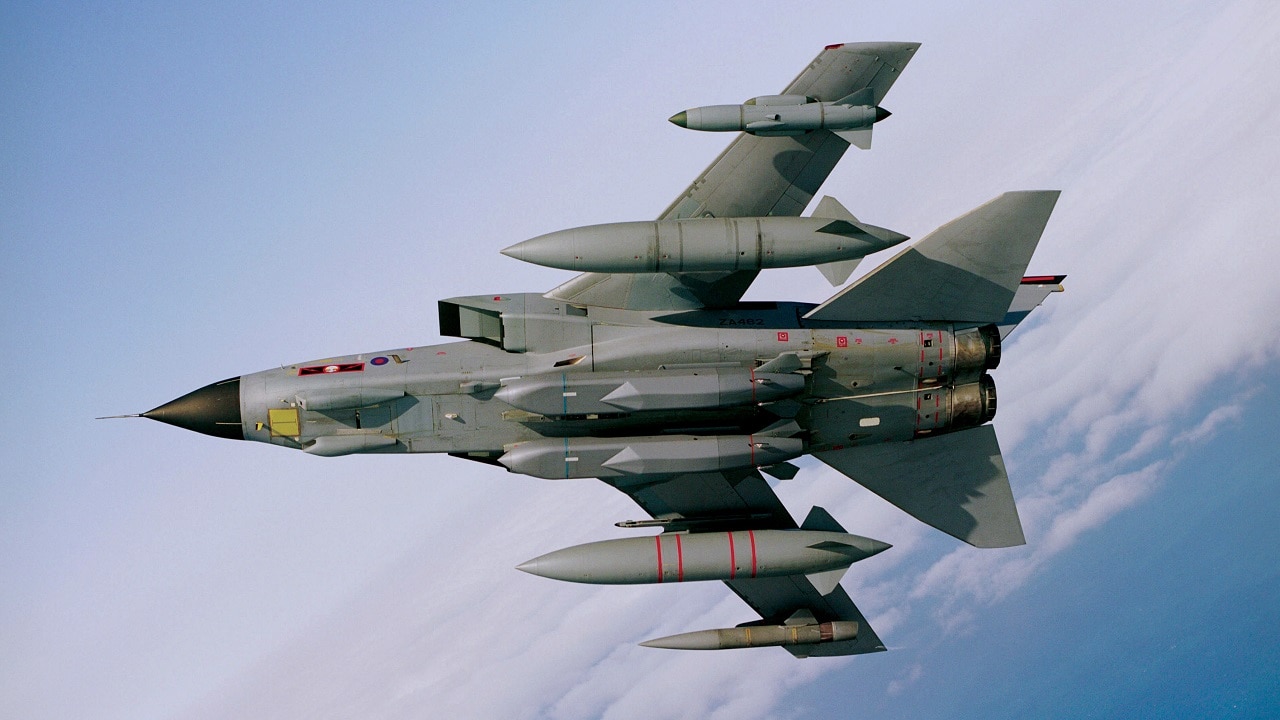
SCALP is the French version of the British Storm Shadow; both are based on shared Franco-British technology and are managed by MBDA. The missile is not an improvised drone system, but a complex air-launched cruise missile for deep strikes against high-value targets. It combines a low-signature design, terrain-following flight, precise terminal guidance, and a BROACH warhead for hardened targets. This makes it militarily valuable, but also industrially cumbersome: Anyone wanting to assemble such a system needs not only metal and electronics but access to protected design and integration data.
- Type: air-launched long-range cruise missile from MBDA
- Warhead: BROACH tandem warhead of around 450 kilograms
- Carrier platforms: Western combat aircraft such as Tornado or Mirage 2000
- Military role: deep precision strike against bunkers, logistics, and critical infrastructure
This is where the analytical core lies. London is not simply giving Ukraine the missile. London is allowing part of the hidden industrial blueprint to circulate at all. This is progress, but limited. Assembly is not construction. Whoever masters final assembly gains speed, repair capability, and a piece of resilience. However, those who do not control engines, navigation, sensitive software, release rights, and supply chains sovereignly do not possess full missile autonomy. Europe is thus moving from delivery to assembly, but not yet from assembly to sovereignty.
Why the Decision Comes Now
The timing is no coincidence. Burnham is traveling to Kyiv for the meeting of the Coalition of the Willing, while Ukraine is increasingly pointing out its gap in air defense. According to Zelensky, Ukraine received 675 Patriot interceptors in 2023, only 364 in 2025, and currently only 264 are planned for 2026; Kyiv is demanding a package of at least 300 for the winter. These numbers are crucial. As interception capacity decreases, the strategic value of one's own deep strike capability increases. Europe is then not only helping to protect the skies but also to threaten Russian logistics, refineries, and hubs from a distance.
Here, the logic of support is changing. Until now, the European aid model has often been consumptive: stockpiles were handed over, replacements ordered later, and political decisions sold as capabilities. The SCALP release goes a step further because it aims to shift production and assembly capacity to Ukraine. But is that enough? Only partially. An assembly line shortens paths and can improve output and maintenance. However, it does not automatically eliminate bottlenecks in engines, seekers, components, and release processes. Europe is thus finally responding industrially, but still selectively industrially.
The Real European Lesson
For a European analyst, the most embarrassing point is a different one. The most significant new step in Europe's long-range assistance is not taking place within an EU framework like PESCO, EDF, or SAFE, but in a political triangle of the United Kingdom, France, and Ukraine. Ironically, the state outside the EU is opening the critical technical door; France is providing the industrial platform; Ukraine is becoming the production space under wartime conditions. This is more efficient than many Brussels programs, but it is also an admission. When Europe resorts to ad-hoc coalitions in a crisis, it is because its formal defense instruments are too slow or too fragmented for time-critical armament decisions.
The step is therefore strategically significant and simultaneously sobering. Significant because it allows Ukraine to become more robust in long-range strikes in the medium term. Sobering because Europe's supposed missile sovereignty once again proves to be a shared asset that only becomes operational after bilateral releases. The familiar illusion is that higher spending would automatically generate more independence. The SCALP case shows the opposite: even £25 billion in support does not replace the question of who releases critical know-how.
In the end, a classic European paradox remains. The more serious the war becomes, the more pragmatic the cooperation; and the more pragmatic it becomes, the clearer it is how little institutionalized sovereignty Europe actually possesses. The new SCALP line could become very useful militarily for Ukraine. For Europe, it is primarily a mirror. It reflects a continent that is finally learning to prioritize production over symbolism, but is still exchanging permissions where it should already possess its own enforcement rights.
The UK has authorized the release of SCALP missile component information to Ukraine, facilitating the establishment of local assembly lines for missile production. This decision, made in 2023, aims to enhance Ukraine's long-range strike capabilities amid ongoing air defense challenges. The move underscores the importance of industrial cooperation in European defense, as the UK, France, and Ukraine collaborate to improve military resilience.
- UK has released classified information on SCALP missile components to Ukraine.
- This move allows Ukraine to establish local assembly lines for SCALP missiles.
- The SCALP missile is a complex air-launched cruise missile designed for deep strikes.
- The UK has provided £25 billion in support to Ukraine since 2022, including military and non-military aid.
- The decision reflects a shift in European defense collaboration towards production capabilities.