
British Excalibur UUV to Launch a Mk-48 Torpedo in 2026 — AUKUS Demonstrates Interoperability Instead of European Autonomy
 Dr. Klaus Weber
British Excalibur UUV to Launch a Mk-48 Torpedo in 2026 — AUKUS Demonstrates Interoperability Instead of European Autonomy
On September 13, the British Royal Navy successfully launched an American Mk-48 heavyweight torpedo from the unmanned underwater vehicle XV Excalibur at the Scottish test site BUTEC for the first time. Technically, this is a remarkable achievement. Politically, it is even more interesting: Operation BROADSWORD shows that the three AUKUS nations can connect weapons, platforms, and software faster than the European Union can consolidate its own maritime capabilities. The test thus proves interoperability — but not yet European autonomy.
A 19-Ton Demonstrator with a 5.8-Meter Weapon
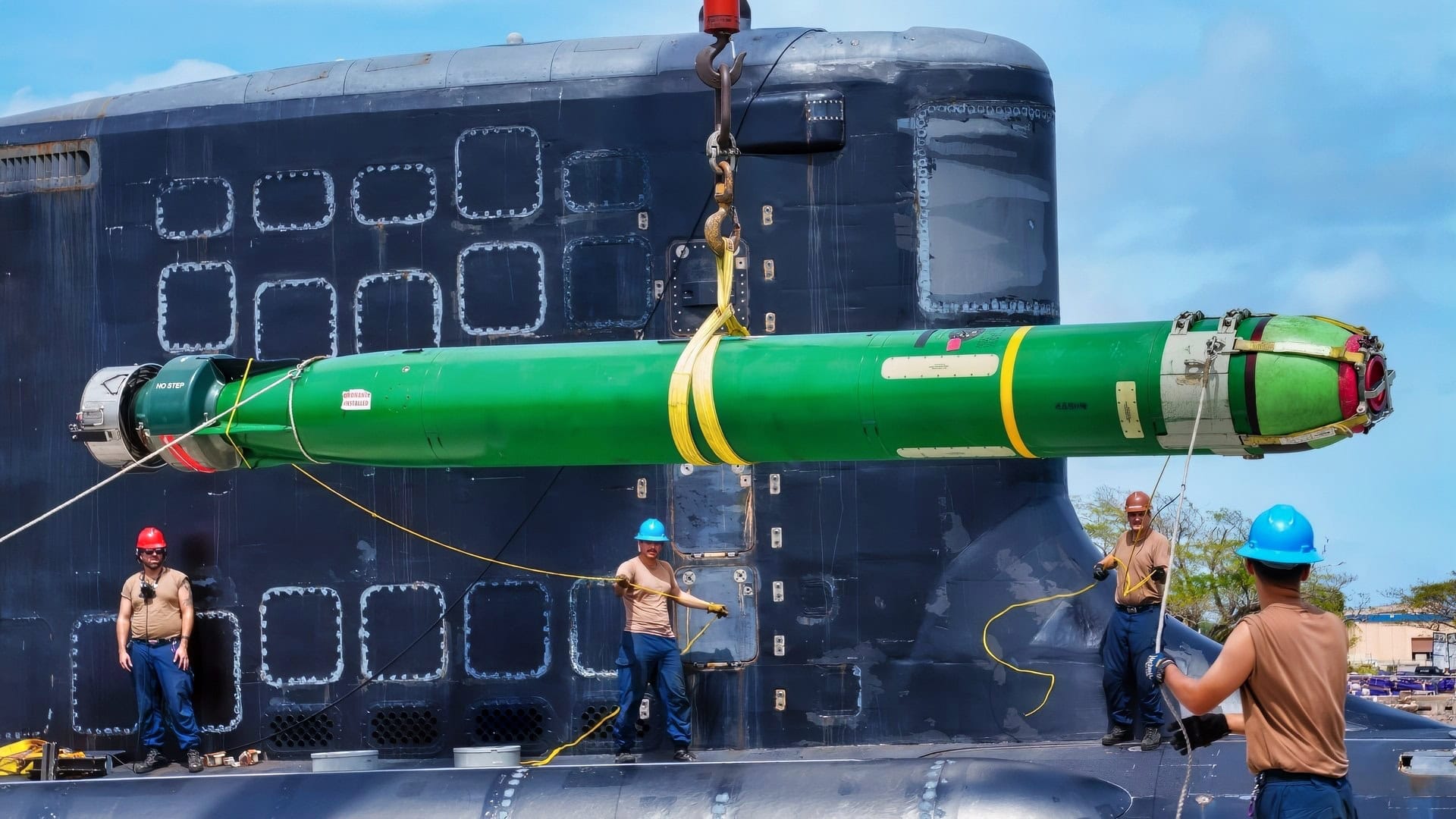
Excalibur was built by MSubs in Plymouth as part of the British Project CETUS. The vehicle displaces about 19 tons and is designed as an experimental platform for underwater autonomy, special payloads, and the interaction of manned and unmanned systems. It is explicitly not yet an operational submarine. The Mk 48, on the other hand, is an established American heavyweight torpedo designed for use against submarines and surface ships. The Mod-7-CBASS variant, which was likely used, combines acoustic target-seeking methods with wire-guided control.
The technical point lay precisely in the imperfection of the setup. Excalibur has no torpedo tubes; the 5.8-meter-long Mk 48 did not fit into the central payload bay. It was therefore apparently transported and launched in a temporary holder beneath the hull. This is sufficient for a demonstration, but not for a fleet. An operational system would need to integrate payload, sensors, communication links, power supply, and safety mechanisms from the outset.
AUKUS Pillar 2 Provides a Different Model of Cooperation
The attempt is a Signature Project of AUKUS Pillar 2. The focus is not on building a joint nuclear submarine, but on rapidly connecting advanced capabilities — including autonomous systems, artificial intelligence, and underwater warfare. The fact that an American torpedo could be launched from a British UUV is therefore more than a successful mechanical adaptation. It is a test of the political and industrial interfaces.
The involved nations are working with a clear strategic problem. Australia and the United States jointly developed the Mk 48; the United Kingdom contributes its own autonomous platform and testing infrastructure. The joint capability does not arise because all pursue the same industrial policy, but because the three partners define a concrete military interface. This is the difference between a project with a verifiable outcome and a European declaration of intent regarding "strategic autonomy."
Interoperability is the ability to operate foreign systems together. Autonomy is the ability not to have to request foreign approval at the critical moment.
The Critical Bottleneck Is Not the Torpedo
Navy Lookout rightly points out that the test demonstrated neither an autonomous firing decision nor an operational armed UUV capability. An unmanned vehicle can carry a torpedo and still be of little military value if it lacks reliable target reconnaissance, secure command links, and clear rules for human authorization. Underwater, the problem intensifies: radio connections are limited, acoustic data channels are slow, and enemy deception is likely.
Project CUTLASS and the planned use of the Anduril Dive-XL are therefore intended to go beyond mere launch mechanics. Next, data architectures, command and operational concepts, and tactical integration into manned formations must mature. The path from proof of concept to military capability is long. Those who derive a new underwater fleet from a successful launch confuse demonstration with operational readiness.
What Europe Should Learn from This
For the EU, the lesson is uncomfortable. Europe possesses industrial competence in submarines, sensors, torpedoes, and autonomous platforms. However, it lacks a permanent political architecture that translates these competencies into a common, rapidly testable system. PESCO and the European Defense Fund can provide money and procedures; however, they do not replace a common capability requirement, a reliable user group, and a responsible system integrator.
Germany and France continue to discuss platforms, division of labor, and industrial leadership roles. In contrast, AUKUS shows that an alliance can function even with nationally different industries if the interface is defined first. A similar interface could be conceivable for European underwater capabilities: a common unmanned vehicle, a standardized payload module, and a multinational testing regime. This would be less prestigious than a new major program, but militarily verifiable.
The transatlantic dimension should not be romanticized. AUKUS demonstrates British-American-Australian operational capability but remains heavily dependent on American weapons, data, and approvals. For London, this is a conscious decision: maximum connectivity to the United States against limited industrial independence. For the EU, it would be a problem to simply copy this logic. European autonomy cannot consist of mounting American payloads on European platforms and marketing the process as sovereignty.
The Success Intensifies Europe's Fundamental Question
Operation BROADSWORD is therefore a success with a warning. The Royal Navy has shown that a British UUV can carry and launch an American Mk 48; AUKUS has removed a concrete interoperability barrier. But the capability remains experimental, the targeting chain is unclear, and technological dependence is evident. Europe must decide whether it wants to be merely compatible with American systems in the future or whether it can also develop its own, politically controllable operational chains. More cooperation is necessary. However, cooperation without control is not autonomy — and a successful torpedo launch does not answer this question.
Sources
- Defense News — Royal Navy successfully launches US Mk 48 torpedo from uncrewed submersible, September 22, 2026
- Navy Lookout — Royal Navy’s autonomous submarine fires heavyweight torpedo in AUKUS trial
- U.S. Department of Defense — AUKUS Pillar II Signature Project Fact Sheet, May 2026
- U.S. Navy — Mk 48 Heavyweight Torpedo Fact File
The British Royal Navy launched an American Mk-48 heavyweight torpedo from the unmanned underwater vehicle Excalibur at the BUTEC test site in Scotland on September 13, 2026. This event demonstrates the interoperability of AUKUS nations in military capabilities, although the Excalibur is still in the experimental phase and not yet operational. The test underscores the collaboration between the U.S., U.K., and Australia in developing advanced military technologies.
- The British Royal Navy launched a Mk-48 torpedo from the Excalibur UUV on September 13, 2026.
- This event demonstrates interoperability among AUKUS nations.
- The Excalibur UUV is not yet operational and lacks certain capabilities for military use.
- The Mk-48 torpedo is a well-established weapon system used against submarines and surface ships.
- The test highlights the political and industrial collaboration between the U.S., U.K., and Australia.