

“Death is nothing, but to live defeated and inglorious is to die daily,” Napoleon Bonaparte once said. It’s a quotation that is widely attributed to him, at least. However, no reliable contemporary record establishes exactly when or where he said it. At least in the public zeitgeist, it reflects his vision and thinking.
The sentiment fits the final period of his career, too.
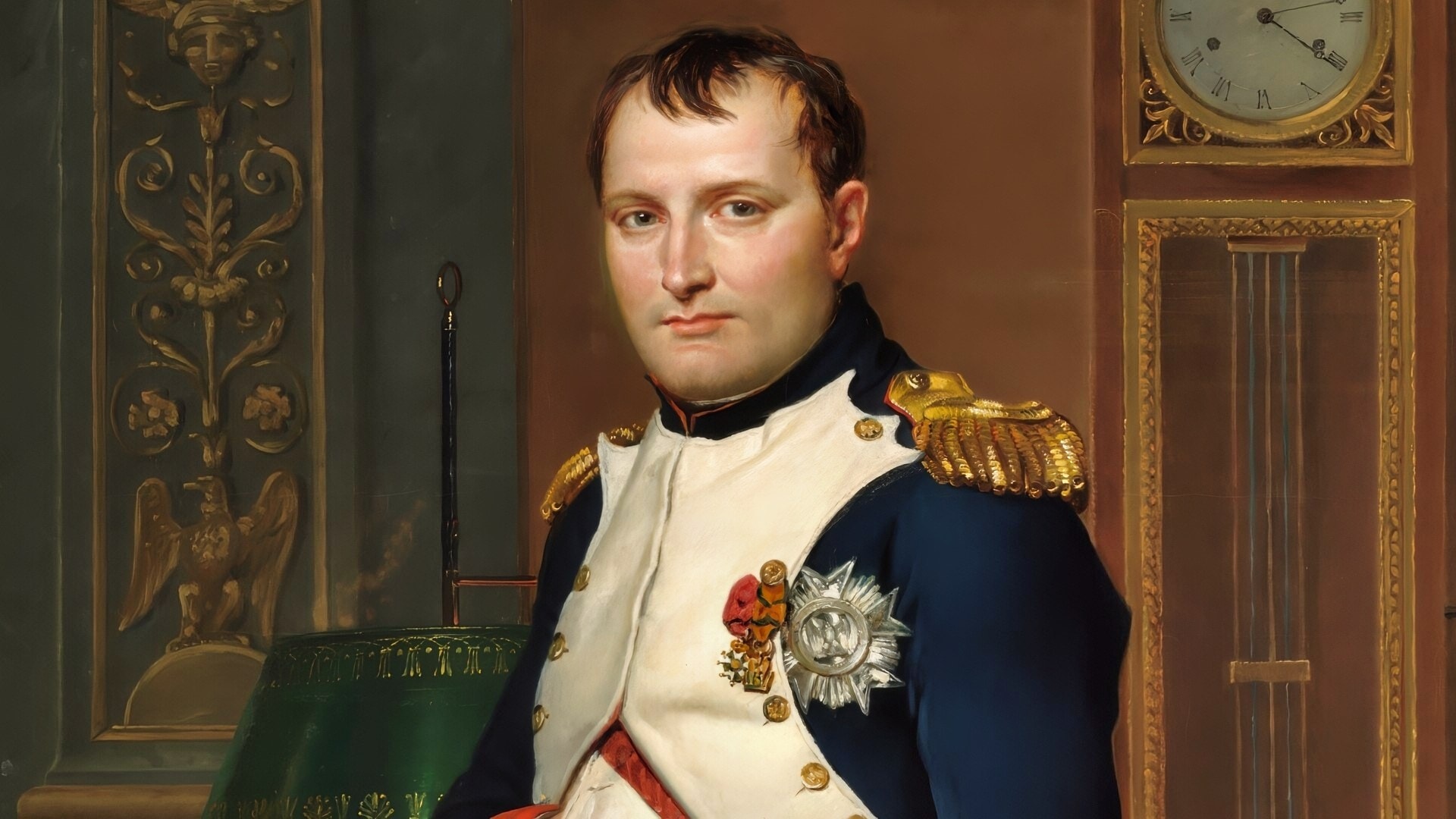
Napoleon Painting Creative Commons Image

Napoleon Quote of The Day Two Looks. Image Credit: Creative Commons.
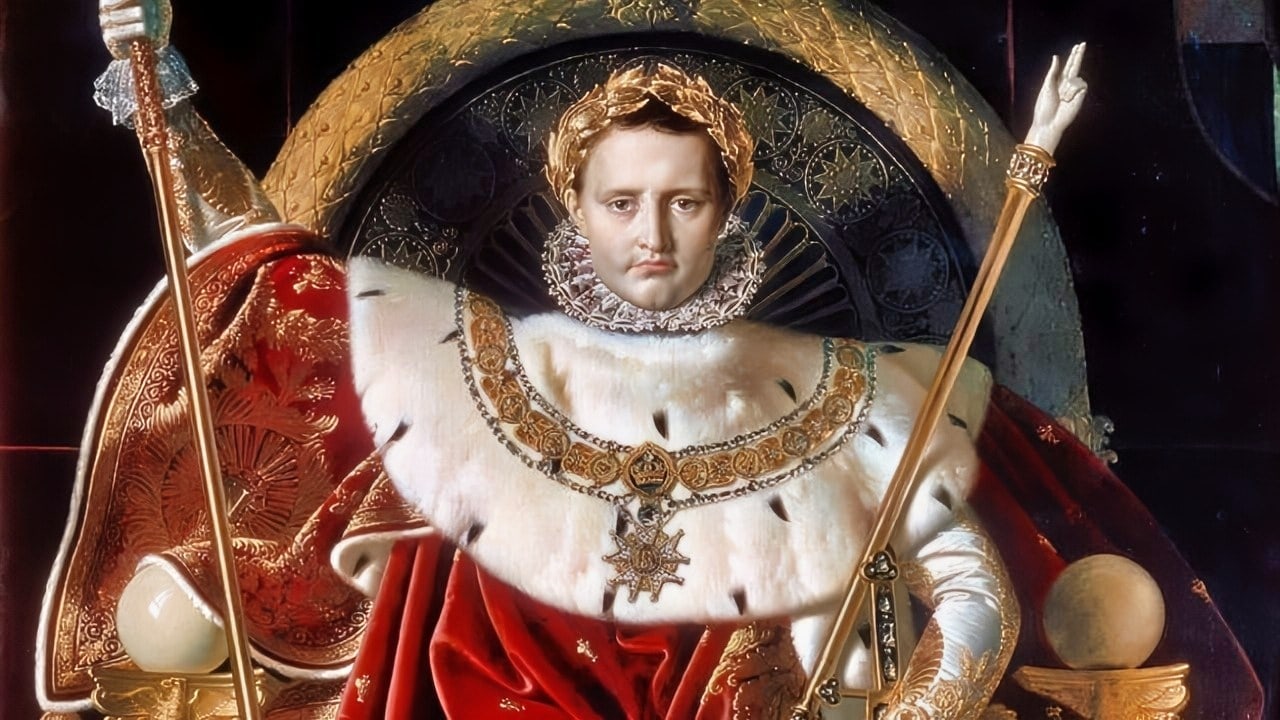
Napoleon the Emperor. Image Credit: Creative Commons.
Napoleon started as an artillery officer during the French Revolution and became emperor of France and ruler of much of continental Europe.
Between 1814 and 1815, he was defeated and exiled, and then returned to power before being defeated and exiled again.
How Napoleon Lost His Empire
Napoleon was born on the island of Corsica, France, on August 15, 1769. He attended French military schools and eventually became an artillery officer before he rapidly rose through the ranks during the French Revolution.
He won victories in Italy, became nationally famous, and in 1799 took part in a coup that installed him as First Consul of France.
In 1804, he crowned himself emperor, and in the years that followed, his armies defeated several European coalitions.
Those victories allowed Napoleon to reorganize territories across the continent and install relatives or allies as their rulers.
But after the invasion of Russia in 1812, his position began to fall apart.
Napoleon entered Russia with a multinational force of hundreds of thousands of men, but Russian resistance, combined with disease, hunger, and harsh winter conditions, destroyed much of that army.
So Austria, Prussia, Russia, Britain, and other opponents formed another coalition.
That new force defeated Napoleon at Leipzig in October 1813 and entered Paris in March 1814.
Senior commanders refused to continue the war, and so Napoleon abdicated in April.
Napoleon’s First Exile on Elba
Napoleon was then sent to Elba, a small island in the Mediterranean located off the western coast of Italy, as a condition of the Treaty of Fontainebleau.
He retained the title of emperor, but he ruled only the island’s small, 12,000-strong population.
He arrived there on May 4, 1814, along with several hundred guards and members of his household.
Napoleon quickly reorganized the island’s administration.
He inspected the mines, improved the roads, and commissioned public works.
His exile may have been restricted, but he was not treated like a conventional prisoner and set about improving conditions on the island.
During this time, the Bourbon monarchy was restored in France under King Louis XVIII.
The new government faced opposition from former soldiers and officials who feared losing the status or property they had acquired since the Revolution.
Napoleon learned that the financial allowance promised to him under the Treaty of Fontainebleau was not being paid.
So, his wife, Marie Louise, and their son did not join him.
European officials also began discussing moving him to an even more distant location, which prompted his decision to leave of his own accord.
His Escape
Napoleon set sail from Elba on February 26, 1815, aboard the Inconstant with 1,000 men. He landed in southern France on March 1 and began to travel north toward Paris.
He was immediately wanted, with Louis XVIII sending troops to arrest him.
Napoleon confronted soldiers on March 7, and accounts of that encounter describe him approaching the troops and inviting them to shoot their emperor.
The soldiers joined him.
Other units also followed, including some forces commanded by Marshal Michel Ney, who had promised Louis XVIII that he would bring Napoleon back in a cage.
The king saw what was coming and fled Paris, and Napoleon re-entered the capital on March 20 without even fighting a major battle.
That began what’s known as the Hundred Days — the period between his return and the restoration of Louis XVIII, which lasted a little longer than 100 days.
Waterloo and His Final Exile
European powers again formed a coalition and prompted Napoleon to invade present-day Belgium before opposing armies could fully prepare.
On June 18, 1815, his forces were defeated at Waterloo by the British army under the command of the Duke of Wellington. Prussian forces were led by Gebhard von Blücher.
Napoleon was again forced to abdicate just four days later.
He was left unable to flee to the United States, and so he surrendered to the British on July 15. This time, he was sent to Saint Helena — a tiny, remote island in the South Atlantic, where escape became virtually impossible.
Napoleon lived under British supervision at Longwood House, where he dictated accounts of his campaigns and repeatedly disagreed and clashed with Governor Hudson Lowe.
He eventually died aged 51 on May 5, 1821, with modern accounts suggesting that his death was likely caused by stomach cancer.
His remains were returned to France in 1840.
About the Author: Jack Buckby
Jack Buckby is a British researcher and analyst specializing in defense and national security, based in New York. His work focuses on military capability, procurement, and strategic competition, and he produces and edits analysis for policy and defense audiences. He brings extensive editorial experience, with a career output spanning over 1,000 articles at 19FortyFive, and has previously authored books and papers on extremism and deradicalization.