
China calls on all parties to avoid escalating tensions in the Middle East.
On the 2nd local time, the United Nations Security Council held an emergency public meeting on the situation in the Middle East. In response to the recent escalation of military confrontation between the United States and Iran, the Chinese representative called on all parties to avoid threatening rhetoric and military adventurism, and to prevent the escalation of tensions.
China's Permanent Representative to the United Nations, Fu Cong, stated during his speech that there has been a new round of mutual attacks between the United States and Iran, affecting targets within Bahrain and Kuwait. China has consistently advocated that all parties should adhere to the purposes and principles of the United Nations Charter and oppose the use or threat of force in international relations. China calls on all parties to remain calm and restrained, avoid threatening rhetoric and military adventurism, and prevent the escalation of tensions. China also emphasizes that the sovereignty, security, and territorial integrity of all countries in the Middle East should be respected, and civilians and non-military targets should be protected.
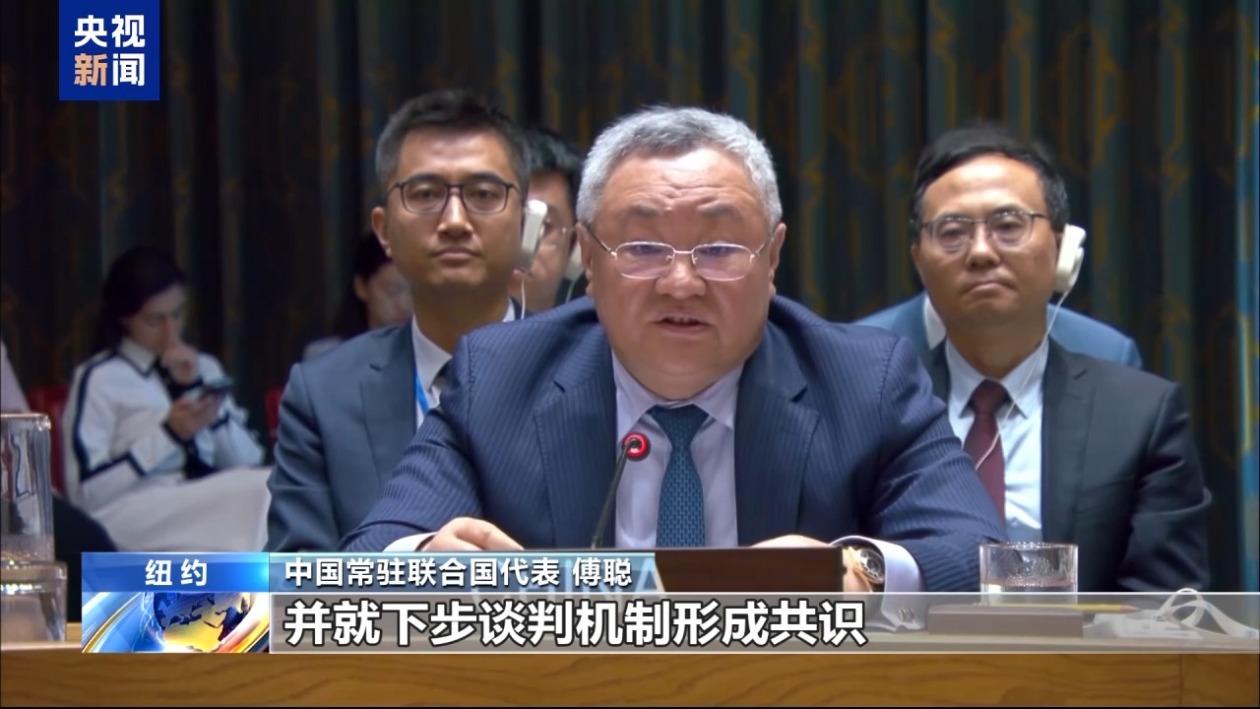
China's Permanent Representative to the United Nations, Fu Cong: China welcomes the United States and Iran to initiate follow-up consultations on the memorandum of understanding with the assistance of Pakistan and Qatar, and to reach a consensus on the next negotiation mechanism. Facts have repeatedly proven that force and power cannot solve problems; dialogue and negotiation are the correct choices. With the joint efforts of all parties, the conflict has finally shifted to dialogue, but the ceasefire situation remains fragile. Whether true peace can be achieved depends on the joint efforts of all parties.
Regarding the next steps in the situation, China proposes three points:
First, to consolidate a comprehensive ceasefire and halt hostilities. Both the United States and Iran should show maximum sincerity, earnestly implement the memorandum of understanding, maintain the momentum of negotiations, eliminate interference, and promote the early conclusion of a comprehensive agreement that is acceptable to both parties, regional countries, and welcomed by the international community.
Second, to quickly restore normal navigation in the Strait of Hormuz. Restoring safety and freedom of passage in the strait will help maintain the stability of global supply chains and is in the common interest of regional countries and the international community.
Finally, to improve the relationships among regional countries, including the Gulf region, so that the Middle East can no longer become a battleground for great power competition and a victim of geopolitical struggles. China will continue to work with the international community to play a constructive role in achieving political solutions to regional hotspot issues and maintaining and promoting peace and stability in the Middle East.
China called for all parties to avoid escalating tensions in the Middle East during a UN Security Council meeting on the 2nd. The Chinese representative highlighted recent military confrontations between the U.S. and Iran affecting Bahrain and Kuwait. China emphasized the importance of dialogue and proposed measures to restore normal navigation in the Strait of Hormuz and improve relations among regional countries.
- China urges all parties to avoid military threats and actions in the Middle East.
- Recent military confrontations between the U.S. and Iran have affected targets in Bahrain and Kuwait.
- China emphasizes the need for dialogue and negotiation to resolve conflicts.
- China calls for respect for the sovereignty and territorial integrity of Middle Eastern countries.
- China proposes three points to stabilize the situation, including a comprehensive ceasefire.