
China-India Actual Control Line Faces First Standoff in 6 Years: Thaksin Sets Up 3 Tents as Boundary Tensions Rise Before BRICS Summit
 Li Minghui
First Standoff in 6 Years Along the Sino-Indian Actual Control Line: Taksin's 3 Tents, Border Game Heats Up Before BRICS Summit
[Beijing News] In late July, a patrol team from the People's Liberation Army (PLA) encountered an Indian Army patrol near Taksin in the southern Tibetan region of Subansiri County. According to Indian media reports, the incident reportedly occurred about 2.5 kilometers inside the actual control line. Following the usual practice, both sides displayed banners to assert their sovereignty, after which the Chinese personnel withdrew; however, in early August, PLA personnel returned to the site and set up 2 to 3 tents. Indian ABP reported that this is the first standoff of this scale along the Sino-Indian actual control line since the Galwan Valley conflict in 2020, lasting nearly a week, and was ultimately controlled by the intervention of senior commanders from both sides.
27 Place Names and 36 Meetings
Almost simultaneously, the border game heated up on the diplomatic front. On August 7, the Indian Ministry of Home Affairs officially marked 27 locations and geographical features in southern Tibet with "standard names" on the map, including Pukarla and Pisa Village. On August 10, Chinese Foreign Ministry spokesperson Zhao Lijian responded, stating that the Indian side's actions are "illegal and invalid," and do not change the fact that southern Tibet belongs to China. Just on August 6, China and India held the 36th meeting of the Working Mechanism for Consultation and Coordination on Border Affairs (WMCC) in New Delhi, where both sides agreed to continue addressing outstanding issues through existing diplomatic and military channels. Indian Foreign Ministry spokesperson Jaiswal bluntly stated, "The situation at the border will reflect the state of bilateral relations."
The Weight of This Standoff
How should we understand this standoff? In my view, three details need attention. First, the intensity is completely different. The 2020 Galwan Valley incident involved a violent clash with casualties; this time, it involved banners and tents, which is a typical "confirmation of presence," not "preparation for attack." Second, the location is significant. Subansiri has a relatively low altitude and shallow valley depth, making it the most frequently crossed section of patrol routes, and it is also the area where India is most actively promoting its "border village plan"—the Indian report's mention of "2.5 kilometers" itself reflects the differences in both sides' understanding of the actual control line. Third, the timing is sensitive. The BRICS summit in New Delhi will be held about a month later, with Xi Jinping attending, and both sides have chosen to set the tone for the border before the summit.
Infrastructure Competition and Plateau Equipment
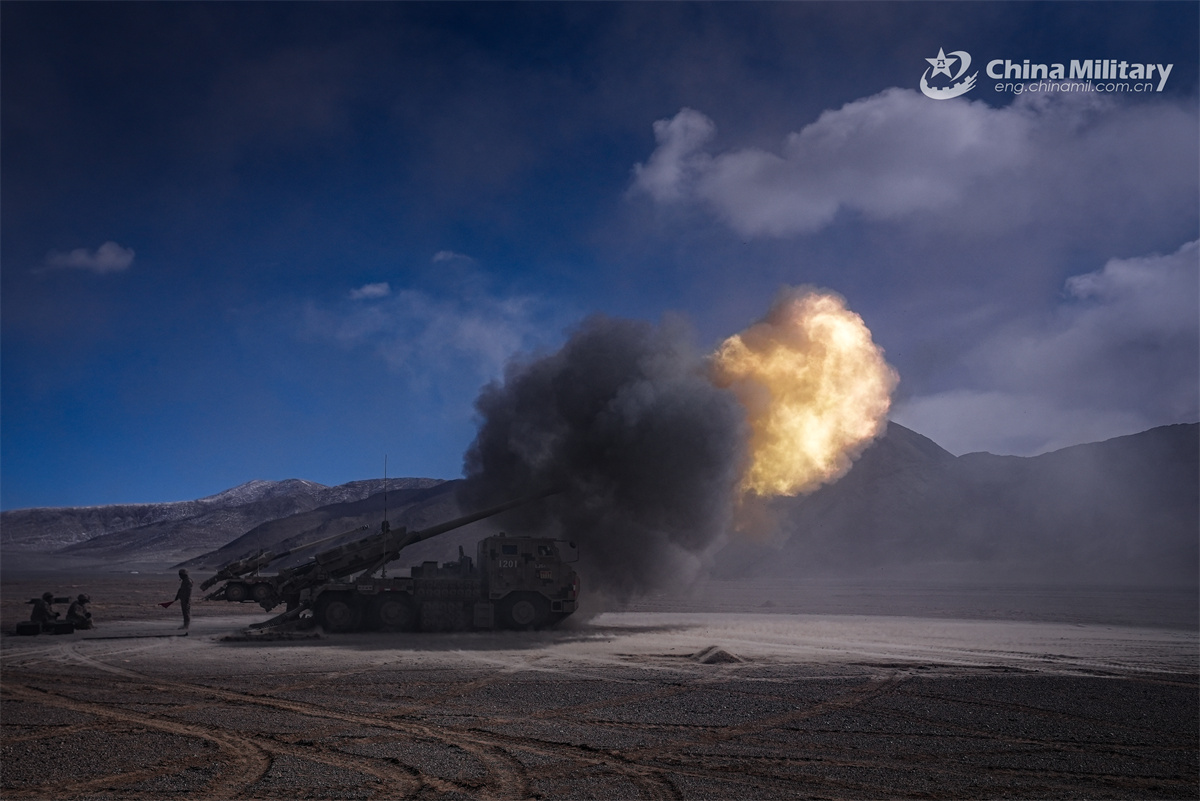
What is even more noteworthy are the actions beneath the surface. In January 2026, India will restart the 1,840-kilometer "Arunachal Frontline Road" project, costing approximately $4.7 billion, and the Indian Army's mountain division budget shows a significant increase in the proportion of long-range artillery and plateau drones. The PLA is also not idle: the Western Theater Command's plateau troops have recently equipped themselves with PCL-181 self-propelled howitzers and Type 15 light tanks, specifically optimized for plateau conditions, and held live-fire drills in the Xinjiang plateau in May. In short, both sides are using infrastructure and firepower to support the "normalization of patrols"—the underlying cards in this standoff have never just been a few tents.
Sources from the Indian Ministry of Defense told ThePrint that the current situation is "completely under control."
Finally, I would like to express a reservation. The most unusual aspect of this incident is the temperature difference in the narratives from both sides: Indian media loudly reported "the first standoff in 6 years," while the Chinese side downplayed it as "overall stability," and the military has remained silent. Whether the tents are seasonal patrol camps or intentionally left "markers of presence" is insufficiently defined by public information. However, it can be confirmed that the WMCC and the commander-level meetings established after 2020 did play a role this time—there was no bloodshed, no escalation.
One month before the BRICS summit, both sides have won the "control of the situation." It remains to be seen whether this mechanism can withstand the border infrastructure competition that both sides are simultaneously advancing when the Xi-Modi meeting concludes in September, the rainy season passes, and the next round of patrol season arrives.
Chinese and Indian patrols encountered each other near Taksin, Arunachal Pradesh, in late July 2023, leading to a standoff where the PLA set up tents after initial withdrawal. This confrontation is the first significant one since the 2020 Galwan Valley clash and lasted nearly a week. Concurrently, India marked 27 locations in Arunachal Pradesh, prompting a response from China, indicating rising tensions ahead of the upcoming BRICS summit.
- Chinese and Indian patrols encountered each other near Taksin, Arunachal Pradesh.
- The standoff lasted nearly a week and involved the setup of tents by the PLA.
- This is the first significant confrontation since the Galwan Valley clash in 2020.
- India marked 27 locations in Arunachal Pradesh on maps, which China deemed illegal.
- Both sides are enhancing military infrastructure and capabilities in the region.