
China-Russia Naval Submarines First Joint Appearance at Sea: What Signals Do the Joint Exercises Send?
The joint exercise "Maritime Joint-2026" conducted by the navies of China and Russia in the maritime and airspace near Qingdao concluded today (the 13th), with the maritime drill phase having wrapped up on July 11. The exercise adopted a real-combat grouping without a pre-set plan, with real-time data sharing and an upgraded intensity of offensive and defensive confrontations.
Notably, the submarines of China and Russia achieved their first simultaneous appearance at sea during the joint exercise, with naval cooperation between the two countries expanding from "surface" to a three-dimensional combat capability of "surface + underwater." Since 2012, the "Maritime Joint" series of exercises has become an important platform for naval cooperation between China and Russia. What changes and characteristics did this year's joint exercise present? What does the first simultaneous appearance of submarines from both countries at sea signify?
This year's China-Russia "Maritime Joint-2026" joint exercise was conducted in three phases: troop assembly, port planning, and maritime drills. Military expert Zhang Junsha stated in an interview with the national broadcaster that this joint naval exercise has four major changes and characteristics.
01
Anchoring on the Real Security Needs of Both Countries
Zhang Junsha introduced that following 2024, this year's "Maritime Joint-2026" once again set the joint response to maritime security threats as the exercise topic. This is due to the deployment of various medium- and long-range powerful offensive weapons in Asia in recent years, particularly the intermediate-range missiles that were prohibited from development and deployment during the Cold War.
The threats posed by various missiles, drones, and unmanned vessels from the air, surface, underwater, and land have sharply increased, seriously threatening the important waterways of the Asia-Pacific region and the security of both China and Russia, thereby threatening regional peace. Therefore, through conducting exercises in reconnaissance, early warning, air defense, missile defense, and maritime strikes, both sides enhanced their capabilities to jointly respond to maritime security threats.
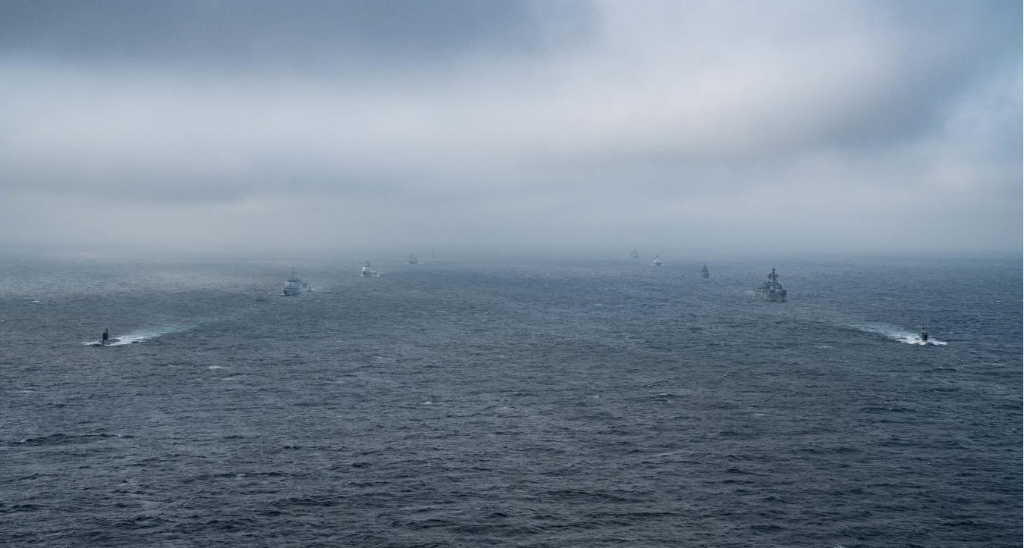
△ On July 10, the participating naval vessels of China and Russia conducted maritime drills.
02
Highlighting Combat Readiness
The entire exercise closely adhered to a realistic maritime and aerial combat environment, focusing on solidifying the offensive and defensive combat capabilities of both navies through exercises in anti-ship, air defense, and anti-submarine operations, while also concentrating on new maritime threats such as drones, conducting specialized research and drills.
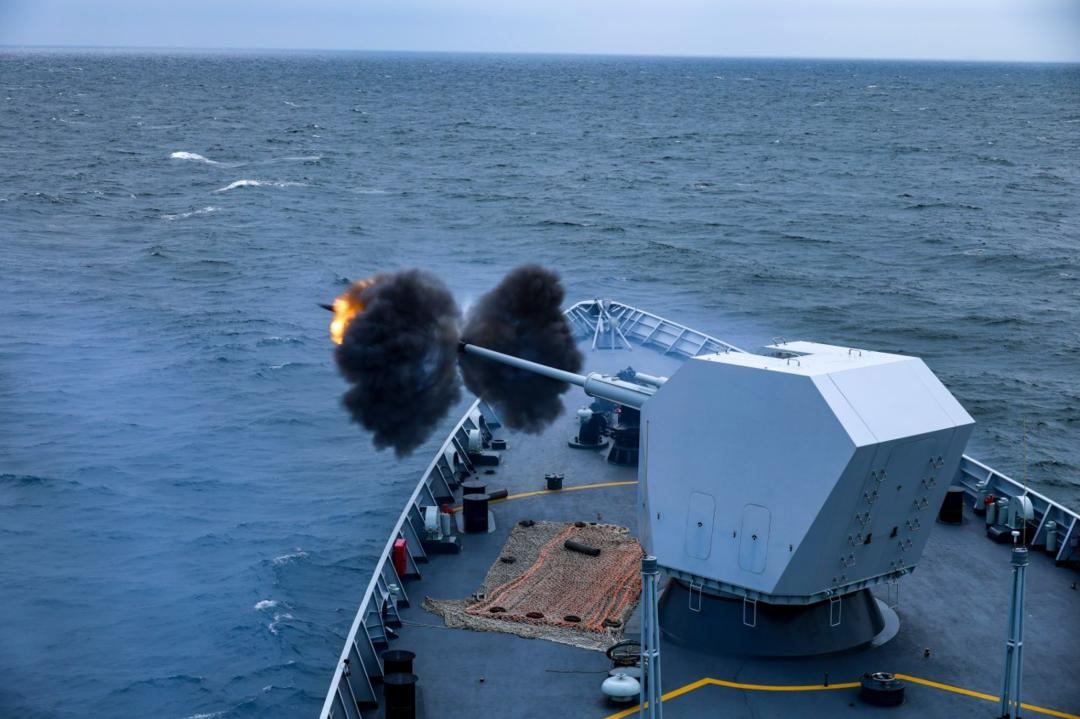
△ Live fire from the main gun.
03
Cooperative Operations from
"Surface" to "Surface + Underwater"
Zhang Junsha: This year's exercise established a joint directing department and a joint command, with participating forces from both sides adopting a mixed grouping approach, building a joint combat system based on multiple platforms at sea, in the air, and underwater, effectively testing and improving the command coordination and firepower strike capabilities of both sides. Notably, both sides dispatched submarines to participate in the exercise, marking an expansion of naval cooperation from "surface" to a three-dimensional combat capability of "surface + underwater."
During the exercise, the simultaneous appearance of submarines from both countries and the participation of rescue submarines were also noteworthy. Military expert Song Xiaojun told reporters that, from an appearance perspective, both countries dispatched relatively advanced conventional submarines. The inclusion of rescue submarines means that if one side's submarine encounters danger near the other's waters, the other side can quickly provide nearby rescue, ensuring mutual maritime safety.
Song Xiaojun: Submarine rescue is a very complex technology, and cooperation between China and Russia in submarine rescue can achieve a greater effect than the sum of its parts. Submarines navigating in the ocean often encounter unexpected situations, and both sides can share resources and communicate rescue information in a timely manner. Additionally, countries with relatively weak submarine rescue capabilities nearby may also join the rescue system in the future.
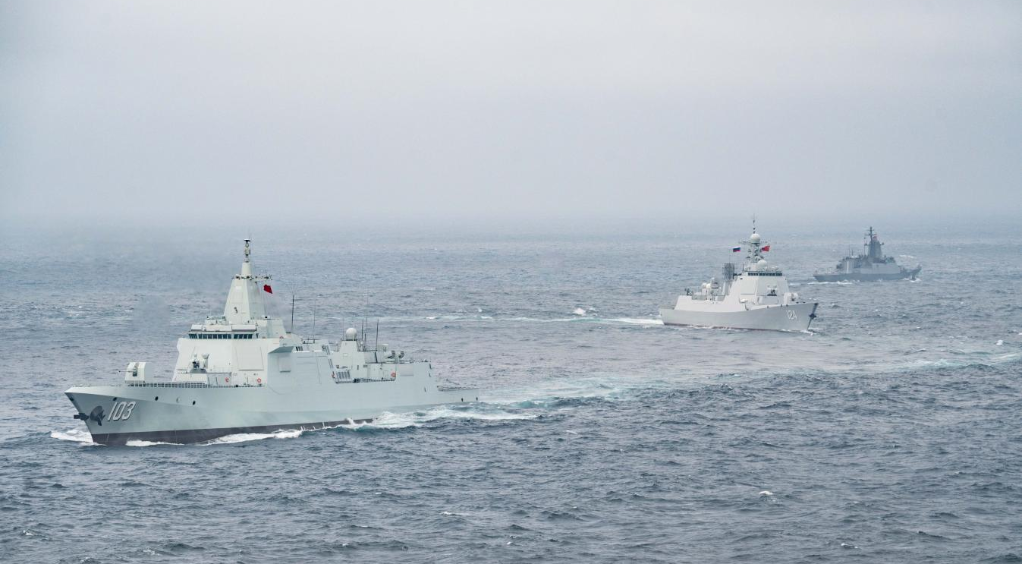
△ On July 10, the participating naval vessels of China and Russia conducted maritime drills.
04
Real-time Data Sharing
Deepening Strategic Mutual Trust
Zhang Junsha: The exercise included joint reconnaissance, early warning, air defense, missile defense, maritime strikes, and submarine rescue drills, with both militaries sharing and exchanging comprehensive battlefield situation data, fully reflecting and further deepening the comprehensive strategic cooperative partnership and strategic mutual trust between China and Russia in the new era.
Song Xiaojun believes that the first simultaneous appearance of submarines from both countries at sea signifies a deepening level of military mutual trust and a continuous expansion of the scope of cooperation.
According to the plan, after the exercise concludes, some forces from both sides will also organize a joint maritime patrol in relevant areas of the Pacific, establishing a complete cooperation chain, focusing on key and difficult subjects of maritime security disposal, and making positive contributions to maintaining international and regional peace and stability.
China and Russia conducted joint naval exercises near Qingdao, concluding on July 11, 2026. This marked the first instance of both nations' submarines operating together at sea, enhancing their collaborative military capabilities. The exercises focused on addressing maritime security threats and included real-time data sharing and joint command structures.
- China and Russia conducted joint naval exercises near Qingdao.
- This exercise marked the first time submarines from both nations operated together at sea.
- The exercises focused on responding to maritime security threats.
- Real-time data sharing and joint command structures were implemented during the drills.
- The exercise included various military capabilities such as reconnaissance and anti-submarine operations.