
China-U.S. Hawaii Maritime Security Consultations 2026: PLA's Far-Sea Operations Need New Safeguards
 Li Minghui
China-U.S. Hawaii Maritime Security Consultation 2026: PLA's Long-Distance Operations Need New Safeguards
From May 28 to 29, the Chinese and U.S. militaries held the 2026 annual maritime military security consultation mechanism working group meeting in Hawaii. The name of this meeting sounds very technical, even a bit dull, but I believe it actually reflects the current real state of the PLA's naval and air forces better than many high-profile exercises: as platforms operate further and contact frequency increases, both sides must recalibrate the operational boundaries of "close but not colliding."
The English version from the Chinese Ministry of Defense stated that both sides had "candid and constructive" exchanges regarding the current maritime and air security situation between China and the U.S., the implementation of the "Code for Unplanned Encounters at Sea" since 2025, and measures to improve maritime military security. The U.S. Indo-Pacific Command's description was more concise: the U.S. Indo-Pacific Command, Pacific Fleet, Pacific Air Forces, and Coast Guard met with representatives of the Chinese People's Liberation Army in Honolulu, focusing on reducing the risks of unsafe and unprofessional encounters. Although the wording differs, both point to the same issue: frontline units are encountering each other too frequently.
The Venue in Hawaii, Signals in the First Island Chain
This meeting was not a sudden diplomatic gesture. The maritime military security consultation mechanism has existed for many years, but what is truly interesting is its context in 2026. In recent months, the density of maritime and air activities in the South China Sea, east of the Taiwan Strait, and around the Bashi Channel has been increasing. The U.S. and its allies emphasize freedom of navigation and overflight, while China repeatedly points to "close reconnaissance" and "provocative infringements." If one only looks at the statements, it is easy to think that both sides are still engaged in a war of words; however, from a military technology perspective, the change is that the contact scenarios have shifted from occasional friction to normalized samples.
In simple terms, previously, when a ship or several aircraft encountered each other in sensitive waters, it was more of a political news story. Now, it has become a tactical process that bridge crews, pilots, and command centers must handle daily. How to communicate over the radio, how many degrees of course change is considered safe, what lateral spacing to maintain between reconnaissance and intercepting aircraft, and how to avoid misjudging each other's turning intentions in fleet formations—these details may not sound as exciting as missile ranges, but they determine whether a crisis can spiral out of control within five minutes.
The PLA Needs More Than Just Tonnage
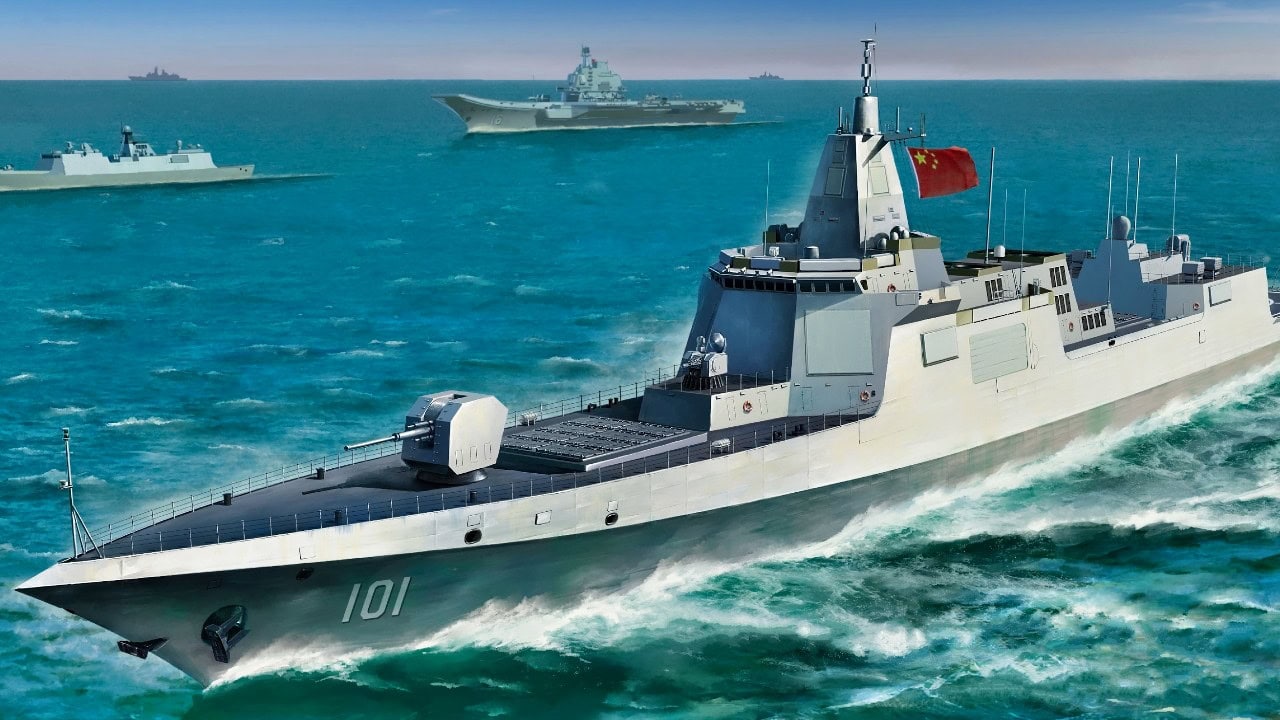
In recent years, discussions about the modernization of the Chinese Navy have often focused on counting ships: Type 055 destroyers, Type 052D series, Type 075 amphibious assault ships, and aircraft carrier groups. This counting is certainly important, as production capacity is a hard indicator. However, this Hawaii meeting reminds us that the maturity of long-distance capabilities has another layer of indicators, namely the ability to absorb rules. A navy's ability to operate in front of the other side's reconnaissance aircraft, drones, coast guard vessels, and allied fleets relies not only on radar power and the number of missile units but also on the procedural discipline of crew members under high-pressure contacts.
I do not fully agree with a popular interpretation that simplifies such consultations as "easing relations." It is more like adding a cooling system to high-power equipment. The equipment is still operating at full capacity; the cooling is not to shut it down but to prevent it from burning out. The PLA's current issue is not whether it has ships deployed, but how to maintain a controllable pace in waters where multiple forces from the U.S., Japan, the Philippines, and Australia are present.
- In the South China Sea, coast guard and navy operations around Scarborough Shoal and Second Thomas Shoal are becoming more frequent, and maritime and air coordination is no longer a temporary response.
- In the Taiwan Strait, Taiwan's defense department continues to announce the activities of PLA aircraft and vessels around the island, with eastern and southwestern routes becoming common tracks.
- In the Western Pacific, the training radius of Chinese aircraft carrier and large surface ship formations has expanded, naturally increasing the probability of contact with U.S. forward-deployed forces.
The Real Shortcoming Lies in Organizational Interfaces
From an equipment perspective, the Chinese Navy does not lack new platforms. The more challenging issue is organizational interfaces: whether the navy, air force, rocket force, coast guard, and even local maritime systems can share the same situational map within minutes. The U.S. units participating in this meeting included the Indo-Pacific Command, Pacific Fleet, Pacific Air Forces, and Coast Guard, which itself indicates that maritime encounters are no longer a single service issue. Although the Chinese side has released less information publicly, the navy's announcement of the meeting also places the safety of frontline operations in a more institutionalized position.
There is a detail that is easily overlooked: the meeting assessed the implementation of relevant behavioral guidelines since 2025, rather than reinventing a set of grand principles. This means that both sides have accumulated enough practical cases that need to be reviewed one by one. For the PLA, the value of such reviews lies not only in communication with the U.S. but also in internal training. If a certain interception action is deemed dangerous by the other side, the issue may not only be the pilot's boldness but could also involve the command chain, identification processes, video recording, and post-event evaluation mechanisms not being fully closed.
The English version from the Ministry of Defense stated that China opposes harming its sovereignty and security under the guise of freedom of navigation and overflight, while also acknowledging that effective communication helps frontline troops execute tasks more professionally and avoid misunderstandings and misjudgments.
Safeguards Will Become Increasingly Important
In the coming year, the importance of such mechanisms may further increase. The reason is simple: as the operational range of Chinese vessels and aircraft expands, the U.S. and its allies are also deploying more sensors, unmanned platforms, and land-based anti-ship firepower to the first island chain. The "human-to-human" interactions at sea are transforming into "sensor-to-sensor, drone-to-drone" interactions. Can the rules for human communication still cover close encounters with unmanned platforms? Are the safety guidelines between coast guard ships and warships consistent? There is currently very little public information on these issues, leading to speculation that both sides are not yet fully prepared.
Therefore, the highlight of this Hawaii meeting is not whether it will suddenly calm the South China Sea or the Taiwan Strait, but rather that it exposes a more realistic fact: the PLA has entered a stage where it must simultaneously expand its capabilities and manage friction. The truly unanswered question is, when unmanned boats, drones, and electronic warfare platforms become the main actors in frontline contacts, how long can today's safety safeguards, centered around manned vessels and aircraft, hold up?
U.S. and Chinese military officials held discussions in Hawaii on May 28-29, 2026, focusing on maritime security and operational protocols to mitigate risks of unsafe encounters. The talks emphasized the rising frequency of military activities in sensitive areas and the need for effective communication to prevent misunderstandings. Both sides recognized the importance of adapting to the evolving maritime security landscape.
- U.S. and Chinese military officials met in Hawaii for maritime security discussions.
- The focus was on reducing risks of unsafe encounters at sea and in the air.
- The discussions highlighted the increasing frequency of military activities in sensitive maritime areas.
- Both sides acknowledged the importance of effective communication to avoid misunderstandings.
- The report indicates a shift from sporadic encounters to more regular military interactions.