
China YY-20 Tanker Video Pushes 2026 Sixth Generation Fighter Threat Past Taiwan
 Marcus Chen
China YY-20 Tanker Video Pushes 2026 Sixth Generation Fighter Threat Past Taiwan
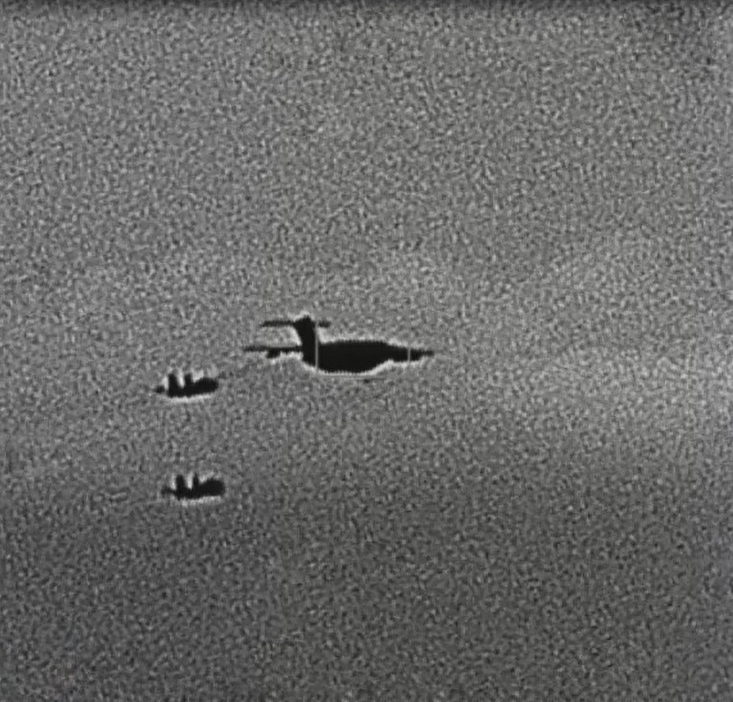
One blurry aircraft beside a YY-20 tanker says more than a clean publicity photo would. China Military Bugle, the official press account of the People Liberation Army, used a four-minute Y-20 anniversary video to show a tailless aircraft widely assessed as a sixth generation fighter moving into an aerial refueling sequence. South China Morning Post reported that the clip used the phrase Little Six, a clear reference to a sixth generation aircraft, after first naming the H-6 bomber.
The fighter is the headline. The tanker is the point.
For a Taiwan contingency, the operational question is not whether China can build a futuristic airframe. It is whether the PLA Air Force can keep combat aircraft alive, armed, and on station far enough east to complicate United States and allied intervention. A YY-20 paired with a next generation fighter is a direct answer to that question. It does not make the aircraft operational today. It does show the direction of Chinese air power in 2026: longer legs, longer patrol windows, and less dependence on bases inside the First Island Chain.
The Tanker Changes The Geography
FlightGlobal laid out the problem in plain terms back when the Y-20U, now generally referred to as the YY-20, first began appearing in operational settings. Distance is the central fact of air war in the Asia-Pacific. China had long relied on a small force of older H-6U tankers and three Il-78s. The H-6U fleet is based on an old bomber airframe, with limited fuel offload and poor endurance compared with modern tankers.
The YY-20 is a different machine. Built from the Y-20 heavy transport, it gives the PLA Air Force a large, indigenous tanker platform that can support J-20s, J-16s, H-6Ns, and now, at least in official messaging, a sixth generation fighter. Open estimates usually put YY-20 transferable fuel around the 90-ton class, while earlier H-6 based tankers were far smaller. Even if exact figures remain uncertain, the order of magnitude matters. A handful of H-6U tankers can support demonstrations. A growing YY-20 force can support campaign planning.
That is the difference between a video and a war plan.
Second Island Chain Math
The First Island Chain from Japan through Taiwan and the Philippines is already inside Chinese missile and aircraft planning. The harder problem is the Second Island Chain, especially Guam. From the Chinese coast to Guam is roughly 3,000 kilometers. A fighter that has to fly out, fight, and return without refueling spends most of its sortie budget on transit. Add aerial refueling and the same aircraft can patrol longer, approach from less predictable axes, escort bombers farther out, or form barrier patrols against United States bombers and cruise missile carriers.
Roderick Lee of the China Aerospace Studies Institute told FlightGlobal that it is extremely difficult to overstate the importance of aerial refueling for future PLA operations, because Beijing wants to deter or defeat United States intervention as far from mainland China as possible. That is exactly the logic shown in the new footage. The YY-20 is not merely extending range. It is moving the forward edge of Chinese air operations eastward.
Anyone who has served on a destroyer knows that range is not an abstract number on a slide. It decides where the carrier air wing can operate, where Aegis ships must stand, how many tankers the United States has to expose, and how quickly the defensive geometry around Guam starts to bend. A Chinese fighter with a refueling option does not have to win every engagement. It has to force American planners to protect more airspace with the same number of aircraft, missiles, and crews.
The Fighter Is Still Not The Fleet
There is a danger in overreading the clip. The aircraft has no official designation. Many observers use J-36 for the Chengdu design, but that remains an outside label. No public evidence proves that it is close to squadron service. The United States Air Force has said its F-47 Next Generation Air Dominance fighter will not make first flight until 2028, while Chinese prototypes have been seen in flight since late 2024. That does not automatically mean Beijing will field the better aircraft first. Prototype tempo and operational maturity are different things.
The same caution applies to the tanker fleet. Janes has reported rapid YY-20 expansion from the first visible aircraft toward a small but growing fleet, and FlightGlobal noted that production capacity at Xian is likely a constraint because the same industrial base must build transports and tankers. A serious Pacific refueling architecture needs dozens of aircraft, trained crews, protected bases, maintenance depth, and command-and-control that works under attack. China is building that architecture, but it is not complete.
Still, incompleteness is not comfort. The United States and its allies have built their Pacific posture around a small number of fixed bases and tanker-dependent air operations. Andersen Air Force Base on Guam, Kadena in Okinawa, and dispersed fields across Japan and the Philippines all assume that Chinese air power has limits. The YY-20 is one of the systems designed to erode those limits.
What Washington Should Count
The useful metric is not how stealthy the tailless aircraft looked in a grainy frame. The useful metric is how many refueling tracks China can sustain east of Taiwan during the first 72 hours of a crisis. Count tankers. Count escort fighters. Count runway repair capacity. Count missiles that can suppress the bases those tankers use. Then count how many United States tankers must be positioned forward to keep F-35s, F-22s, B-21s, and carrier aircraft in the fight.
That calculation is uncomfortable because Washington has its own tanker and basing problem. Long-range concepts sound elegant until a sortie requires multiple refuelings and the tanker itself becomes a high-value target. China is now working the same problem from the other side, but with shorter interior lines and an expanding domestic airlifter base. The YY-20 does not solve every Chinese limitation. It makes several United States assumptions more expensive.
The new video is propaganda, but propaganda can still reveal priorities. Beijing chose to show a next generation fighter not alone, not in a hangar, and not in a clean flyby. It showed the aircraft beside a tanker. That was the real message. China is not just chasing a sixth generation jet. It is trying to build the refueling depth that lets that jet matter beyond Taiwan.
The aircraft may be years from service. The tanker math is already changing.
China showcased a YY-20 tanker alongside a sixth generation fighter in a video, highlighting advancements in aerial refueling capabilities. This development suggests a strategic shift in the People's Liberation Army Air Force's operational reach, particularly concerning potential operations near Taiwan. The YY-20's capabilities are expected to enhance the PLA's ability to conduct extended air operations by 2026.
- China's YY-20 tanker can support next generation fighters, including a sixth generation aircraft.
- The YY-20 tanker significantly enhances the PLA Air Force's operational range and capabilities.
- The video indicates a shift in Chinese air power strategy towards longer patrols and reduced reliance on bases within the First Island Chain.