
China’s 2026 Pacific Push Is Becoming a Permanent Operating Pattern
 S.W
S.WChina’s 2026 Pacific Push Is Becoming a Permanent Operating Pattern
China has conducted four different kinds of military activity across the Western Pacific in barely two weeks: a bomber patrol with Russia, a bilateral naval exercise, coast guard operations east of Taiwan, and a submarine-launched ballistic-missile test that traveled roughly 7,300 kilometers into the South Pacific. The important number is not the missile's range. It is the geographic spread.
Beijing is testing whether operations once treated as exceptional can become routine. That is a more consequential project than any single exercise.
The Activity Is Distributed Across Four Tools
As Channel NewsAsia reported, China and Russia flew a joint bomber patrol over the Sea of Japan, the East China Sea and the western Pacific on June 27, including the Miyako Strait. The patrol used the Xian H-6 bomber, a platform built to carry long-range anti-ship and land-attack weapons. The operational value is straightforward: Japan must watch its northern and southwestern approaches at the same time.
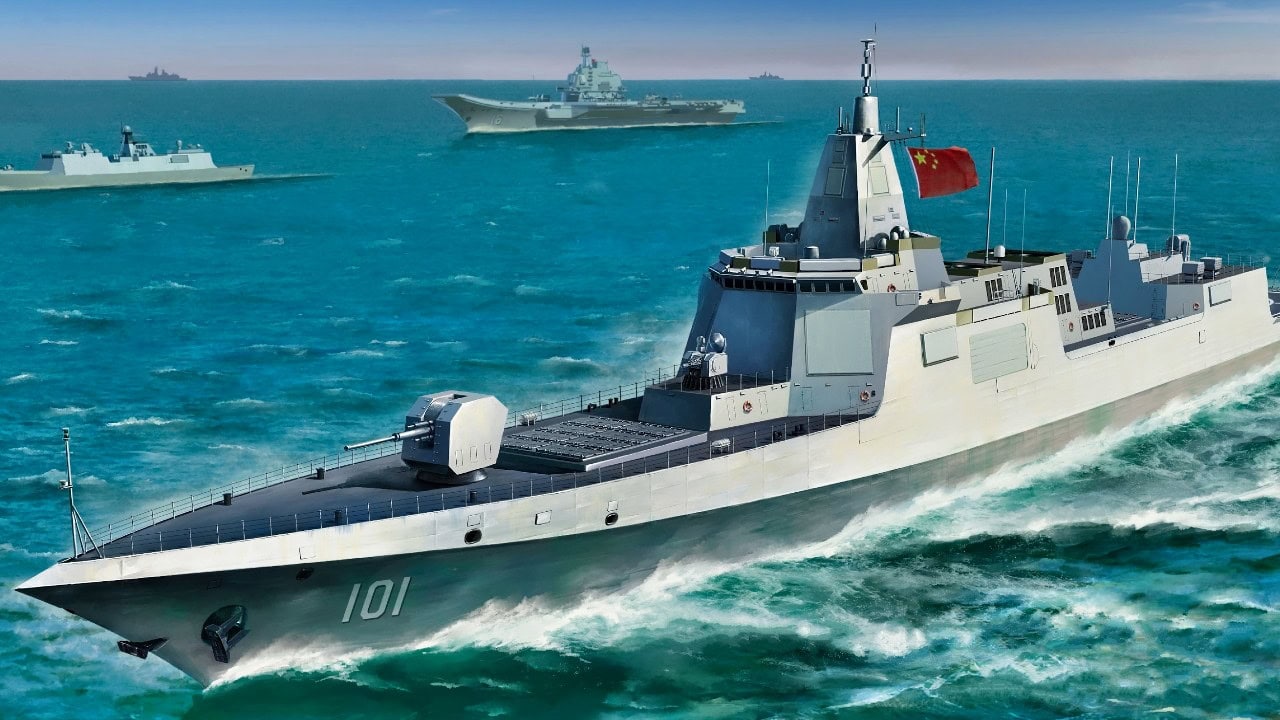
That patrol was followed by Joint Sea-2026 around Qingdao. Defence Security Asia identified a Chinese force including Type 052D guided-missile destroyers, a Type 054A frigate, a Type 903 replenishment ship, a submarine and rescue vessels, alongside Russian Pacific Fleet ships. The inventory matters because it was not just a photo opportunity. A replenishment ship, submarine rescue assets and helicopters are the pieces required to practice endurance, anti-submarine warfare and recovery in a real task-group cycle.
Then came the less theatrical but politically sharper activity: China Coast Guard vessels operating east of Taiwan. Those patrols are different from a PLA Navy exercise. They are a claim about jurisdiction, not merely a demonstration of firepower. A coast guard presence can be described by Beijing as law enforcement, while still creating a record of Chinese activity on the Pacific side of Taiwan.
Finally, CNA reported that a long-range ballistic missile launched from a nuclear-powered submarine flew approximately 7,300 kilometers before landing in international waters. The test reportedly carried a simulated warhead. It should not be treated as proof that China has solved every problem in sea-based nuclear deterrence, but it is a useful demonstration of reach, command authority and willingness to operate outside the usual near-seas narrative.
Routine Is the Weapon
These events should not be mistaken for one centrally directed operation. They involved different Chinese services, agencies and planning cycles. The evidence supports a coherent direction, not demonstrated operational integration. That distinction matters. An integrated campaign would require shared targeting, communications and timing. A pattern of separate activities can still impose costs without reaching that level.
The cost is measured in surveillance hours and contingency planning. A U.S. or Japanese commander must allocate sensors to track bombers near Japan, surface ships moving through island-chain straits, coast guard vessels east of Taiwan and submarines operating toward the Pacific. None of those missions requires China to fight. Together, they force the other side to keep more aircraft, ships and analysts ready for longer.
For Japan, the geography creates a two-front problem. Chinese aircraft and naval forces can pressure the southwestern islands while Russian participation complicates the northern picture. For Taiwan, the coast guard patrols challenge the assumption that the island's eastern approaches are politically separate from the waters Beijing wants to control in a blockade scenario. For the United States, the message is that access west of the second island chain cannot be planned as an uncontested transit problem.
The Capability Gap Is Still Real
There is a danger in reading presence as control. A bomber patrol does not establish air superiority. A destroyer group does not provide continuous sea control. A coast guard ship east of Taiwan is vulnerable if a conflict turns kinetic. And a single missile test says little about the survivability of an entire ballistic-missile-submarine force.
China still has to solve the hard naval problems: finding submarines, protecting logistics, maintaining secure communications under electronic attack and sustaining forces far from shore-based air cover. A Type 903 replenishment ship helps with endurance, but one support ship cannot create an oceanic logistics network. The same arithmetic applies to the submarine force. A credible deterrent needs patrol availability, trained crews, reliable missiles and a survivable command-and-control chain, not just a long flight path.
That is why the current pattern should be judged by cadence. One missile test is a signal. Repeated tests, regular undersea deployments and a continuously present coast guard task group would indicate doctrine. The distinction is the difference between messaging and a new operating posture.
What Washington and Its Allies Should Watch
- Persistence: whether Chinese coast guard groups remain east of Taiwan for weeks rather than appearing only during a news cycle.
- Support infrastructure: whether China adds tankers, tenders and repair access to its Pacific deployments.
- Undersea activity: whether more submarine-launched missile tests or persistent autonomous underwater vehicles appear in the region.
- Alliance friction: whether Japan, the Philippines and Australia can share maritime surveillance without duplicating the same expensive coverage.
CSIS tracking has already shown that China's regional military activity has been increasing in tempo and geographic reach. The latest cluster adds a different variable: normalization across services and audiences. Beijing is not sending one message to one capital. It is making Japan think about air and sea pressure, Taiwan think about eastern encirclement, Washington think about intervention costs and Pacific states think about China's staying power.
Conclusion
The question is no longer whether China can reach beyond the first island chain. It can. The question is whether it can make that reach sustainable, repeatable and politically difficult to challenge.
The answer is not yet proven. But the test is underway. If these deployments fade with the summer exercise season, they were demonstrations. If the ships, aircraft and submarines return on a schedule—and if the logistics improve—the Western Pacific is moving from episodic Chinese access to a standing Chinese presence. That is the shift U.S. planners should be budgeting for now, before the pattern becomes normal.
Sources: Channel NewsAsia, “What China’s latest military moves reveal about its broader strategy”; Defence Security Asia, “China-Russia Joint Sea-2026”; CSIS ChinaPower, “Tracking China’s Increased Military Activities in the Indo-Pacific.”
China conducted a series of military activities in June 2026, including joint bomber patrols with Russia over the Sea of Japan and East China Sea, naval exercises near Qingdao, and coast guard operations east of Taiwan. A ballistic missile test demonstrated a range of 7,300 kilometers, indicating China's expanding military reach. These actions suggest a shift towards a more permanent military presence in the Western Pacific, challenging regional security dynamics.
- China and Russia conducted a joint bomber patrol over the Sea of Japan and East China Sea.
- China's naval exercise involved multiple types of vessels including destroyers and submarines.
- Coast guard operations east of Taiwan signify a claim of jurisdiction.
- A ballistic missile test demonstrated a range of approximately 7,300 kilometers.
- China is testing the normalization of military operations in the Western Pacific.