
China's 2026 SLBM Test Moves Nuclear Deterrence Into the Pacific
 Marcus Chen
China's 2026 SLBM Test Moves Nuclear Deterrence Into the Pacific
At 12:01 p.m. on July 6, the People's Liberation Army Navy launched a ballistic missile from a nuclear-powered submarine into the Pacific. Beijing called it routine annual training. That is the least interesting part of the event.
The important part is the platform. A land-based intercontinental ballistic missile test signals range. A submarine-launched ballistic missile, or SLBM, signals survivability. If China can put a reliable nuclear missile boat into the Pacific, it is not just adding another weapon to the order of battle. It is trying to make its nuclear force harder to find, harder to preempt, and more politically useful in a crisis with the United States.
The Likely Boat and Missile
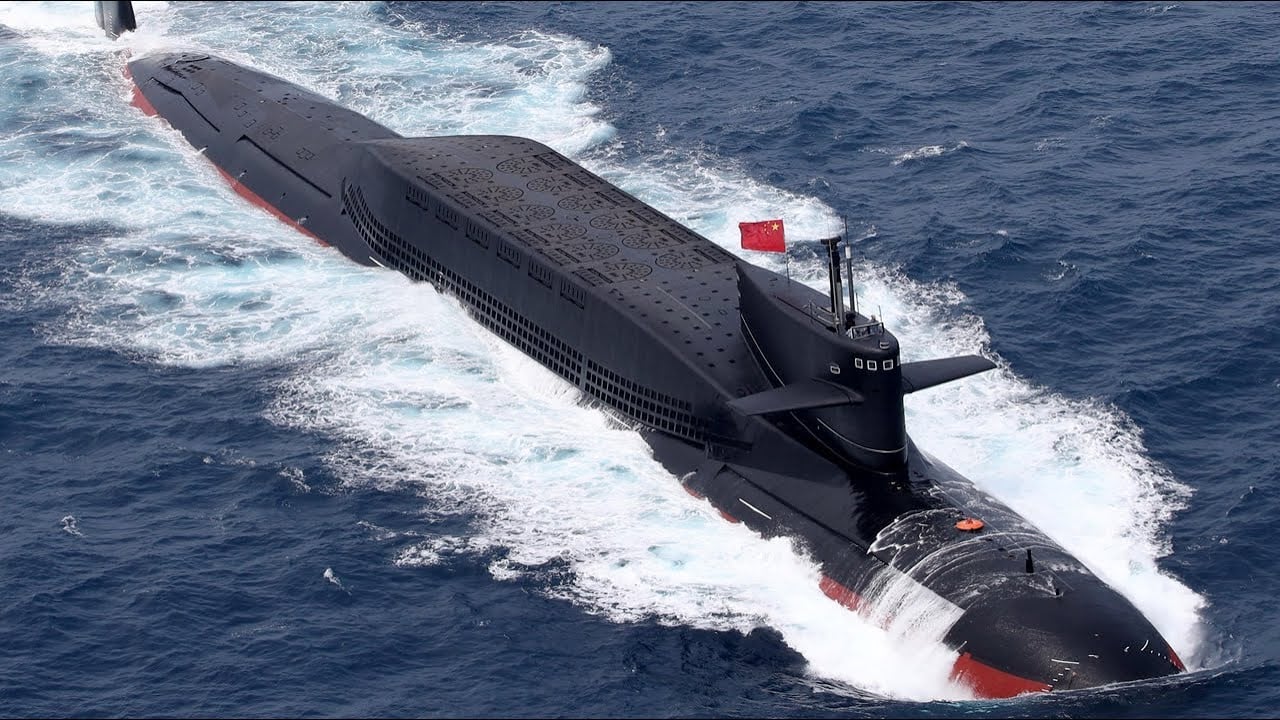
Janes reported that the missile carried a simulated warhead and landed in a designated Pacific impact area after advance notification to relevant countries. The official Chinese statement did not identify the missile type, submarine class, or launch location. That omission matters, but it does not leave many plausible options.
The most likely submarine is the Type 094 Jin-class ballistic missile submarine. Janes assesses that China operates six Type 094 SSBNs, each able to carry up to 12 SLBMs. The follow-on Type 096 is believed to be under development, but there is no public evidence that it has entered operational service. That makes a Type 094 the working assumption.
The missile is harder to identify. The older JL-2 has enough range to threaten regional targets and parts of the United States from exposed patrol areas. The newer JL-3, if fielded as widely assessed, changes the patrol geometry. A missile with intercontinental range lets a Chinese SSBN remain closer to protected waters while still holding distant targets at risk. That is the difference between a force that has to break out and a force that can sit inside a defended bastion.
That distinction is not academic. Anyone who has served on a destroyer knows the ocean is big until the mission is anti-submarine warfare. Then every mile of uncertainty becomes a demand for aircraft, surface ships, undersea sensors, and time. A quieter submarine with a longer-ranged missile increases the search problem faster than the United States and its allies can add platforms.
Why the Pacific Shot Matters
The Associated Press reported that Australia, Japan, and New Zealand criticized the launch. New Zealand said it had been informed only hours beforehand and noted that the missile was fired into the South Pacific Nuclear Free Zone. Australia called the test destabilizing. Japan linked the launch to broader concerns about Chinese military activity and transparency.
China's answer was predictable: the launch complied with international law, carried a dummy warhead, and was not directed at any specific country. That may all be true in the narrow legal sense. It is also beside the point.
Missile tests are messages. This one told Washington that China's nuclear deterrent is no longer a primarily land-based problem. It told Canberra and Wellington that the South Pacific is not insulated from major-power nuclear signaling. It told Tokyo that the same PLA Navy already operating around the first island chain is also practicing longer-range nuclear missions beyond it.
The 2024 Chinese ICBM test into the Pacific was widely read as a public assertion of strategic reach. The 2026 SLBM test is more operationally interesting because it points to the undersea leg of the force. Land-based missiles can be counted in silos, launchers, and brigades. SSBNs are counted in patrol days, acoustic signatures, crew proficiency, and whether the boat can receive orders without giving itself away.
The Math Is Still Unfavorable for Beijing
There is a temptation to treat one successful public test as proof that China now has a mature sea-based nuclear deterrent. That overstates the case. A credible SSBN force requires more than six hulls and a missile that can reach far enough.
Start with hull availability. Six SSBNs do not mean six boats on patrol. One will be in deep maintenance. Another may be in shorter maintenance or training. Some will be preparing to deploy or recovering from patrol. A navy with six SSBNs may be able to keep one or two at sea with any regularity, depending on maintenance cycles, crew model, and basing. The United States and Russia learned over decades that continuous at-sea deterrence is an industrial and personnel system, not just a submarine inventory.
Then there is geography. China's SSBN bases sit behind contested approaches. If a Type 094 patrols from the South China Sea, it benefits from nearby air cover, surface escorts, maritime militia, seabed sensors, and shore-based missiles. It also remains in a crowded and monitored theater. If it tries to push farther into the Philippine Sea or the wider Pacific, it gains maneuver space but moves into areas where U.S., Japanese, Australian, and allied anti-submarine warfare networks can concentrate.
The Type 094 itself is not a magic asset. Open-source assessments have long treated it as a step forward from China's first-generation SSBN, not as an Ohio-class equivalent. Noise, command-and-control procedures, crew experience, and patrol discipline are what determine whether an SSBN is a survivable deterrent or a high-value contact waiting to be trailed.
That is the real question after July 6: not whether China can fire a missile from a submarine, but whether it can send SSBNs to sea often enough, quietly enough, and under command arrangements stable enough to make U.S. planners assume they will survive a first strike.
What Washington Should Take From It
The Pentagon already assesses that China's nuclear arsenal is expanding rapidly. Reporting on the latest China military power assessment put the stockpile at roughly 600 warheads in 2024, with Beijing still on track for more than 1,000 by 2030. The undersea leg matters because it makes that growing arsenal less vulnerable and more crisis-relevant.
For U.S. Indo-Pacific Command, this argues for less theater rhetoric and more anti-submarine capacity. P-8A patrol aircraft, Virginia-class attack submarines, undersea sensor networks, Japanese destroyers, Australian basing access, and Guam's logistics resilience matter more than another communique about deterrence. A Chinese SSBN sortie is not countered by a speech. It is countered by a persistent maritime picture and enough platforms to act on it.
For Australia, the test cuts both ways. It strengthens the logic behind AUKUS, because a Pacific with Chinese nuclear submarines is exactly the environment where Australia wants long-range undersea reach. It also exposes the AUKUS schedule problem. If the regional SSBN problem is arriving now and Australia's nuclear-powered attack submarine capability arrives in the 2040s, the alliance has a two-decade gap to fill with U.S. and British rotations, P-8s, sensors, and munitions stockpiles.
For China, the test is useful but incomplete. It shows progress. It does not prove continuous deterrent patrols. It shows range. It does not prove quietness. It shows political confidence. It does not erase the operational challenge of moving ballistic missile submarines through waters watched by the most experienced anti-submarine coalition in the world.
That is why this test should be taken seriously without being inflated. The balance has not flipped overnight. But the direction is clear. Beijing is building a nuclear force that is larger, more mobile, and less dependent on fixed launch sites. The United States and its allies can still track and complicate that force, but the price of doing so is going up.
The Pacific just became a more demanding anti-submarine problem. That is the operational message behind the July 6 launch.
Sources
- Janes, July 6, 2026, on China's submarine-launched strategic missile test.
- Associated Press via U.S. News, July 6, 2026, on regional reactions from Australia, Japan, and New Zealand.
- Arms Control Association summary of the Pentagon's latest China military power assessment on China's nuclear warhead growth.
On July 6, 2026, the People's Liberation Army Navy launched a submarine-launched ballistic missile from a Type 094 Jin-class submarine into the Pacific Ocean during routine training. The missile, which carried a simulated warhead, landed in a designated impact area. This test has raised concerns among Australia, Japan, and New Zealand regarding regional stability and China's expanding nuclear capabilities.
- China launched a ballistic missile from a nuclear-powered submarine into the Pacific on July 6, 2026.
- The missile carried a simulated warhead and landed in a designated impact area.
- The likely submarine involved is the Type 094 Jin-class, with six operational units.
- The test was criticized by Australia, Japan, and New Zealand for its destabilizing implications.
- The test signifies China's intent to enhance its nuclear deterrent capabilities in the Pacific.