
China’s Liaoning Drill Tests a Taiwan Blockade in 2026
 Marcus Chen
China’s Liaoning Drill Tests a Taiwan Blockade in 2026
More than 100 Chinese naval and coast-guard ships went to sea across the waters around Taiwan, the South China Sea, the East China Sea, and the Philippine Sea. The important detail is not the headline number. It is the geometry. Taiwan says the Liaoning aircraft carrier moved into the Western Pacific while another force encircled the island. That looks less like a demonstration aimed at Taiwan alone and more like a rehearsal for keeping outside forces away.
That is the real military problem. Beijing does not need to begin with an amphibious assault to create a Taiwan crisis. It can first try to turn the island into an operationally isolated target, forcing Washington and its allies to fight their way into the theater before they can help.
The Drill Was Built Around Separation
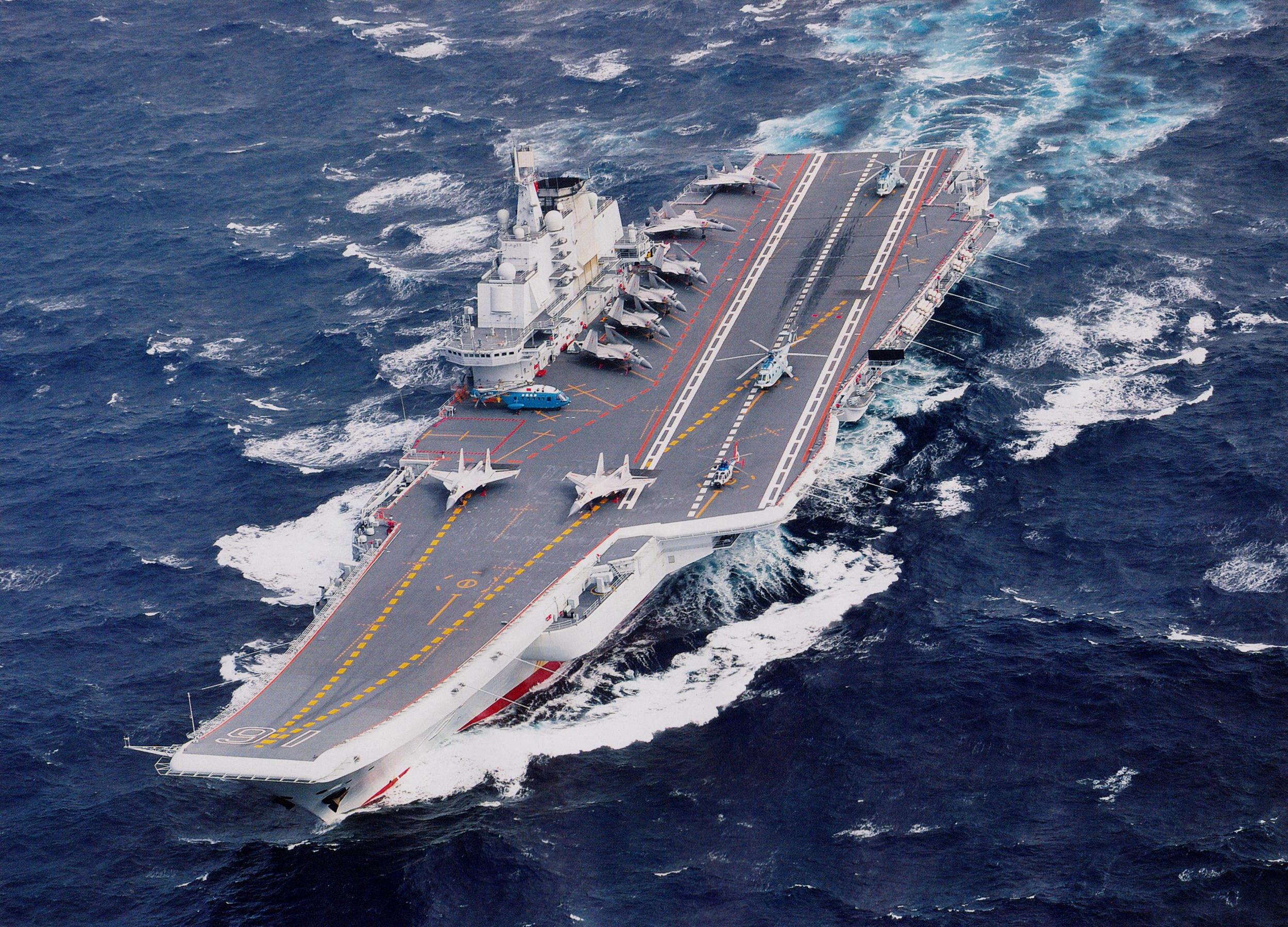
According to The Maritime Executive, the November exercise drew on ships from the PLA Navy’s Eastern, Northern, and Southern Theater Commands. Taiwan’s National Security Council secretary general Joseph Wu said more than 100 PLA Navy and China Coast Guard vessels were at sea on November 3. One group accompanied the Liaoning into the Pacific; another formed a cordon around Taiwan, with additional forces operating in the South China Sea and East China Sea.
The unannounced nature of the movement matters. A scheduled exercise tests a plan under controlled political conditions. A sudden coastwide deployment tests whether commanders can generate forces, move them through chokepoints, and establish a usable maritime picture before an opponent has time to respond. The drill therefore measured mobilization and access, not just gunnery or flight operations.
Liaoning Is a Sensor and Airpower Node
The Liaoning is not the equal of a US nuclear-powered carrier. It is a roughly 60,000-ton conventional carrier with a ski-jump bow, no catapults, and a smaller usable aircraft load than a US carrier strike group. Its J-15 fighters carry meaningful air-defense and anti-ship capability, but the ski-jump launch limits fuel and weapons compared with catapult-launched aircraft.
That limitation does not make the ship irrelevant. In a blockade scenario, Liaoning’s value is not to defeat an American carrier by itself. It can extend China’s fighter coverage, provide a moving radar and command node, and complicate the approach of US and Japanese aircraft. Supported by land-based fighters, long-range anti-ship missiles, submarines, and maritime patrol aircraft, a carrier operating east of Taiwan adds another layer to an access-denial system.
The arithmetic is cumulative. A US carrier approaching from the Philippine Sea would face aircraft launched from the mainland, missiles covering predictable routes, submarines operating ahead of the fleet, and a carrier force that can move the threat picture farther east. None of those systems has to be perfect. They only have to force an intervening force to spend time, aircraft, escorts, and missile defenses before it reaches Taiwan.
This Was Not Yet a Blockade
Calling the event a blockade would overstate what is known. There is no evidence in the available reporting that China stopped commercial shipping, closed Taiwan’s ports, or sustained a coercive cordon. The exercise also does not prove that Beijing has solved the harder problem of maintaining a blockade under attack.
But the exercise is still significant because it exposed the sequence China may prefer. The first move could be an ambiguous maritime quarantine or “law enforcement” operation, backed by naval and air forces. That would give Beijing room to claim it was enforcing domestic authority while presenting the United States and Japan with an immediate escalation decision. A force that waits for a clear invasion signal may already have surrendered the initiative.
Taiwan’s defense minister Wellington Koo told Reuters that China had conducted area-denial drills in the Western Pacific and said they threatened peace and stability. The statement is precise. It describes the operational effect without pretending that a drill equals an attack.
The US and Japan Face the Same Timing Problem
For the United States, the question is not whether it can eventually break a maritime cordon. It is whether it can do so quickly enough while protecting its carriers, tankers, bases, and communications. Japan faces an even more immediate problem: the western Pacific approaches run through waters and airspace close to its southwestern islands, while any decision to support US operations would expose Japanese bases to Chinese strikes.
That makes the first 72 hours decisive. Washington and Tokyo need persistent surveillance, dispersed aircraft, protected fuel and weapons stocks, and preplanned escort routes before a crisis begins. Political statements after ships are already at sea will not substitute for access arrangements and ready forces.
The Warning Hidden in the Drill
China’s exercise did not demonstrate that a Taiwan blockade would succeed. It demonstrated that Beijing is practicing the part of the campaign that comes before an invasion: separating Taiwan from the outside world and making intervention expensive.
The distinction matters. A carrier such as Liaoning does not need to dominate the Philippine Sea to be useful. It only needs to make US and Japanese planners account for one more mobile airpower node while land-based missiles and aircraft do the heavy work. That is a manageable problem in a war. It is a dangerous problem if discovered after the crisis starts.
The next test is endurance. Can China sustain a dispersed cordon for weeks, protect its logistics, replace missile salvos, and keep commercial pressure on Taiwan without triggering a wider war? Until those questions are answered, the drill remains a rehearsal rather than a blockade. But the rehearsal is becoming harder to dismiss. The geography is already visible, and the time available for the United States and Japan to react is shrinking.
Sources
China conducted a naval drill involving over 100 ships around Taiwan on November 3, 2026, simulating a blockade scenario. The Liaoning aircraft carrier participated, moving into the Western Pacific while other forces encircled Taiwan. This exercise aimed to assess mobilization and operational isolation capabilities, raising concerns about regional security and intervention costs for the U.S. and Japan.
- China deployed over 100 naval and coast-guard ships around Taiwan.
- The Liaoning aircraft carrier moved into the Western Pacific.
- The drill aimed to simulate a blockade and assess mobilization capabilities.
- Taiwan's defense minister expressed concerns about the drills threatening peace.
- The exercise did not constitute a formal blockade but indicated preparation for potential isolation.