
China's Type 094 Nuclear Submarine Completes July Submarine-Launched Long-Range Missile Test, PLA's Sea-Based Nuclear Deterrence Shortcomings Shift to Anti-Submarine Barrier
 Li Minghui
China's Type 094 Nuclear Submarine Completes July Submarine-Launched Long-Range Missile Test, PLA's Sea-Based Nuclear Deterrence Shortcomings Shift to Anti-Submarine Barrier
On July 18, the South China Morning Post continued to discuss China's July 6 launch of an intercontinental submarine-launched ballistic missile from a nuclear-powered submarine. This detail is more worth noting than many lively aircraft carrier news: if the reports are accurate, China has advanced its sea-based nuclear deterrence from "whether or not" to "whether it can maintain stable presence, concealment, and launch."
Public information remains limited. SCMP states that external analysts believe the launch platform may be the Type 094 "Jin" class strategic nuclear submarine, with missiles capable of intercontinental range; on July 7, the paper reported that the missile flew towards the deep Pacific, with signal targets not only including the United States but also Japan, Australia, and South Pacific island nations. The author believes that the real highlight is not how far a single missile flew, but whether the Chinese Navy is preparing its next generation of sea-based nuclear forces to master the most challenging lesson: maintaining underwater survival for strategic nuclear submarines during predictable patrol cycles.
The Value and Limitations of the Type 094
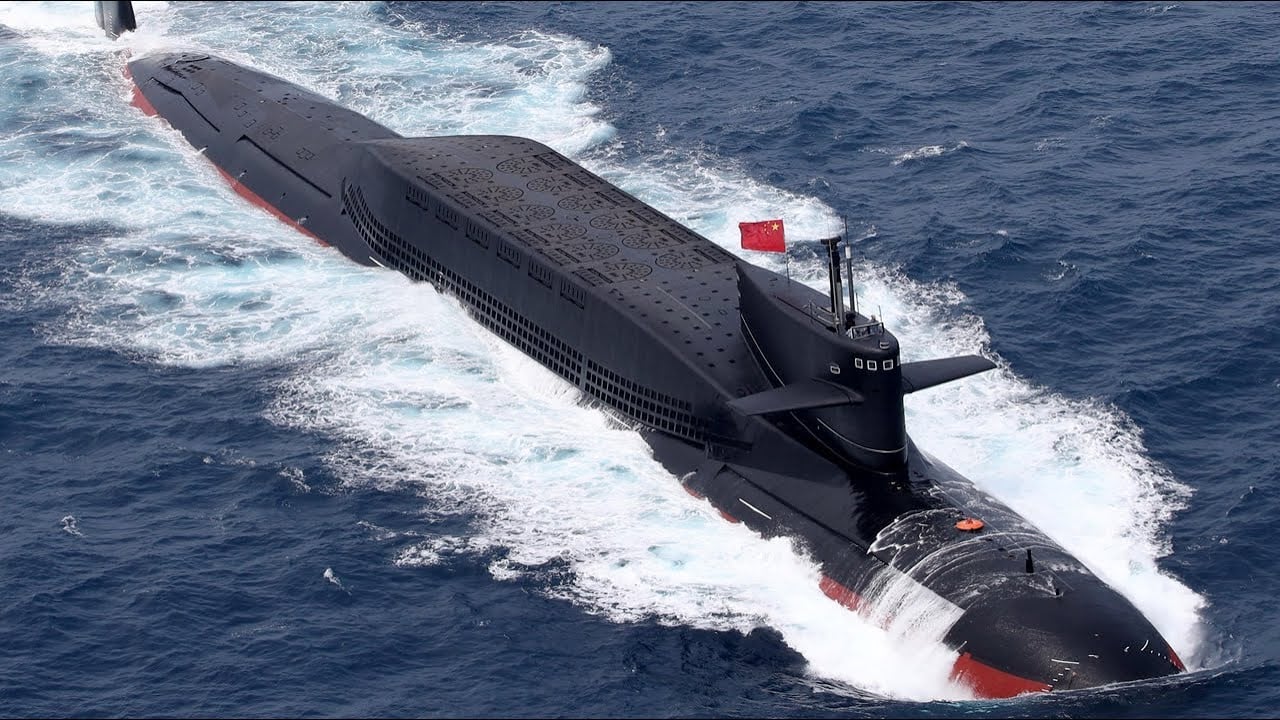
The Type 094 is not a perfect strategic nuclear submarine. Western public data has long suggested that it still lags behind the U.S. Ohio class and later Russian models in terms of stealth capabilities, and earlier Type 094s were considered reliant on operations within nearshore "fortress sea areas." In simple terms, while the missile range can extend the strike line outward, if the submarine itself is easily detected by enemy attack submarines, P-8A anti-submarine patrol aircraft, and fixed sonar nets, the deterrent effect will be diminished.
This is also why a seemingly ordinary training report from the Chinese military network on July 14 becomes interesting when viewed alongside the submarine-launched missile test. The report stated that in a certain area of the South China Sea, naval aviation anti-submarine patrol aircraft and submarine forces organized cross-day-and-night confrontation training, deploying multiple sonar buoys, with submarines conducting maneuvers in interference and complex terrain, ultimately leading to the anti-submarine aircraft locking onto targets and simulating strikes. The official report did not disclose the aircraft type, but terms like "task cabin positions," "sonar buoy array," and "flight data, sonar record review" clearly indicate that this was not a simple flight training exercise.
The Other Half of Sea-Based Nuclear Deterrence is Anti-Submarine
Many people discussing sea-based nuclear capabilities focus solely on missile types. For example, JL-2, JL-3, their ranges, and whether they can cover the U.S. mainland. However, from an engineering perspective, strategic nuclear submarines are a system that includes at least three layers of capability: hull stealth and communication, missile reliability, and anti-submarine barriers in the operating sea area. The first two are primarily addressed by shipyards, missile research institutes, and the electronics industry, while the third relies on naval aviation, surface ships, conventional submarines, underwater sensors, and shore-based intelligence systems working together.
The Chinese Navy's past shortcoming has precisely been in the third area. The complex hydrological conditions in the South China Sea favor submarine concealment, but they also complicate anti-submarine searches; outside the first island chain, U.S.-Japan-Australia anti-submarine forces are active. If the Type 094 is to transition from nearshore deterrence to more distant sea areas, it cannot rely solely on "going far," but must also depend on clearing exit channels, tracking enemy submarines, supplying sonar buoy consumables, and integrating data links. This number may not seem exciting, but it is very concrete: a single high-intensity anti-submarine patrol could consume dozens of sonar buoys, and the buoys themselves are high-tech consumables.
Production Capacity Issues are More Realistic than Launch Videos
From the perspective of the military supply chain, China is currently facing not whether it can produce a long-range submarine-launched ballistic missile, but whether it can synchronize the production of Type 094, the future Type 096, submarine-launched missiles, nuclear reactor maintenance, special steel, soundproof tiles, towed array sonar, and naval anti-submarine aircraft. Sea-based nuclear deterrence is not like a military parade; missing a single link can affect operational readiness. The U.S. was able to maintain continuous patrols of ballistic missile submarines during the Cold War due to the long-term industrial operation of shipyards, logistics, training, intelligence, and communications.
This is also why I maintain a cautious judgment regarding this test launch. It indicates that China has developed a more mature capability for demonstrating long-range strike from submarines, but it cannot directly lead to the conclusion that "stable second-strike nuclear capability has been fully formed." The number of Type 094 platforms, their stealth levels, missile types, and whether live-fire launches come from a state of combat readiness are all insufficiently disclosed public information. Overinterpreting a single missile and completely ignoring its political signals are both unrigorous.
In the July 14 anti-submarine training report from the Chinese military network, participating units emphasized the need to enhance combat capabilities in a "complex electromagnetic environment"; the SCMP's July 18 commentary reminded that submarine-launched intercontinental missile tests, while enhancing defense capabilities, also bring higher nuclear risk management responsibilities.
The Implications for the Taiwan Strait and Western Pacific
For the Taiwan Strait, sea-based nuclear capabilities are not tools directly used for conventional landing operations, but they will change the crisis threshold. If Beijing believes its second-strike nuclear capability is more reliable, it may be able to withstand higher external pressures during conventional conflicts; conversely, the U.S. and Japan will also strengthen their monitoring of the South China Sea, Bashi Channel, and underwater passages in the Western Pacific. In the coming years, we are likely to see a competition that may not make headlines but is crucial: a race involving anti-submarine aircraft, unmanned underwater vehicles, fixed underwater sound arrays, and space-based ocean surveillance systems.
The truly important question is not what type of missile China launched this time, but whether, before and after the next similar test, there will be more comprehensive escort, anti-submarine, and long-range communication support actions in the South China Sea. If the answer is affirmative, it indicates that the focus of the PLA's sea-based nuclear deterrence has shifted from "launching missiles from submarines" to "systematically protecting submarines."
China's Type 094 nuclear submarine successfully launched an intercontinental ballistic missile on July 6, 2023, in the South China Sea. This test marks a significant advancement in China's naval nuclear deterrent capabilities, emphasizing the need for effective anti-submarine warfare to ensure operational success. The missile's trajectory towards the deep Pacific indicates a strategic shift in deterrence posture.
- China's Type 094 nuclear submarine successfully launched an intercontinental ballistic missile on July 6, 2023.
- The missile flew towards the deep Pacific Ocean, signaling a broader deterrent capability.
- The report emphasizes the importance of anti-submarine warfare capabilities for the effectiveness of nuclear deterrence.
- China's naval nuclear deterrent is evolving from mere existence to reliable operational capability.
- The report highlights the challenges of maintaining submarine stealth and operational readiness.