
Continue to Block the Strait of Hormuz, Suggest Neighbors to Close U.S. Military Bases, Iran's New Supreme Leader Issues First Statement

[Global Times Special Correspondent in the U.S. Feng Yaren, Global Times Reporter Xian Yifan, Global Times Special Correspondent Wen Yuan] Iran's Supreme Leader Mojtaba Khamenei stated on the 12th that Iran will not give up on revenge and will continue to use the blockade of the Strait of Hormuz as a means, suggesting that neighboring countries should quickly close local U.S. military bases. This is the first statement made by Mojtaba since assuming the position of Supreme Leader. U.S. media reported that this new Supreme Leader had never issued any written statements before due to concerns about revealing his location and jeopardizing his safety. Some Iranian officials indicated that Mojtaba is currently hiding in a highly secure location, with contact with the outside world kept to a minimum. Previously, U.S. intelligence assessed that after nearly two weeks of intense bombing by the U.S. and Israel, the Iranian regime remains stable, with no risk of collapse in the short term. The Australian website "The Conversation" commented that if this war against Iran is ultimately seen as having only severely damaged the Iranian military while allowing its government to still have the capacity to rebuild its military strength, it will be difficult for the U.S. government to justify the enormous cost of the war.
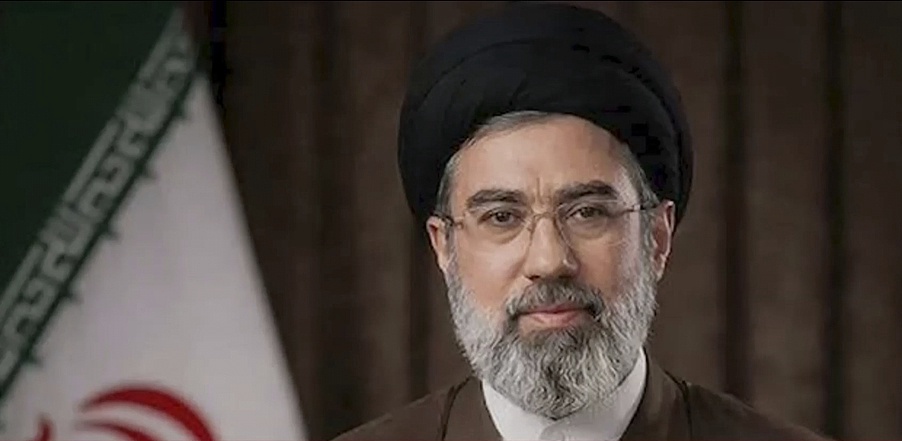
Mojtaba: The Responsibility of the Supreme Leader is Heavy
The newly appointed Supreme Leader of Iran, Mojtaba Khamenei, issued his first statement through national television on the 12th. In the statement, he first expressed condolences for the martyrdom of his predecessor, Ali Khamenei, and stated that succeeding to this position carries significant responsibility. He expressed sympathy for those harmed in the war and promised to take revenge for the victims. He also sincerely thanked the Iranian military and the armed forces of the "Resistance Front," stating that he would continue to use the blockade of the Strait of Hormuz as a "strategic lever" and would open new fronts if necessary.
Mojtaba emphasized that neighboring countries should quickly close U.S. military bases, as the U.S. claims about establishing security and peace are nothing but lies. Iran hopes to maintain friendly and sincere relations with neighboring countries, with targets limited to hostile military facilities.
The U.S. Consumer News and Business Channel reported that this is the first statement made by Mojtaba since he became the Supreme Leader of Iran. Previously, his father, Ali Khamenei, died in the U.S.-Israeli attack on Iran on February 28. Mojtaba was injured in the attack. Iranian Foreign Ministry spokesman Baghaei stated in an interview with Italy's "Evening Post" on the 12th that Supreme Leader Mojtaba is "injured but in good condition."
According to the Iranian Fars News Agency, on the evening of the 11th, Israeli drones launched an attack on Tehran, resulting in the deaths of several security forces and militia members. On the 12th, the Israeli military stated that it had launched a new round of "large-scale" airstrikes within Iran. Meanwhile, the U.S. military hinted that it might strike Iranian ports next. The U.S. Central Command called on Iranian civilians to stay away from ports along the Strait of Hormuz on the 11th.
The Iranian "Real Commitment-4" operation continues on the 13th day of the conflict. According to the Iranian Mehr News Agency on the 12th, earlier that day, ballistic missiles launched by Iran hit over 50 targets in various locations, including Haifa, Tel Aviv, and Beersheba in Israel. The Iranian Islamic Revolutionary Guard Corps also stated on the 12th that earlier that morning, a tanker flying the flag of the Marshall Islands, owned by the U.S., was attacked in the northern Persian Gulf for ignoring warnings from the Revolutionary Guard.
U.S. Intelligence Report: The Iranian Regime Remains Stable
U.S. President Trump stated in a phone interview with the U.S. Axios news website on the 11th that the war with Iran will end soon because "there are actually no targets left to strike," and "some minor things... as soon as I want to end it, it will end."
Israeli Defense Minister Katz expressed a different view on the future of the war on the same day: "The operation will not have a time limit; it will continue as long as necessary until we achieve all our goals and win the campaign." The "Times of Israel" reported that according to some reports, Israeli officials are concerned that Trump may decide to end the war prematurely, which Israel does not want, as it would prevent the achievement of Israel's key goal of overthrowing the Iranian regime.
On the 11th, Trump claimed at a rally in Kentucky that the U.S. had won the war against Iran, stating, "The war ended in the first hour." However, he also stated that he did not want to withdraw troops prematurely, saying, "We must complete the mission," and "We do not want to go back to fight every two years." Reuters reported that this seems to suggest that the U.S. will continue this war.
On the 11th, Reuters cited sources as saying that U.S. intelligence reports indicate that after nearly two weeks of continuous bombing by the U.S. and Israel, the Iranian leadership remains fundamentally stable and will not face a risk of collapse in the short term. An Israeli official told Reuters that Israeli officials acknowledged in closed-door discussions that it is still uncertain whether this war will lead to the collapse of the Iranian government.
The Pentagon Acknowledges Over $11.3 Billion Spent on Military Action Against Iran in 6 Days
To alleviate global energy supply pressures, the International Energy Agency announced on the 11th that 32 member countries have unanimously approved the release of the largest-ever strategic reserve of 400 million barrels of oil. However, this move has not quelled market panic. According to AFP on the 12th, Brent crude oil prices surged to a high of $101.59 per barrel. Analysts warned that due to the lack of signs of an end to hostilities, oil prices of $90 to $100 per barrel may become the new norm for some time. The surge in oil prices has raised concerns about a resurgence of inflation and potential interest rate hikes, putting pressure on the stock market. On the 12th, stock markets in several countries, including Japan and the Philippines, fell sharply.
Ali Fadavi, advisor to the commander of the Iranian Islamic Revolutionary Guard Corps, stated in an interview with Iranian state television on the 11th: "Israel and the U.S. must consider that they will be caught in a protracted war of attrition, which will destroy the U.S. and even the world economy and weaken all its military capabilities to the brink of collapse."
According to the U.S. "New York Times," Pentagon officials admitted during a closed briefing to Congress on the 11th that, excluding various operation-related costs, the U.S. spent over $11.3 billion in the first six days of military action against Iran. Reuters reported that congressional staff indicated that the White House is expected to soon submit a request for additional war funding to Congress. Some officials stated that the request could be as high as $50 billion. Some congressional members are concerned that this strike against Iran will deplete U.S. munitions stockpiles, while the U.S. defense industry is already struggling to meet demand.
Iran's Supreme Leader Mujtaba Khamenei announced the continuation of the blockade of the Strait of Hormuz and urged neighboring countries to close U.S. military bases. Iranian forces launched ballistic missiles targeting over 50 locations in Israel. The U.S. military has warned civilians to avoid ports along the Strait, while the Pentagon reported over $11 billion spent in the first six days of military action against Iran.
- Iran's Supreme Leader Mujtaba Khamenei vows to continue blocking the Strait of Hormuz.
- Khamenei suggests neighboring countries close U.S. military bases.
- Iranian forces launched ballistic missiles targeting multiple locations in Israel.
- U.S. military warns civilians to stay away from ports along the Strait of Hormuz.
- The Pentagon acknowledges significant costs associated with military operations against Iran.