
Contractor Surveillance Planes Won't Close Taiwan's Gray-Zone Blind Spot
 Marcus Chen
Contractor Surveillance Planes Won't Close Taiwan's Gray-Zone Blind Spot
Chinese-flagged fishing vessels turn off their tracking systems an average of 998 times a year each. They change their registered names more than 1,300 times annually. On Christmas Day last year, roughly 2,000 maritime militia boats arranged themselves in a 466-kilometer L-shape northeast of Taiwan, in formation with the geometry of a blockade rehearsal. That is not sloppy seamanship. That is a campaign.
Two researchers just proposed the fix. Kitsch Liao of the Atlantic Council's Global China Hub and Fu S. Mei of the Taiwan Security Analysis Center, writing in the August issue of US Naval Institute Proceedings, argue Taiwan should stand up a contractor-owned, contractor-operated (COCO) fixed-wing ISR fleet, civilian airframes with military sensors flown by retired aircrews, to keep eyes on the gray zone without burning F-16 flight hours. Taiwan News covered the proposal on August 20.
The Proposal in Brief
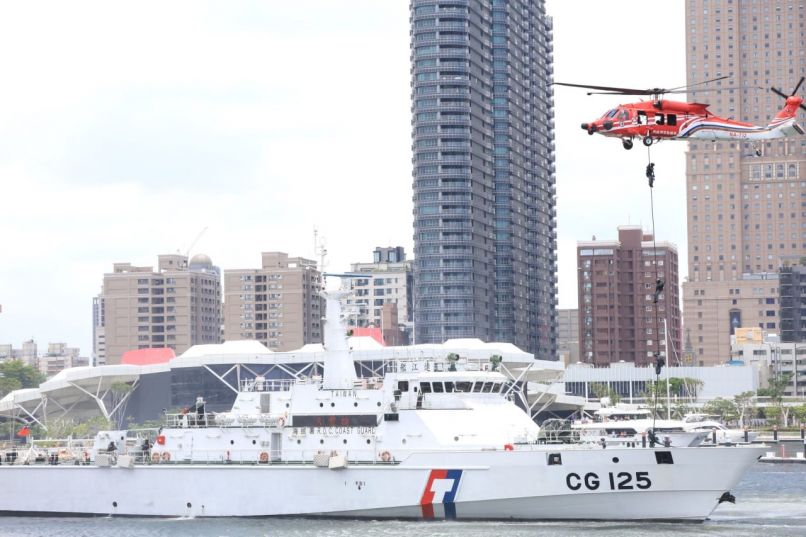
Under COCO, a contractor owns the aircraft and the sensors, certifies the pilots, and runs maintenance. The government pays a service fee and issues mission orders. No new units. No capital program. No multi-year procurement. Liao and Mei claim operations could start within months of contract signature, because the framework already exists in miniature: Taiwan's navy has used contractor target-towing aircraft for years, and the Coast Guard Administration (CGA) buys contractor services for parts of its shore-based network.
The aircraft would need a low-SWaP synthetic aperture radar with maritime moving target indication, electro-optical and infrared sensors, onboard processing, secure links, and a direct interface into Taiwan's command network. That is a real requirements list, essentially a mini P-3 in a Cessna-sized package, and it is the most honest part of the pitch.
The Numbers Behind the Campaign
The researchers' threat data is the strongest thing in the article. Over two years, the CGA went from monitoring about 300 ships to nearly 1,900 based on gray-zone intelligence. Between 128 and 209 Chinese-flagged fishing vessels show state-directed behavior patterns, transponders switched off on schedule, identities swapped at sea, and a habit of congregating in PLAN exercise boxes instead of actual fishing grounds.
During Justice Mission 2025 in December, the first day alone saw at least 130 sorties and 32 vessels. The Christmas Day militia formation was 466 kilometers of ships arranged to look like a shipping-lane blockade. Liao and Mei call this a structured probing campaign to map Taiwan's maritime response latencies and identify when surveillance coverage collapses. That phrase should worry people in Taipei more than anything else in the piece, because it means China is measuring Taiwan: its decision times, its coverage gaps, its breaking points.
Why the Fix Won't Survive Contact
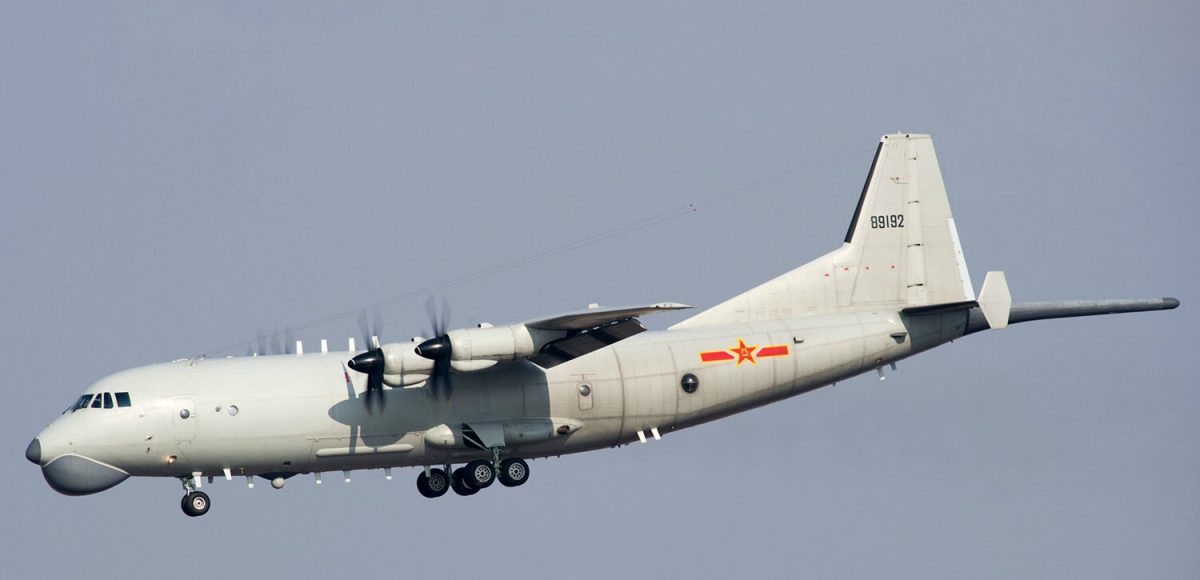
Here's the problem. A COCO fleet is a peacetime instrument. The first thing a contractor's unarmed turboprop does when the strait heats up is leave the airspace, or get shot out of it. The Taiwan Strait is 130 kilometers wide at its narrowest. PLA fighters can be over it in minutes. Unarmed civilian-crewed ISR aircraft at medium altitude are exactly the kind of target a J-16 or an HQ-9 battery eats for breakfast.
Anyone who has served on a surface ship knows the rule: surveillance you can't protect is surveillance you don't have. The COCO aircraft would be valuable on day zero of a crisis and dead by day two. And contractor crews are not conscripts. When the missiles start flying, the contract clause that matters is the one about pulling out.
The Ukraine comparison the authors cite does not hold up either. Ukrainian private companies fly drones under a wartime command structure with a functioning air-defense umbrella and permissive airspace. Taiwan's gray zone is a contested corridor under constant PLA surveillance. The operational environments are not analogous.
The Real Gap Is the Loop, Not the Sensor
Here is the uncomfortable part the proposal glosses over: Taiwan's problem is not that it cannot detect vessels. The CGA already tracks nearly 1,900 of them. The problem is what happens between detection and response. The article concedes that SeaVision, Taiwan's data-fusion platform, introduces delays in track-blending, and that key irregularities like AIS identity changes at sea are usually discovered after the fact. By the time analysts realize a vessel has gone dark, the authors write, it is already too late to respond.
More aircraft do not fix that. They feed the same lagging fusion pipeline more data. What Taiwan needs is a decision loop that runs in minutes: automated anomaly detection, cross-agency tasking, pre-approved response authorities. Not a second-hand air force that invoices per flight hour.
And the no-major-spending claim deserves scrutiny. A low-SWaP SAR with MMTI, EO/IR, onboard processing, and secure C2 is not off-the-shelf cheap, and certified aircrews with Taiwan Strait experience do not grow on trees. The National Audit Office already found the CGA's drone program short of trained operators and unable to fly in bad weather. The people problem this proposal hopes to outsource is the same people problem that produced those audit findings.
The Bottom Line
Liao and Mei are right about the threat. The probing is real, the numbers are damning, and Taiwan's maritime domain awareness is stretched past its seams. But a contractor ISR fleet is a bridge to nowhere: too slow to respond, too soft to survive, and aimed at the wrong part of the problem. When China tests Taiwan's response latency, what matters is what happens in the command center in the minutes after a vessel goes dark, not how many civilian turboprops are on patrol when the test starts.
Taiwan does not need hired eyes. It needs a loop that closes faster than the probe does. Until that loop exists, every aircraft, military or contractor, is just a more expensive way to watch China measure Taiwan's response times.
Chinese maritime militia organized approximately 2,000 boats in a blockade formation northeast of Taiwan on Christmas Day last year. Researchers proposed a contractor-operated ISR fleet to enhance Taiwan's surveillance capabilities, as current systems struggle with response times. The report highlights the increasing number of Chinese-flagged vessels exhibiting state-directed behavior patterns, indicating a structured probing campaign against Taiwan's maritime defenses.
- Chinese-flagged fishing vessels turn off tracking systems an average of 998 times a year each.
- On Christmas Day last year, roughly 2,000 maritime militia boats arranged in a blockade formation northeast of Taiwan.
- The CGA increased monitoring from about 300 ships to nearly 1,900 based on gray-zone intelligence.
- The proposal for a contractor-owned ISR fleet aims to enhance Taiwan's maritime surveillance capabilities.