
Details of the fire revealed, issues pile up and are hard to fix, "Ford" malfunction exposes decline in U.S. Navy combat capability.
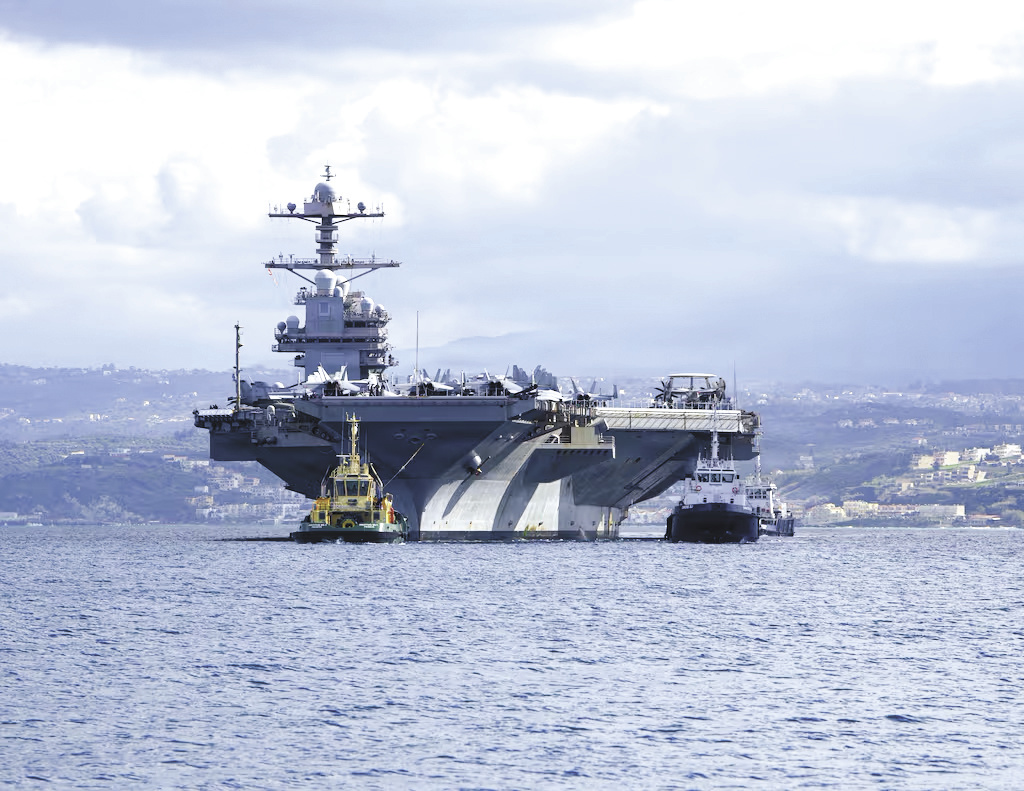
[Global Times Special Correspondent Chen Yang, Global Times Reporter Ma Jun] The USS Ford, which recently set the record for the longest overseas deployment of a U.S. Navy aircraft carrier in decades, has just returned to the U.S. mainland and has been reported to have a series of issues. The latest video disclosed by CNN on the 5th shows that the fire the carrier encountered in March this year caused far more damage than expected, and "the U.S. Navy deliberately downplayed the impact of the fire." Relevant industry insiders in the U.S. believe that the USS Ford will require more than a year of maintenance before it can set sail again, which will inevitably exacerbate the U.S. Navy's global deployment challenges.
"Things shouldn't have gotten this bad."
The USS Ford experienced a fire on March 21 during military operations against Iran in the Red Sea, with the fire starting in the laundry room at the rear of the ship. Initially, the U.S. Naval Institute website reported that the fire spread rapidly, triggering a ship-wide damage control and emergency response operation, forcing many crew members to evacuate and severely disrupting normal operations on the ship. More than 200 crew members received treatment for smoke inhalation. The New York Times reported that the fire lasted over 30 hours, resulting in more than 600 military personnel losing their berths, and the Navy had to urgently transport 1,000 mattresses from the yet-to-be-commissioned USS Kennedy to replace those on the Ford. Additionally, since most of the laundry facilities on the Ford were destroyed in the fire, the U.S. Navy urgently arranged for nearly 2,000 sets of sweatshirts and other clothing to be airlifted to the carrier.
However, at the time, the U.S. Navy downplayed the incident, claiming that the fire "did not burn for 30 hours, but rather the firefighting containment operation lasted 30 hours," stating that only two people were lightly injured and that the carrier was fully operational.
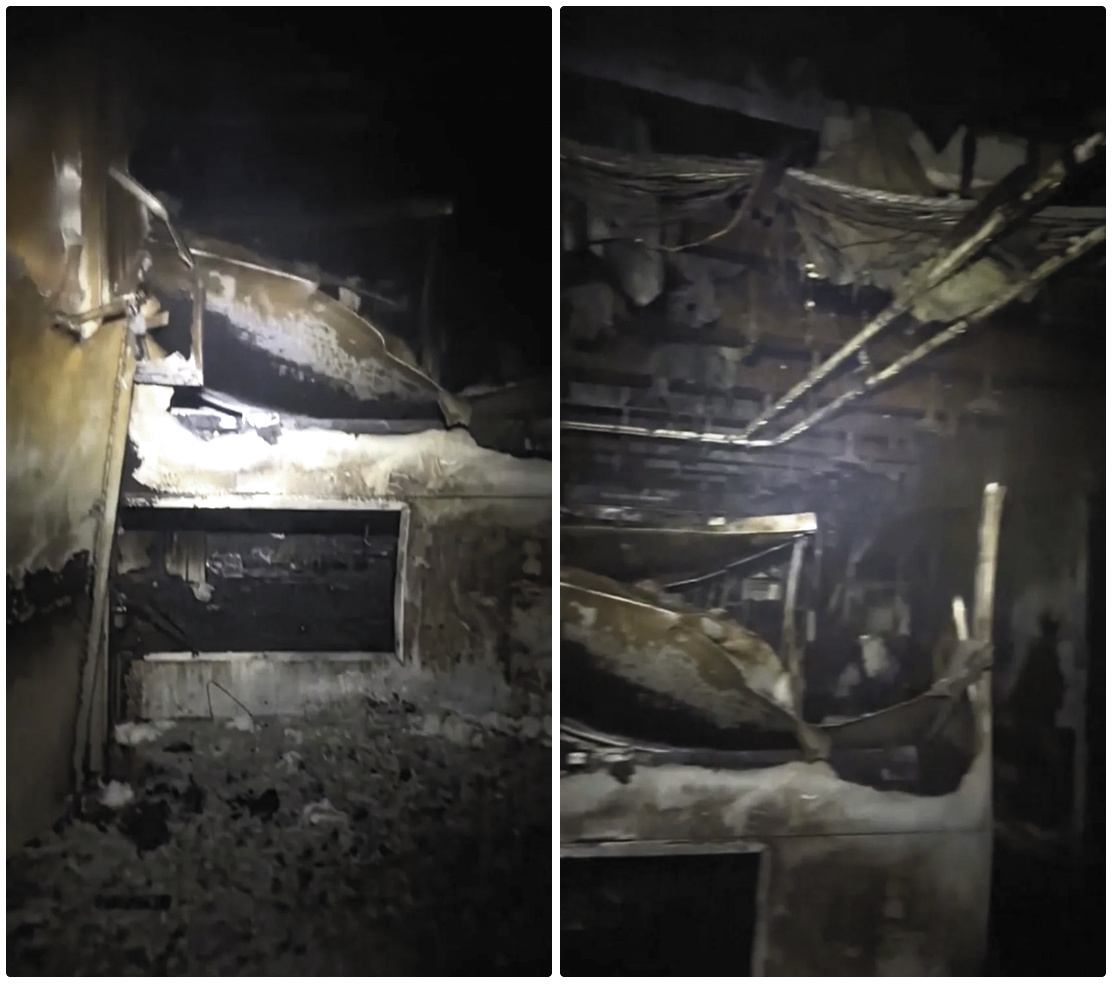
But the exclusive video released by CNN on June 5 and testimonies from sailors on board indicate that the fire on the USS Ford was far more serious than the Navy claimed, with greater destructive impact. The video shows that the sleeping quarters of the sailors were completely destroyed, with only charred and twisted metal remnants of the beds left, and the ceiling above was clearly burned through, with wires hanging down from it, and piles of ashes scattered on the floor around the berths.
A senior U.S. official familiar with the situation revealed that the firefighting system on the USS Ford failed to operate normally, forcing sailors to frantically attempt to extinguish the fire. One sailor on the carrier described his feelings while fighting the fire to CNN: "I really thought we were going to lose this ship. Things shouldn't have gotten this bad. The ship's built-in firefighting system should have been able to put the fire out; everyone—including me—was involved in fighting the fire." When asked about the severity of the fire and the failure of the firefighting system, a U.S. Navy spokesperson told CNN, "The investigation into the fire is still ongoing."
The aforementioned senior official told CNN that the U.S. Navy's public statements downplayed the impact of the fire on the USS Ford, and the carrier's operational capability was indeed affected. U.S. Navy Chief of Naval Operations Admiral Daryl Caudle stated in April that it would take until two days after the fire for the USS Ford to launch aircraft again, and the ship was forced to head to a Greek port for temporary repairs.
Resolving the "toilet gate" requires extensive repairs
CNN also reported that the USS Ford participated in military operations against Venezuela and Iran during this overseas mission, with a total deployment time of 326 days, setting the record for the longest single deployment of a U.S. aircraft carrier in decades. During such a lengthy deployment, this latest U.S. aircraft carrier has also exposed numerous issues.
In addition to the fire in March, the widespread toilet clogging issue on the USS Ford has become a topic of ridicule for the carrier. Another video obtained by CNN from the USS Ford shows toilets overflowing with waste. Sailors described, "If you're in the bow area, you have to walk all the way to the stern area to find a usable toilet."
The earliest report of the "toilet gate" by National Public Radio in January stated that the USS Ford is expected to enter the Norfolk Naval Shipyard for maintenance. Rear Admiral Kaveh Hakimzadeh, who oversees the shipyard, stated that maintenance personnel will repair the damage caused by the March fire in the laundry room and upgrade the sewage system on the ship. Reports indicate that the widespread toilet clogging issue on the USS Ford cannot be resolved simply by forcefully unclogging it. The carrier's new sewage system, known as the "vacuum collection, retention, and transfer system," uses thinner pipes and vacuum suction to flush toilets. During the construction of the USS Ford, the U.S. Navy recognized that this sewage system had defects: the USS Bush, which was the first to use this equipment, had to halt its deployment in 2011 due to similar widespread toilet clogging issues.
The chief mechanic responsible for maintaining the complex systems on the USS Ford explained in an email sent to all crew members on March 18 that the most common problem was a loose hose at the back of the toilet, which caused the system to lose suction. Technicians also requested sailors to help locate leaks among the hundreds of toilets.
Hakimzadeh stated that the sewage maintenance model for the carrier is divided into four areas, "This is a closed system, and there are thousands of components on the ship that fail every day. If one toilet control valve fails, it can cause all toilets in that area of the carrier to become inoperable, and even lead to all toilets in the front or rear of the carrier becoming inoperable." The current new maintenance plan is to further subdivide it into more areas, so that a problem with one restroom does not lead to a quarter of the ship's area becoming inoperable.
The U.S. Navy has systemic issues
Chinese experts interviewed by the Global Times stated that the experiences related to the USS Ford disclosed by U.S. media indicate that the U.S. Navy has systemic problems. The U.S. Navy has experienced frequent fire incidents in recent years: in 2020, a fire on the USS Bonhomme Richard burned for four days, leading to the ship being completely scrapped; on November 29, 2022, and June 28, 2023, the USS Abraham Lincoln experienced two fires; on August 20, 2025, the USS New Orleans caught fire in Okinawa and burned for 12 hours; on April 14, 2026, a fire occurred on the USS Eisenhower during maintenance, injuring nine people; on April 19, 2026, a fire broke out on the USS Zumwalt while undergoing upgrades at the Ingalls Shipbuilding dock; on April 30, 2026, a major fire occurred on the USS Higgins of the U.S. Navy's Seventh Fleet, crippling its power and propulsion systems.
Although the U.S. military has summarized numerous fire incident cases over the years and proposed several recommendations, these improvements have not been fully implemented in practice. Experts indicate that the root cause of this situation is the long-term overburdening of the U.S. Navy. From the USS Bonhomme Richard to the USS New Orleans, the U.S. military has repeatedly acknowledged that these fires could not be quickly controlled, with key reasons being the reduced training time for damage control teams and the lack of firefighting skills among junior sailors. In particular, the long-term high-intensity deployments have left crew members exhausted and morale low, making it difficult to ensure relevant training.
Meanwhile, the U.S. military frequently operates in various locations around the world, with ships operating under long-term overload, and maintenance windows being repeatedly squeezed, creating a vicious cycle of "the more tired, the more likely to have problems, and the more problems, the more tired." The U.S. Navy's reports revealed that the maintenance reports for the USS Bonhomme Richard were falsified, and 87% of the firefighting stations on board had equipment issues or had not been inspected. In the recent fire on the USS Ford, the failure of the firefighting system to operate normally also exposed the same issues.
CNN reported that due to various wear and tear during the extended deployment and additional repairs related to the fire, the USS Ford will enter a lengthy maintenance phase. U.S. officials revealed that the USS Ford may need at least a year before it can set sail again, requiring other aircraft carriers to fill the gap. This will further exacerbate the U.S. Navy's challenges in global deployments. Even though the U.S. Navy has been forced to keep the USS Nimitz, which should have been retired, deployed in South America, the condition of this carrier, which has been in service for over 50 years, is deteriorating, making it difficult to extend its deployment time further, while the newly constructed USS Kennedy is still in the early stages of sea trials and is far from being operational and combat-ready. The number of available aircraft carriers for the U.S. in the coming years will continue to decline.
The USS Gerald R. Ford (CVN-78) experienced a significant fire on March 21, 2023, while operating in the Red Sea, resulting in over 600 personnel losing their sleeping quarters. The fire lasted more than 30 hours, causing extensive damage and requiring over a year of maintenance before the ship can return to service. Additionally, the USS Ford is facing severe issues with its toilet system, compounding operational challenges.
- USS Ford experienced a fire on March 21, 2023, during operations in the Red Sea.
- Over 600 personnel lost their sleeping quarters due to the fire.
- The fire lasted over 30 hours, with significant damage reported.
- The USS Ford will require over a year of maintenance before returning to service.
- The ship's toilet system has faced severe issues, leading to operational challenges.