

Everybody obsesses about “endgame”: how and when this war ends. That’s the boring question. The really interesting conundrum is “end-state”: what does the place look like after, and what do we do about it?
Understanding Endgame
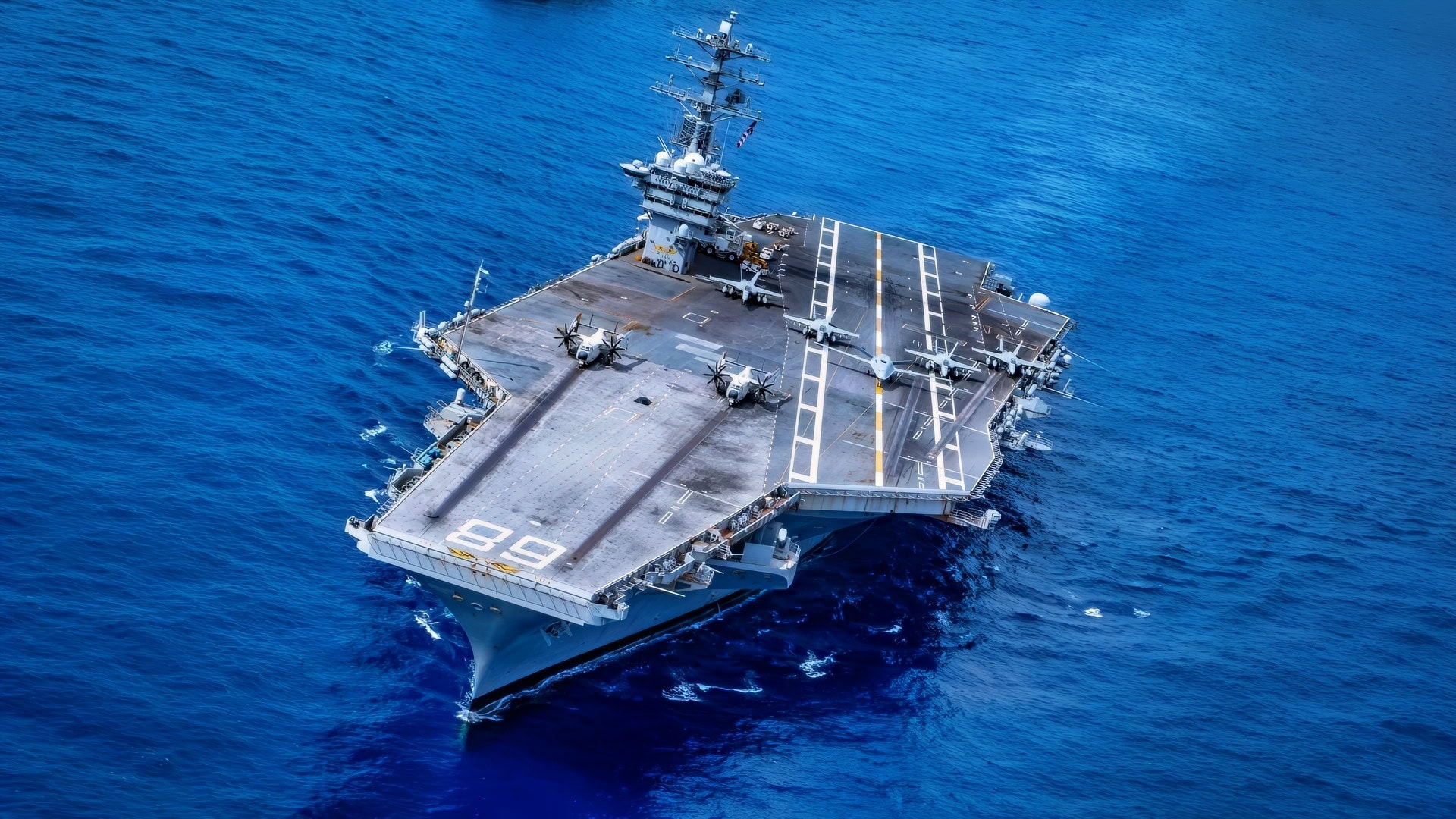
Twenty-six ships from 13 partner and allied nations steam in formation with Nimitz-class aircraft carrier USS Nimitz (CVN 68) as part of Fleet Exercise (FLEETEX) 250 in the Atlantic Ocean, June 25, 2026. Nimitz is underway taking part in Fleet Exercise (FLEETEX) 250, a series of structured multilateral training events at-sea, aimed at building cohesiveness, validating tactical procedures, and strengthening the interoperability of participating units—which include warships, aircraft, and crews from the U.S. and 13 partner and allied nations. (U.S. Navy photo by Mass Communication Specialist 3rd Class Gina M. Gallia)
Just like in Avengers: Endgame, where half of the Universe that evaporated returned and Thanos got his comeuppance, we already know how the Iran War story ends.
Iran won’t have a nuclear weapon. Tehran won’t control the Strait of Hormuz. The IRGC won’t be the strategic threat to its neighbors it was just a year ago. The only difference is we knew Cap and Iron Man would resolve everything in three and a half hours. Warfighting, however, is not scriptwriting.
Meanwhile, Hakeem Jeffries, the leader of the opposition in the House, is busy scriptwriting, constantly asserting that the longer the war drags on Iran is stronger and America is weaker.
Hakeem’s harangues are not a strategic assessment. They are talking points, shilling for the party in the mid-term elections. He is literally making up an endgame that suits his politics—banking on the war not ending (proving him dead wrong) until after the ballots are counted.
Trump, on the other hand, can’t just write the ending he wants. He has to fight in the real world. Lucky Trump, however, has lots of options and lots of time. In fact, the longer the war drags on, the weaker the Iran regime gets. Jefferies histrionics aside. The Iranians have lost control of the strait. Oil is flowing at near-normal levels. Prices are fluctuating—not skyrocketing. Meanwhile, the U.S. economy is growing, not weakening. At the same time, the American military position in the Gulf is as dominant as ever. Trump is not running out of ships, planes, or munitions.
Who knows if Jefferies’ gesticulating will score some votes. Trump, however, has already discounted the impact of the elections in his timeline. He is determined to end the war on his terms, not by the midterms.
Meanwhile, look who agrees with Trump—the rest of the world. The president declared in his address to the United Nations General Assembly that Iran would never get a nuclear weapon. The response was something else. Instead of sitting on their hands or smirking, the audience erupted in universal applause across the hall, cutting the president’s speech short. They believe him. This has to be the worst day in the war for Iran—ever, that shocking moment when you realize no one in the world thinks Tehran stands a chance—except Hakeem Jeffries, maybe.
Understanding End State
Asking what comes after the war ends is a far more interesting and consequential question—and as equally unknowable as when the war will end. To end the war, both sides at least get a vote. No one gets to vote on the end state, just like there is no crying in baseball. End state is a fate, not a choice. End state is what’s left after—the post-conflict condition inherited after the fighting—a state of order that cannot be confidently predicted beforehand or willed into existence—like the Avengers wishing back half the universe.
Trump has a vision for what comes after the end state. His aspiration for the future of the Middle East, with the Iran threat sidelined, is a region that largely provides its own collective defense; that achieves stability through economic growth and integration; and is a stakeholder and net contributor to what Trump declared in his UN address as confronting “global challenges with ‘courage and resolve…cooperation among nations [creating] ‘a future for our people that is brighter, more hopeful, and more magnificent than ever before.” That’s a tall order. To succeed, Trump will have to deal with the war’s end state first.
While predicting the end state is like trying to pad your 401(k) with FanDuel, preparing for it definitely increases the odds of success.
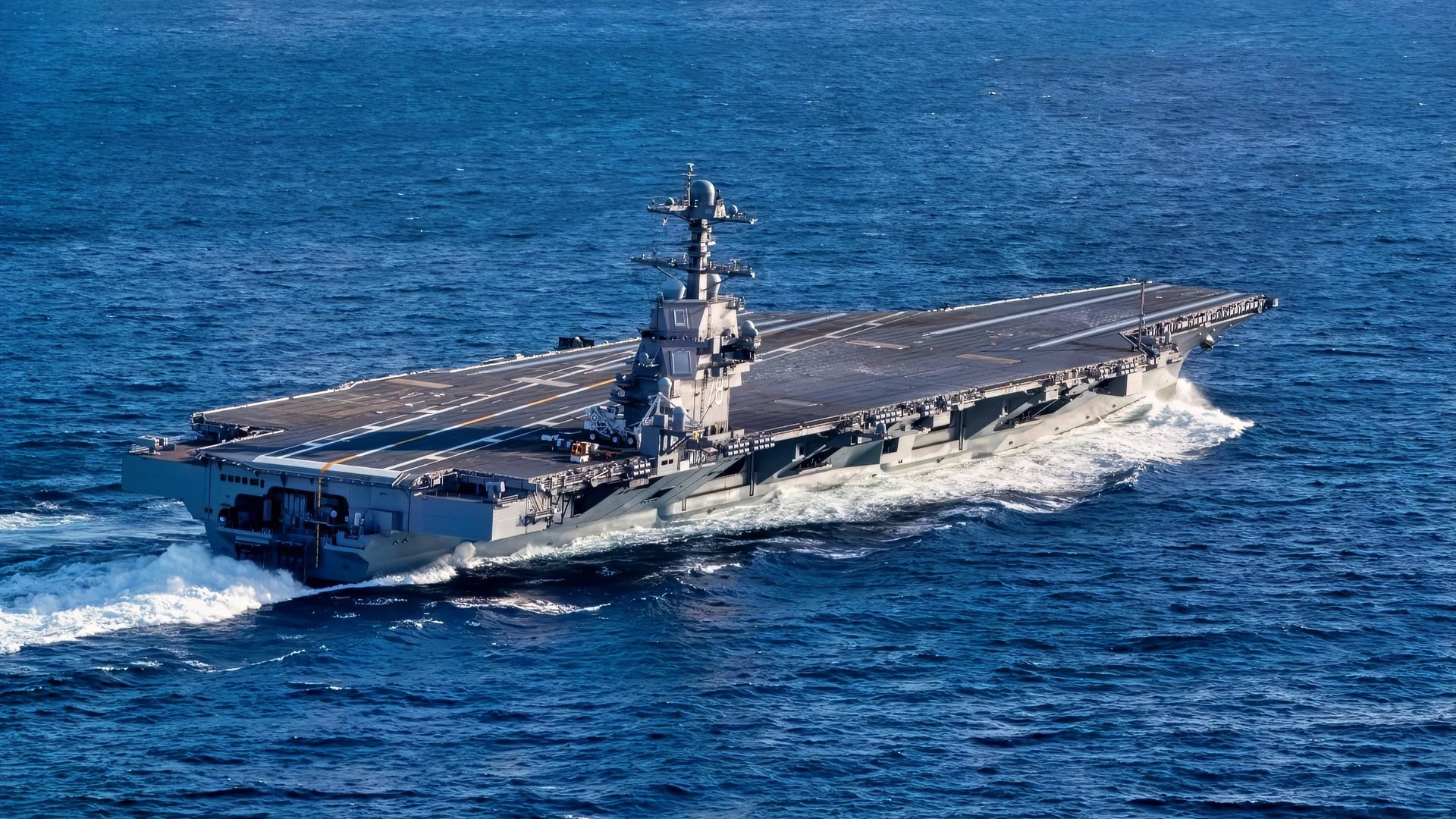
(Oct. 29, 2019) USS Gerald R. Ford (CVN 78) conducts high-speed turns in the Atlantic Ocean. Ford is at sea conducting sea trials following the in port portion of its 15 month post-shakedown availability. (U.S. Navy photo by Mass Communication Specialist 3rd Class Connor Loessin)
The odds of Trump achieving his vision without a proactive effort from the U.S. are low. On the security front, the region produces only a small fraction of what it needs for collective defense. Furthermore, the Gulf Coast Countries collectively pay about half of what is needed for regional security. Even if they ramped up spending tomorrow, it would be years for capabilities to be in place, meaning the U.S. will have to backstop regional deterrence till at least 2030.
On the economic front, the war highlighted the need for alternative and redundant supply chains and transport routes. To really drive regional economic integration, however, slapdash workarounds are not enough. Significant new infrastructure initiatives are needed, such as a major multimodal transport node on the border of Jordan and Israel.
On the geopolitical side, stability and prosperity have to spread faster than disillusion and discontent in places ruined by Iran’s malicious influence, including Gaza, Lebanon, Syria, and Yemen.
The U.S. should be posturing now to urgently address these challenges. Here are some instruments that will be important to achieving the end state.
Combat Commands (COCOMS). Regional military commands like CENTCOM will not only need to play a major role in collective security action but also lead a vibrant interagency A-Team that can proactively address a range of public safety, economic, and physical security challenges. The best and brightest operators across government ought to be serving in the COCOMS. AFRICOM’s new Defense Economics Office is a great example of the kind of innovation, energy, and action initiatives that are needed.
India-Middle East-Europe Economic Corridor (IMEC). Rather than a single trade route, IMEC is evolving into a network of transport, finance, services, digital, and additive manufacturing. What IMEC lacks is a global leader to drive private financing, settle bilateral disputes that are holding up infrastructure investments, and partner in promoting and moving IMEC at Trump speed—which basically means IMEC needs the Trump touch.
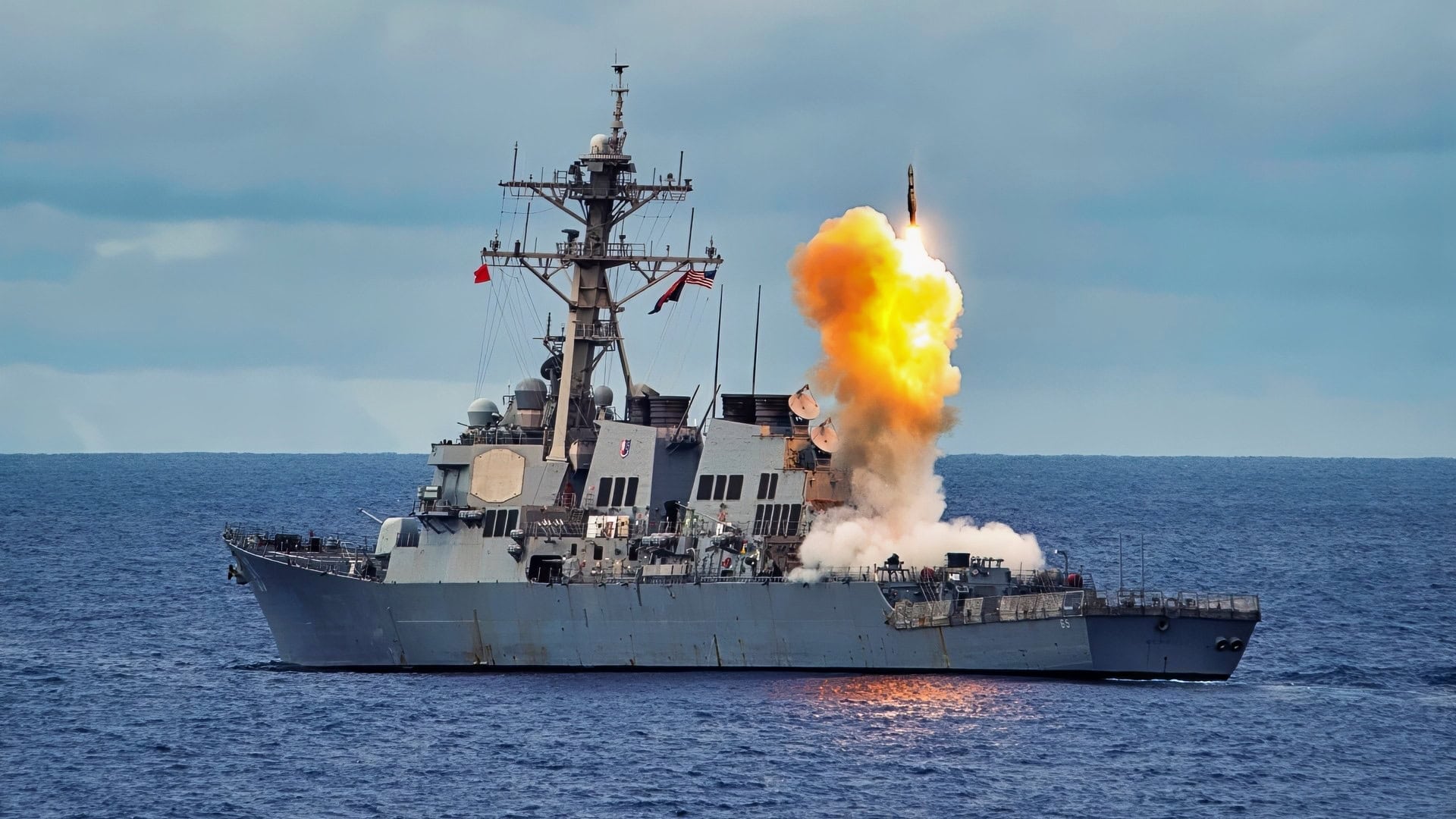
PHILIPPINE SEA (Sept. 19, 2016) The Arleigh Burke-class guided-missile destroyer USS Benfold (DDG 65) fires a standard missile (SM 2) at a target drone as part of a surface-to-air-missile exercise (SAMEX) during Valiant Shield 2016. Valiant Shield is a biennial, U.S. only, field-training exercise with a focus on integration of joint training among U.S. forces. This is the sixth exercise in the Valiant Shield series that began in 2006. Benfold is on patrol with Carrier Strike Group Five (CSG 5) in the Philippine Sea supporting security and stability in the Indo-Asia-Pacific region. (U.S. Navy photo by Mass Communication Specialist 2nd Class Andrew Schneider/Released)
The Board of Peace. The board needs to become the leader in fusing private and public reconstruction efforts across the region, with a focus on energy, efficiency, and effectiveness. The reason for that is that there is no other multinational or international organization up to the task. If the board doesn’t effectively take the lead, piecemeal efforts to fix the broken pieces of the Middle East won’t outpace those who want to break them again.
The bottom line is: don’t worry about the endgame. Trump has that well in hand. Worry, however, very much about whether we are ready for the challenges of the end state. What comes after the end state will be far more consequential to the future than the end of the endgame controversy.
About the Author: Dr. James Jay Carafano
James Jay Carafano is a national security expert and a 25-year Army veteran. His most recent books are Cold Combat: Mountain Warfare in Italy and the Battle of San Pietro, 1943, and Digital Dominance: Winning in a Socially Networked World. He is a 19FortyFive Contributing Editor. Carafano is also a Senior Counselor to the President and E.W. Richardson Fellow at The Heritage Foundation.