
Eagle Strike-2026 and Divine Eagle-2026 Launch Successively: PLA Air Force Advances Joint Command and Drone Coordination Towards Practical Verification
 Li Minghui
Yingji-2026 and Shenying-2026 Conduct Joint Exercises, PLA Air Force Advances Joint Command and Unmanned Coordination Towards Practical Verification
On August 27, details of two joint training exercises disclosed at the regular press conference of the Ministry of Defense revealed much more information than meets the eye. The China-Thailand "Yingji-2026" is already the 9th joint air force training, and this time the Chinese side brought not just a single aircraft type, but a complete set of combinations including fighter jets, early warning aircraft, refueling aircraft, helicopters, and ground-to-air weapons; at the same time, the China-Belarus "Shenying-2026" was launched at a certain air force training base in Hubei, covering subjects directly related to reconnaissance and counter-reconnaissance, seizing control and defense, clearing and holding, and specifically mentioning the use of unmanned equipment and airborne infiltration. The author believes that when looking at these two actions together, what is truly noteworthy is not "another joint training," but that the PLA Air Force and Airborne Troops are pushing joint command, cross-platform coordination, and manned-unmanned collaboration from demonstration subjects towards replicable combat links.
What Are the Two Joint Exercises Practicing?
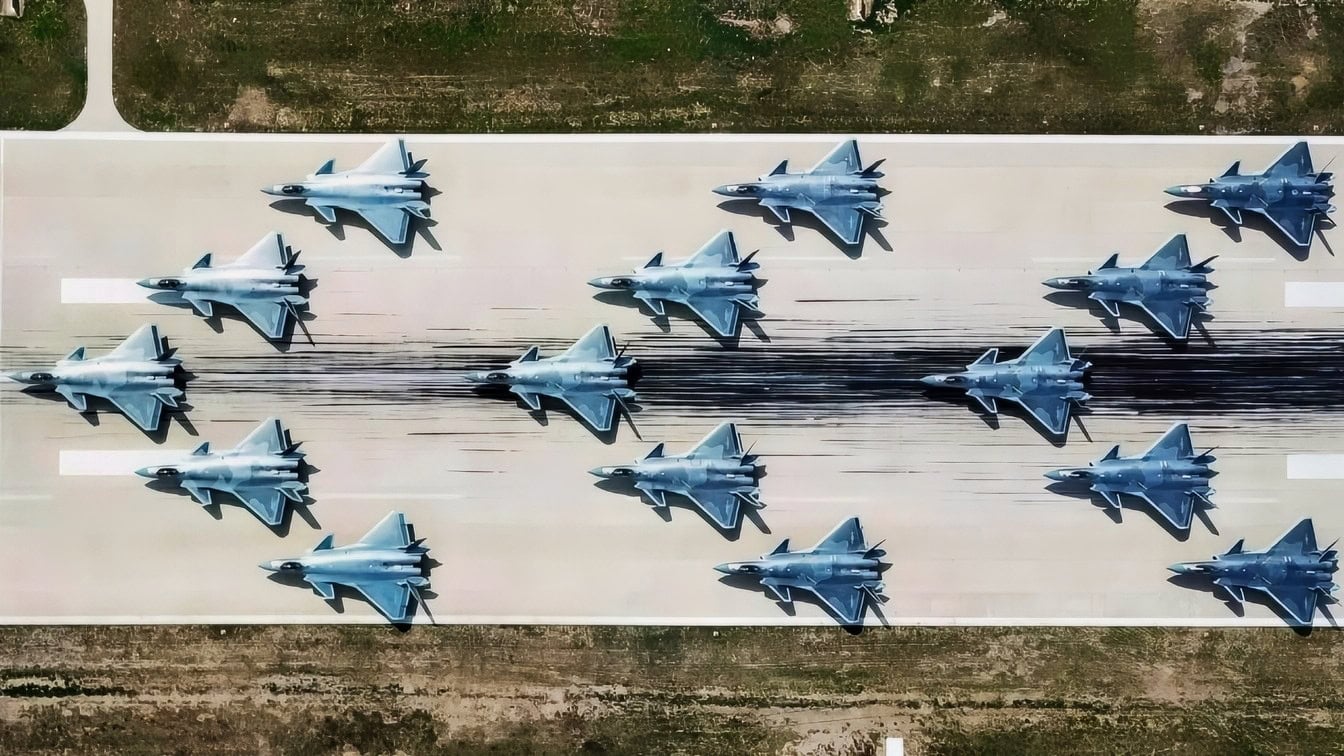
- The China-Thailand "Yingji-2026" was held at Udon and Don Mueang bases, with the Chinese side deploying fighter jets, early warning aircraft, refueling aircraft, helicopters, and ground-to-air weapons, and for the first time emphasizing the establishment of a joint command center for overall planning, coordination, and implementation.
- The joint training included not only aerial confrontations but also ground-to-air troop mobility deployments, medical configuration aircraft participating in humanitarian rescue drills, and exchanges around the use of drone capabilities, indicating that it practiced a complete task chain, not just a simple flight demonstration.
- The China-Belarus "Shenying-2026" was more focused on tactical levels, advancing in three phases, mixed training, and real combat confrontations, with an emphasis on reconnaissance, control, holding, and coordination with unmanned equipment in the context of urban counter-terrorism.
The Real Signal Is Not in the Number of Flights, But in Whether the Link Is Closed
In the past, many people observing PLA joint training were accustomed to focusing on "how many aircraft came, what munitions were carried, and how many flights were made." This is certainly important, but not the most critical. The most notable detail of this China-Thailand joint training was the simultaneous appearance of the joint command center and early warning and refueling aircraft. In simple terms, it is not difficult for fighter jets to fly over; the challenge lies in linking target detection, airspace allocation, fuel maintenance, command coordination, and subsequent ground-to-air cover into a continuous system. Once the early warning and refueling aircraft entered the field, the nature of the joint training shifted from "familiarizing with procedures" to "verifying the capability of system extension."
The China-Belarus joint training made another direction clearer. It was not about showcasing a certain star equipment but integrating the use of unmanned equipment into real combat confrontations and airborne infiltration frameworks. This indicates that what the PLA is currently concerned about is not whether drones can fly, but whether drones can relieve pressure, fill blind spots, and designate targets for manned forces in specific tactical actions such as seizing control, defense, and clearing. This change is very practical because, in future high-intensity operations, what is often most valuable is not a specific platform but who can compress reconnaissance, communication, and strike into a shorter time frame.
From Domestic Ranges to Foreign Joint Training, What Shortcomings Is the PLA Addressing?
This line of thought did not appear suddenly. On August 28, the U.S. military review website 19FortyFive recalled a PLA live-fire training in June, mentioning that the Chinese side practiced strike processes against "Patriot" missile launchers and "Humvee" targets, with the core being drone reconnaissance, low-altitude helicopter penetration, and precision munitions coordination. That signal leaned towards creating pressure on enemy air defense, while this time "Yingji-2026" and "Shenying-2026" pushed the same systematic thinking towards overseas joint exercises and urban confrontation training. The former verifies long-range organization and joint operations, while the latter verifies grassroots tactical grouping and the integration of manned and unmanned forces, piecing together a complete modernization path.
Of course, the most solid parts of the publicly available information have still not been fully revealed, such as the stability of data links under strong electromagnetic suppression, the sustained support capability of refueling aircraft at forward bases, the reliability of unmanned equipment under complex interference, and whether the stock of precision munitions can support high-tempo consumption. The author has always felt that what the PLA has feared most in recent years is not the lack of advanced platforms, but the system breaking down under high pressure. Looking at it now, it has already made "breaking down" a focus of training. The next truly worthy issue to watch is whether the next round of joint training will incorporate more complex electronic warfare, mobile air defense, and long-range logistics into the same combat loop.
The People's Liberation Army Air Force (PLAAF) conducted joint military exercises with Thailand and Belarus in August 2026, focusing on command coordination and the integration of unmanned systems. The exercises took place in Udon Thani and Bangkok, Thailand, and Hubei, China, involving multiple aircraft types and emphasizing operational capabilities in joint scenarios. This marks a significant step in the PLAAF's approach to modern military operations.
- The PLAAF conducted joint exercises with Thailand and Belarus in August 2026.
- The exercises included a variety of aircraft and emphasized command coordination.
- Focus was on integrating unmanned systems into tactical operations.
- The exercises aimed to validate operational capabilities in joint scenarios.
- The nature of the exercises indicates a shift towards more complex military operations.