
Egypt, Libya, and Chad Relaunch a Security Front in the Sahara in 2026
 Marie Dubois
Egypt, Libya, and Chad Relaunch a Security Front in the Sahara in 2026
On October 4, in Cairo, the foreign ministers of Egypt, Libya, and Chad put back on the table the revival of the Community of Sahelo-Saharan States and a strengthening of security cooperation. The Ahram Online dispatch presents this meeting as a diplomatic initiative. On the ground, it is primarily a signal of regaining control over the northern flank of the Sahelian theater, after years in which the Malian, Libyan, and Sudanese crises were addressed separately.
A Geography That the Juntas Do Not Control
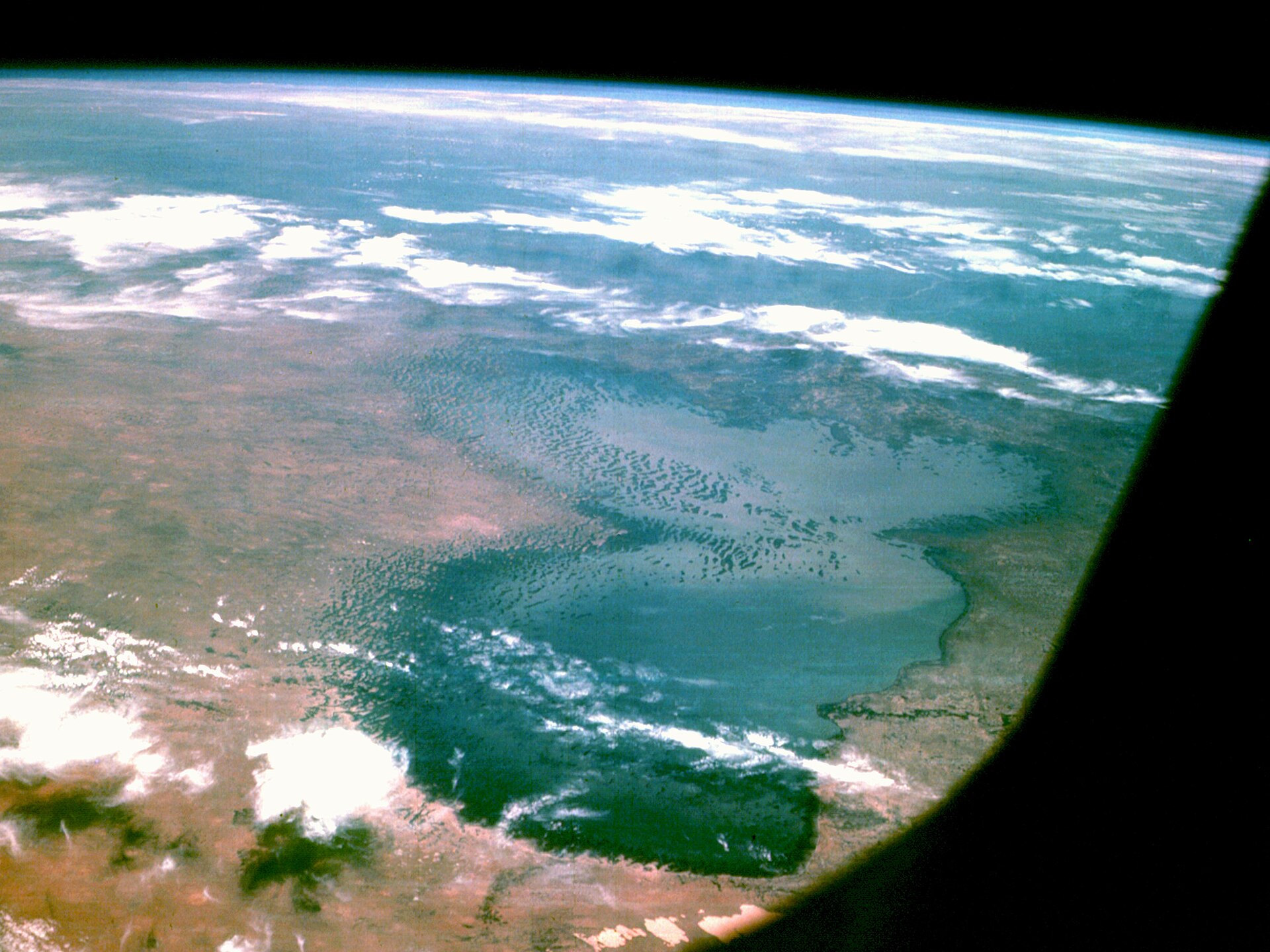
The border is not a line that is monitored from a capital. Between the Libyan Fezzan, the Chadian Tibesti, and the routes leading down to the Lake Chad basin, there are thousands of kilometers of desert, seasonal tracks, and smuggling corridors. A patrol can hold a position in Koufra or Faya-Largeau without controlling the routes that bypass this post fifty kilometers away.
This is the weakness of all regional architectures in the Sahel. They announce joint forces but struggle to share intelligence, air assets, and pursuit procedures. The Cairo meeting attempts to reconnect a strategic space that armed actors have never ceased to traverse.
The Cautious Return of CEN-SAD
The Community of Sahelo-Saharan States, often referred to by its acronym CEN-SAD, already has an institutional history. It did not prevent the wars in Libya, the fragmentation of Sudan, or the expansion of jihadist groups. Its revival should therefore not be confused with the immediate creation of an operational force.
Egypt's choice is nonetheless revealing. Cairo wants to prevent the security vacuum in southern Libya from becoming a strategic depth for traffickers, armed groups, and jihadist networks. For Tripoli, cooperation provides a regional framework for a dossier that remains trapped in rivalries between Western and Eastern authorities. For N'Djamena, it offers partners at a time when Chad must simultaneously monitor Libya, Sudan, and the Lake Chad basin.
This convergence is real, but it remains limited. The three states do not share the same understanding of the Libyan crisis or the same military priorities. Cairo prioritizes state stability and border closures. Chad reasons in terms of defensive depth. Libya remains a contested territory, where official coordination can be neutralized by rival command chains.
The Libyan Corridor and the Threat to the South
The danger is not only a spectacular infiltration of fighters. Armed networks need fuel, vehicles, guides, phones, and markets. Southern Libya can provide a logistical space, while the Tibesti and Chadian desert areas offer routes that are difficult to monitor. Further south, the violence in the Lake Chad basin adds a different pressure, driven by Boko Haram and the Islamic State in West Africa.
It would be excessive to claim that these theaters already form a single jihadist command chain. The available information does not allow for confirmation of systematic coordination between the factions in the Lake Chad area and the groups active in central Sahel. But the circulation infrastructures overlap. When an army closes a road, traffic shifts; when a garrison abandons a post, armed actors reclaim the space and local contacts.
The Cairo meeting thus takes on an operational dimension: to prevent the discontinuity between Libya and Chad from becoming a strategic highway. This requires shared data on vehicles, compatible radio links, regular aerial surveillance, and precise mechanisms for transmission to ground units. A communiqué does not provide any of these means.
A Parallel Architecture Facing the AES
This initiative comes at a time when Mali, Burkina Faso, and Niger are building their own framework around the Alliance of Sahel States. The AES seeks to reduce the influence of ECOWAS and Western partners; CEN-SAD could become, in the north, another coordination space escaping this architecture.
This is not yet an institutional confrontation. Cairo is probably not seeking to enter the dispute between the AES and ECOWAS. But two logics are emerging. In the south, the Sahelian juntas claim military sovereignty and a privileged partnership with Moscow. In the north, Egypt is trying to reactivate a broader framework, where border security, Libya, and Sudan are linked to the stability of the Sahel.
This difference matters for France and Europe. After Barkhane, Paris no longer has the same freedom of action in the Sahelian band. An Egyptian-Chadian coordination can offer an indirect contact point, but it does not restore French capabilities in intelligence, air transport, and evacuation. It is a regional platform, not a return of France through the window.
The Test Will Be a Route, Not a Declaration
The first measure of success will be concrete. The three governments will need to identify a corridor, define who collects intelligence, who authorizes pursuit, and who protects the populations living near the road. Without a common decision chain, a border remains an administrative pause for traffickers.
The coming months will show whether CEN-SAD can produce anything more than a diplomatic photograph. The most immediate risk lies in the contact zones between the Fezzan, the Tibesti, and the Lake Chad basin, where national maps poorly overlap. If the armies do not share their sensors and do not hold the crossing points after patrols leave, armed groups will not even need to conquer territory. They will only need to control the moment when the state passes through.
Sources
- Ahram Online, “Egypt, Libya, Chad FMs discuss reviving Sahel-Saharan bloc, strengthening regional security,” October 4, 2026.
- Egypt Today, report on the trilateral meeting on counter-terrorism cooperation, October 5, 2026.
- Reuters, report on attacks by Al-Qaeda-linked groups against the Malian army, September 2026.
- The Guardian, analysis of the progression of violence linked to Al-Qaeda and the Islamic State in the Sahel, September 16, 2026.
Egypt, Libya, and Chad are reviving security cooperation through the Sahel-Saharan Community during a meeting in Cairo on October 4, 2026. This initiative aims to address security challenges in the northern Sahel, although the three nations have differing military priorities. The meeting signals a renewed focus on regional stability amid ongoing threats from armed groups and jihadists.
- Egypt, Libya, and Chad are reviving the Sahel-Saharan Community for security cooperation.
- The meeting in Cairo signals a renewed focus on the northern Sahel front.
- The three countries have differing military priorities and perspectives on the Libyan crisis.
- The report highlights logistical challenges in monitoring borders and combating armed groups.
- There is a potential for increased jihadist activity in the region.