
EU approves 45 billion euro loan for Ukraine 2026 and postpones Europe's defense issue
 Dr. Klaus Weber
EU Approves 45 Billion Euro Loan for Ukraine 2026 and Delays Europe's Defense Problem
45 billion euros are initially a financing decision
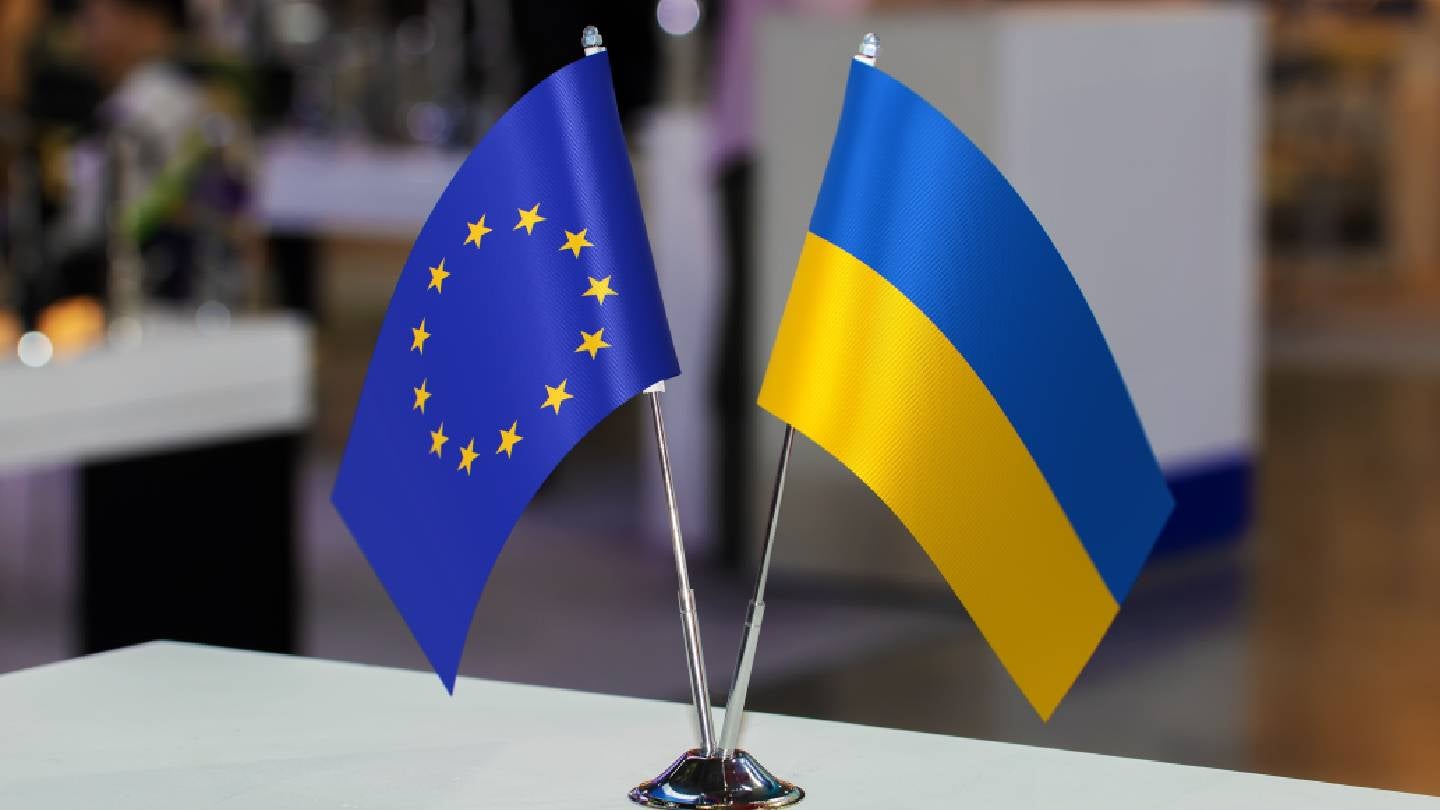
The European Commission proposed a new loan of 45 billion euros for Ukraine on November 18, 2026. Up to 25 billion euros are to be used for military purposes, and 20 billion for the general budget. This package comes in addition to the 90 billion euro loan agreed upon at the end of 2025 for 2026 and 2027. At the same time, Brussels estimates the Ukrainian financing gap for 2027 at around 70 billion euros (Defense News, November 18).
The political message is clear. The EU wants to signal to Ukraine that it will remain solvent even if Washington reduces its support and Russia intensifies its attacks on infrastructure and Black Sea trade. The institutional message is less reassuring: Europe is once again addressing a military production and supply problem with a financial instrument. However, loans are not surface-to-air missiles, and budget commitments are not deployable units.
What the loan can achieve militarily
The military portion of up to 25 billion euros is by no means insignificant. It can make Ukrainian procurement more predictable and provide European manufacturers with longer-term contracts. For Ukraine, not only the platform matters, but the entire chain: spare parts, ammunition, maintenance, training, and repair capacities. A Leopard 2 battalion without 120mm ammunition and maintenance remains an expensive symbol. The same applies to Patriot or IRIS-T systems, whose effectiveness is limited by a shortage of interceptors and long production times.
The EU Council is now referring to up to 28.3 billion euros that can flow into Ukrainian and European defense industries in 2026 through the existing loan model. This is a step away from merely handing over national stocks. Kyiv is to be more directly connected with European and Ukrainian producers. However, a contract for drones, artillery ammunition, or air defense does not create an additional layer of factories in the short term. Between the financing commitment and delivery lie approvals, precursor products, test series, and often years.
The political trick with Russian reparations
The Commission proposes that Ukraine will only have to repay the new loan once Russia pays reparations for war damages. Politically, this is elegant. It reduces the impression that European taxpayers would be indefinitely indebted to Kyiv. Legally and financially, however, it remains a promise about a highly uncertain future. As long as there is no reliable mechanism for seizing Russian assets and no agreement on reparations, the EU bears the risk.
This is precisely where the institutional weakness lies. Member states can agree on a formula that promises solidarity today and shifts costs to a later political phase. However, they cannot agree as quickly on common procurement lists, standardization, and the distribution of scarce production capacities. Three member states – Hungary, the Czech Republic, and Slovakia – had already withdrawn from the previous loan model. Nevertheless, von der Leyen expects approval for the new package. This demonstrates the political art of construction, but also its limits. A common loan is not yet a common defense policy.
70 billion euros and the transatlantic bill
Germany, France, and the United Kingdom reaffirmed on November 19 in Berlin the NATO commitment to provide Ukraine with military equipment, support, and training worth 70 billion euros in 2026 and to aim for at least the same extent in 2027. This figure sounds like European determination. However, it must be read in conjunction with Europe's dependence on American intelligence, air defense, satellite communication, and precision munitions.
The recent statements from Washington exacerbate this contradiction. While European governments want to stabilize support for Kyiv, President Donald Trump questions the additional expenditures and downplays Russian drone and missile violations of NATO airspace. For Berlin and Paris, Ukraine is now directly linked to their own defense. For Washington, it is also a litmus test of whether Europe will take on more responsibility. Europe is thus expected to pay, produce, and politically bear responsibility, while central military capabilities remain American.
The crucial question is not who pays
The crucial question is not whether 45 billion euros is a lot of money. The question is what share of it will actually enhance European defense capability. Will the loan finance Ukrainian production that can deliver quickly enough? Will European factories be expanded to also replenish their own ammunition reserves? Will orders be standardized collectively, or will 27 states continue to buy nationally and slowly?
The EU loan can be a necessary bridge. However, it is not a strategy as long as the bridge does not lead to more capacity. Ukraine needs air defense and ammunition in the winter of 2026/27; Europe simultaneously needs stockpiles, sensors, and industrial endurance. These goals compete for the same production lines. Those who only publish the sum of the loans obscure this competition.
Europe's dilemma remains
Brussels has politically bought time with the 45 billion euro proposal. This is not worthless in light of the Russian war. However, buying time is not the same as building capabilities. The formula "repayment after Russian reparations" makes the loan politically easier, but the military bill remains immediately due.
My judgment is therefore sober: The package stabilizes Ukraine, but it does not yet demonstrate European strategic autonomy. Europe is spending more because it has to, while simultaneously continuing to procure capabilities that it cannot produce quickly enough itself. More money does not automatically solve the production problem. However, without this money, Europe cannot even begin to address the production problem. This is precisely where the uncomfortable contradiction of the European turning point lies.
Sources
- Defense News, November 18, 2026 — Proposal from the European Commission for the 45 billion euro loan.
- Defense One, November 20, 2026 — European support, 70 billion euro commitment, and NATO reactions.
- European Council, November 17, 2026 — Meeting of foreign and defense ministers on Ukraine support and transatlantic cooperation.
- Reuters, November 17 and 19, 2026 — European positions on US troops, Ukraine, and security guarantees.
The European Union proposed a €45 billion loan for Ukraine on November 18, 2026, with €25 billion allocated for military purposes. This financial support aims to address Ukraine's funding gap and signal ongoing EU commitment amid potential reductions in U.S. assistance. Additionally, NATO allies Germany, France, and the UK pledged military support worth €70 billion to Ukraine for 2026.
- EU proposed a €45 billion loan for Ukraine on November 18, 2026.
- Up to €25 billion of the loan is allocated for military purposes.
- The loan aims to address Ukraine's financing gap and signal continued EU support amid reduced U.S. assistance.
- Germany, France, and the UK reaffirmed NATO's commitment to provide military support worth €70 billion to Ukraine in 2026.
- The loan repayment is contingent on Russia paying reparations for war damages.