
EU invests 3.3 billion euros in Ukrainian drones and missiles — Europe's capability gap remains
 S.W
S.WEU invests 3.3 billion euros in Ukrainian drones and missiles — Europe's capability gap remains
The European Union plans to provide an additional 3.3 billion euros for Ukrainian drones, missiles, and ammunition. Ursula von der Leyen announced the amount on September 18, 2026, after a conversation with Volodymyr Zelenskyy. The figure is politically significant, but militarily relevant only if a financial commitment translates into actual production capacity and timely delivery. This is precisely where Europe's well-known problem lies.
A large number with limited significance
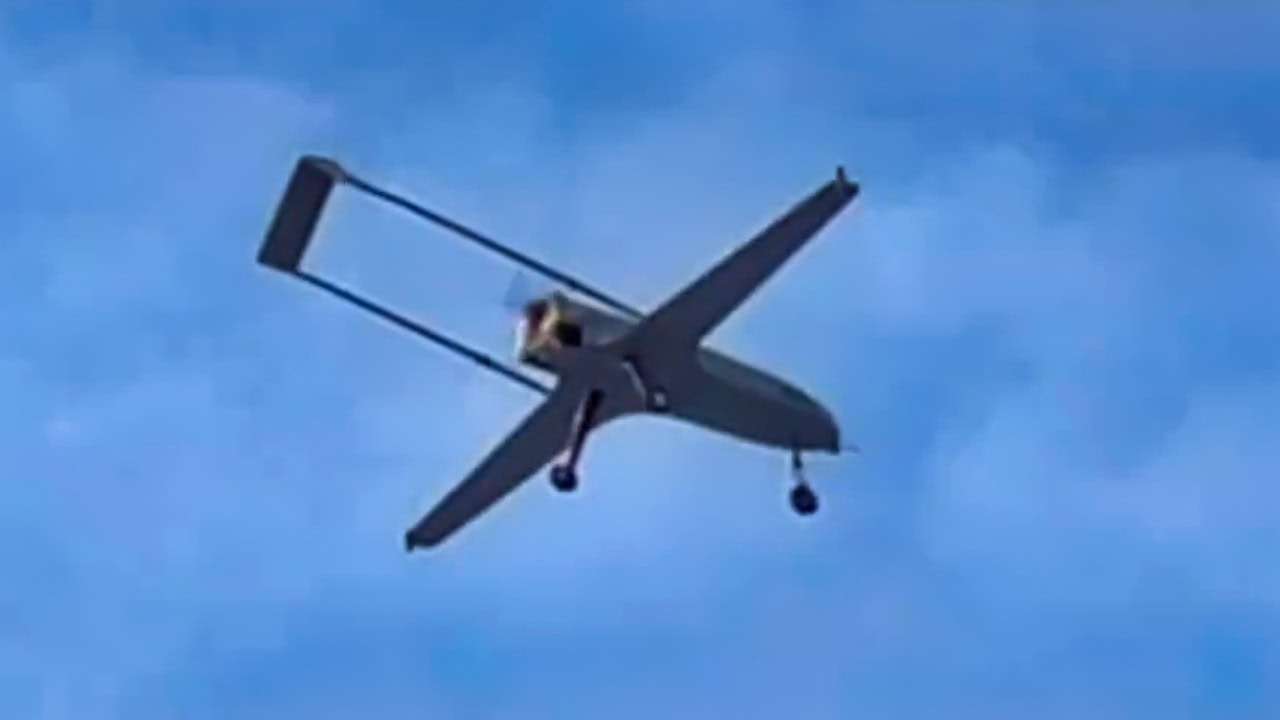
The announcement comes at a time when Kyiv warns of a difficult autumn and winter ahead. Missiles and drones are needed not just for individual strikes. They now form an industrial wear-and-tear logic: Russia can pressure critical infrastructure and cities with large salvos, while Ukraine must continuously adjust its own range, reconnaissance, and air defense. European funding that only becomes effective after long approval and procurement processes only partially addresses this operational urgency.
Moreover, there is uncertainty about the nature of the 3.3 billion euros. Are these new funds, or are already pledged programs being rebranded? Will they be recorded as grants, loans, national contributions, or joint procurement? The difference is not merely accounting but strategic. A credit line can enable an order; however, it does not produce engines, warheads, or solid-fuel rockets as long as factories, suppliers, and qualified personnel are lacking.
Drones are fast — procurement remains slow
Ukraine has developed a procurement model in the war that Western defense ministries still only partially understand. Small and medium drones can be modified in short development cycles, produced decentralally, and immediately fed back from the field. In contrast, cruise missiles and interceptor missiles are subject to long certification, safety, and export control processes. Europe is thus financing two different industrial timelines.
For the drone component, this is an opportunity. European companies can cooperate with Ukrainian manufacturers, integrate Ukrainian software and operational data, and shift production closer to demand. This could achieve more than another central EU framework contract. The situation is tougher for missiles and ammunition. There, a few manufacturers, long-term supply contracts, and American key technologies dominate. Money accelerates orders but does not automatically scale production.
- Drones: short development cycles, high adaptability, and low unit costs, but significant losses in operations;
- Precision missiles: higher impact per system, but long production times and tight industrial bottlenecks;
- Interceptor missiles: strategically particularly valuable, as every Ukrainian shield relies on limited stocks.
The European contradiction in procurement
Brussels has been trying for years to achieve strategic autonomy through joint financing. However, member states continue to purchase based on national priorities. Germany focuses on air defense and the NATO nuclear role, France protects its industrial sovereignty, Poland pushes for rapid availability, and smaller states prefer planned bundling. The 3.3 billion euros can coordinate these interests — or merely finance them side by side.
The crucial test, therefore, is not how high the sum is, but whether it generates additional capacity. Will European production lines be expanded? Will common technical standards become binding? Will Ukraine receive a multi-year delivery plan with guaranteed minimum quantities? And will Ukrainian companies be treated as industrial partners or merely as end customers of European systems? Without clear answers, the initiative remains another European financing act that overestimates its own impact.
The debate recalls the problem of the SAFE program. Loans and grants can consolidate demand, but they do not resolve the fragmentation of the European defense industry or the lack of precursor products. Funding ten national programs with EU money does not create a European capability. It merely labels ten national programs with a European footnote.
The transatlantic dimension
Recent reports about pressure from the Trump administration on NATO allies intensify the political backdrop. Reuters describes an alliance in which Washington demands higher defense spending from Europe, while European governments simultaneously fear that American support and troop presence will become less reliable. The EU must therefore do more, but it cannot quickly replace the American industrial and intelligence role.
This is especially true for missile defense and reconnaissance. European states possess capable systems like IRIS-T SLM and have important competencies in sensors, electronics, and missiles. However, for large quantities, integrated air defense, and certain components, dependence on the United States remains significant. European aid to Ukraine that ultimately finances primarily American bottleneck products can be militarily sensible. However, it is then not strategic autonomy but strategically organized dependence.
What needs to be measured now
The EU should tie the 3.3 billion euros to four verifiable conditions. First, there needs to be a publicly traceable delivery schedule, not just a funding commitment. Second, production contracts must include minimum quantities and spare parts supply. Third, a fixed share should flow into Ukrainian development and manufacturing partnerships. Fourth, the Commission must disclose which part is truly additional and which part was already planned in national budgets.
This would be unspectacular but strategically crucial. Ukraine does not need a European declaration of intent this coming winter, but available missiles, robust drones, and a planned resupply. The EU has proven with 3.3 billion euros that it can mobilize. It must now prove that it can also deliver.
More money does not equate to defense capability. But without verifiable deliveries, Europe's new financial power remains just an expensive form of political reassurance.
Sources: Statement by EU Commission President Ursula von der Leyen on September 18, 2026; EUobserver, September 18, 2026; Reuters, analysis on transatlantic defense burden, September 17, 2026; NATO data on adapting alliance defense to drone and missile threats.
The European Union announced a 3.3 billion euro investment in Ukrainian drones, missiles, and ammunition on September 18, 2026. This funding aims to bolster Ukraine's military capabilities amid ongoing challenges. However, concerns remain regarding the timely delivery and actual production capacity of the promised support, as well as the strategic implications of the funding structure.
- The EU announced a 3.3 billion euro investment for Ukrainian military support.
- The funding aims to enhance Ukraine's drone and missile capabilities.
- There are concerns about the effectiveness and timeliness of the funding due to bureaucratic processes.