
EU Sanctions 2026 Expand Pressure on the Russian Rocket Industry
 Dmitri Volkov
EU Sanctions 2026 Expand Pressure on the Russian Missile Industry
1646 new sanction items — this is not just another long list of European bureaucracy. If the preliminary decision by EU ambassadors, reported by Reuters and The Guardian on October 7-8, is finally approved, most of the companies and individuals included will be linked to the Russian military-industrial complex, with more than half connected to the production chains of ballistic missiles. Moscow will not face a sudden halt in production, but a more unpleasant process: a gradual increase in costs, slowdown, and technological simplification of missile warfare.
The Strike Targets Not the Missiles, but Their Surroundings
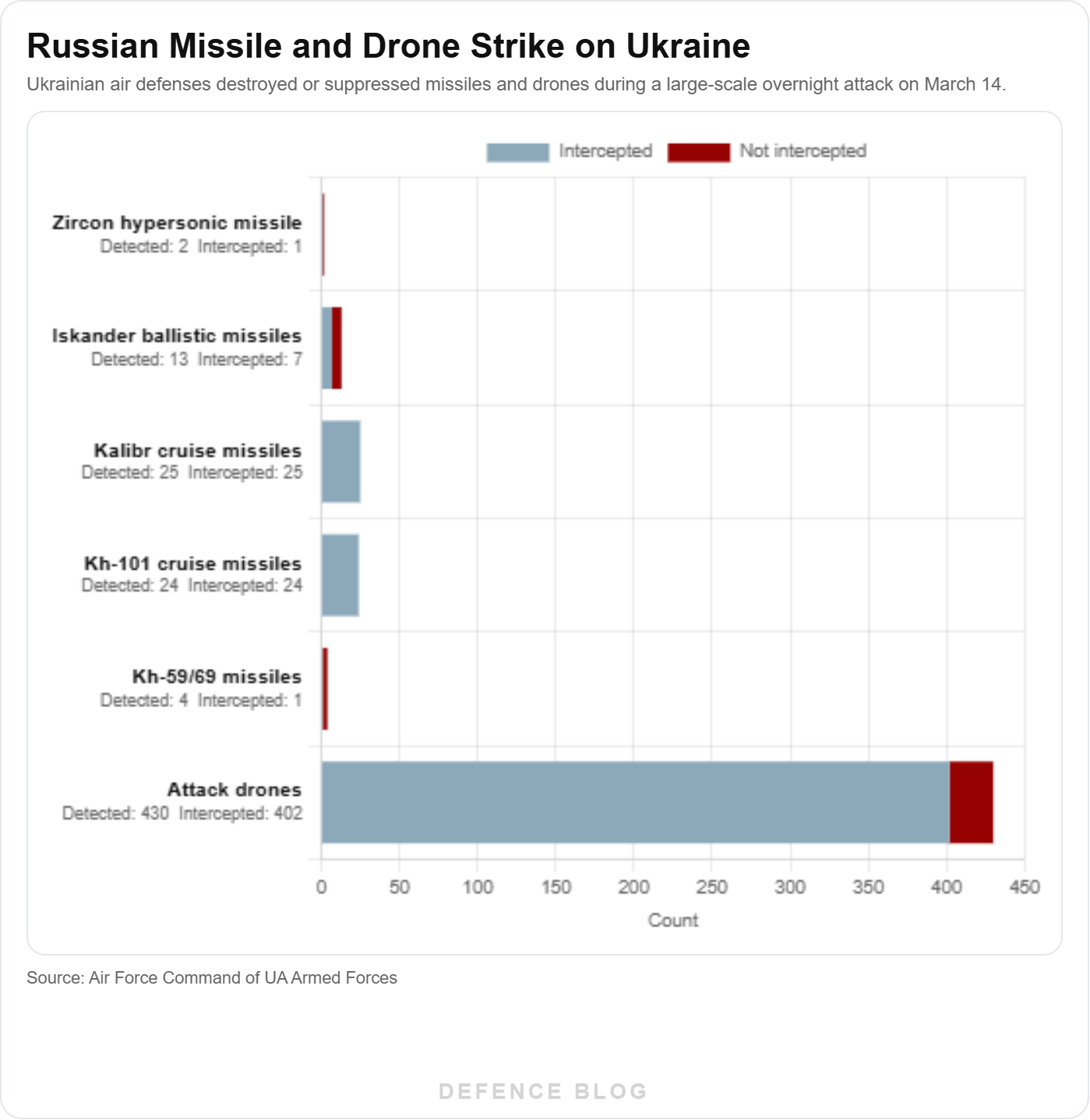
The main feature of the new package is its scale and structure. The sanctions are aimed not only at well-known design bureaus or enterprises that officially assemble missiles. The list includes intermediaries, electronics suppliers, machine manufacturers, logistics firms, and foreign companies that help obtain components through third countries. It is this periphery that is more important today than the loud names. A modern Russian missile is not an autonomous product of a Soviet factory, but the result of a distributed network, where critical microchips, navigation elements, and equipment can pass through several jurisdictions.
European diplomats quoted by Reuters link a significant portion of the new designations to the Russian missile industry. The Guardian notes that this concerns 1646 individuals and organizations, most of which are related to the military-industrial sector. The formal adoption of the package is expected later, so individual items and legal formulations may still change. But the political signal has already been formed: the EU is trying to move from punishing individual enterprises to mapping the entire production ecosystem.
Why This Is Not a Repeat of the 2022 Sanctions
In 2022, Western policy was based on the assumption that a ban on high-tech supplies would quickly create a shortage and reduce the intensity of Russian strikes. This assumption turned out to be too mechanistic. Russia maintained missile production thanks to stockpiles, parallel imports, a shift in procurement to China, Turkey, the Caucasus, and Central Asia, as well as by replacing some components with less advanced analogs. The Russian industry did not avoid quality losses, but learned to live in a mode of constant circumvention of restrictions.
The current package is important precisely because it takes this experience into account. Its purpose is to increase the cost of each operation to circumvent sanctions. If previously a front company could transfer electronic components through one country, now the entire network of counterparties is under threat. For a Russian enterprise, this means more checks, longer routes, increased fees, and the risk of payment blockages. In a military economy, such delays are not always noticeable in quarterly reports, but they directly affect the pace of replenishing stocks.
Missile Warfare and the Limits of the Production Model
The Russian army continues to use missiles and drones to pressure Ukrainian cities, energy infrastructure, and logistics. In recent days, according to BBC reports, Ukrainian settlements have experienced a new wave of strikes, including on Kramatorsk and Kyiv. The Russian Ministry of Defense claims to have hit military and port targets, while Ukrainian authorities report numerous civilian casualties. This difference in the description of targets has political significance, but for the industry, another aspect is more important: Moscow maintains a high expenditure of expensive munitions.
A ballistic missile requires not only a body and engine. It needs precise navigation, stable control, heat-resistant materials, a testing base, and production equipment. Even if some electronics can be replaced, the replacement is not always equivalent. Problems arise with accuracy, shelf life, resistance to interference, and stability of serial production. Therefore, sanctions do not have to immediately reduce the number of launches to be effective. Their result may manifest in a shift from qualitative superiority to quantitative compensation.
Sanctions rarely turn off the military industry with a single switch. They force it to pay more for each unit of previous productivity.
Political Effect for Moscow and Brussels
For the Kremlin, the new package is both an economic problem and a propaganda resource. Russian authorities will be able to present the sanctions as proof of a direct war with Europe and use them to justify further mobilization of the industry. But such rhetoric does not negate the arithmetic. The more resources are spent on intermediaries, insurance, and unofficial channels, the less remains for modernizing factories, salaries for engineers, and developing civilian technologies.
For the EU, this is a test of its ability to control exports. The list of 1646 items is impressive, but effectiveness is determined not by the number of names, but by implementation. If European banks and customs services only close obvious routes, Russian procurement will shift to new chains. Data exchange, end-user control, and coordination with the USA, UK, South Korea, and other countries where dual-use components are produced are needed.
Forecast for 2026
The new package will not stop Russian missile strikes in the coming weeks and will not automatically create a shortage. A different scenario is more likely: Russia will retain the capability for massive attacks but will be forced to choose between the frequency of launches, the complexity of missiles, and stockpiling. Cheap strike drones will continue to compensate for the shortage of expensive systems, while ballistic missiles will be used more selectively.
The Russian military-industrial complex will survive the expansion of sanctions — this is both its strength and its trap. It knows how to mobilize resources but struggles to update its technological base without access to external markets. If the EU truly cuts off not just individual supplies but the network of intermediaries, the limits of this model will become evident not in newspaper statements but in the production pace of 2026. Moscow will continue to produce missiles, but the cost of previous intensity will rise, and the technological gap will slowly and almost imperceptibly become permanent.
Sources
- Reuters, “EU envoys approve new Russia sanctions listings, diplomats say”, October 7, 2026.
- The Guardian, “Ukraine war briefing: Zelenskyy condemns ‘vile’ attacks from Russia that killed 20 in one apartment”, October 8, 2026.
- BBC News, “Russian strike on buses kills at least 30, say officials, as deadly attacks on Ukraine surge”, October 8, 2026.
- Ukrainska Pravda, report on the planned approval of the EU sanctions list of 1646 items, October 7, 2026.
The European Union has approved a sanctions package targeting 1646 individuals and organizations linked to the Russian missile industry in October 2026. These sanctions aim to disrupt the supply chain and increase costs associated with missile production. The measures are designed to impact not only manufacturers but also suppliers and intermediaries, thereby affecting Russia's military capabilities. Despite these sanctions, Russia is expected to maintain its missile strike capabilities while facing increased operational costs.
- EU sanctions list includes 1646 new entries related to the Russian military-industrial complex.
- Sanctions target not only missile manufacturers but also suppliers and intermediaries.
- The sanctions aim to increase the cost of circumventing restrictions on missile production.
- Russia continues to use missiles and drones in its military operations against Ukraine.
- The sanctions are expected to affect the pace of missile production and technological advancement.