
EUCOM hands over Ukraine aid to NATO Europeans 2026 and examines America's troop role
 Dr. Klaus Weber
EUCOM Transfers Ukraine Aid to NATO Europeans 2026 and Examines America's Troop Role
On August 3, three signals were on the same table: EUCOM is beginning, according to a report from Stars and Stripes, to gradually transfer the Ukraine support mission to NATO allies; the Pentagon confirms, according to Euractiv, that consultations for the Europe Posture Review are already underway with allies; and Poland is preparing, according to Defense News, for the first exercises of the so-called Coalition of the Willing with British and French forces this fall. Together, this is not a routine of alliance management. It is a stress test of whether Europe can take operational responsibility before it has created the institutional prerequisites for it.
Three Decisions, One Problem
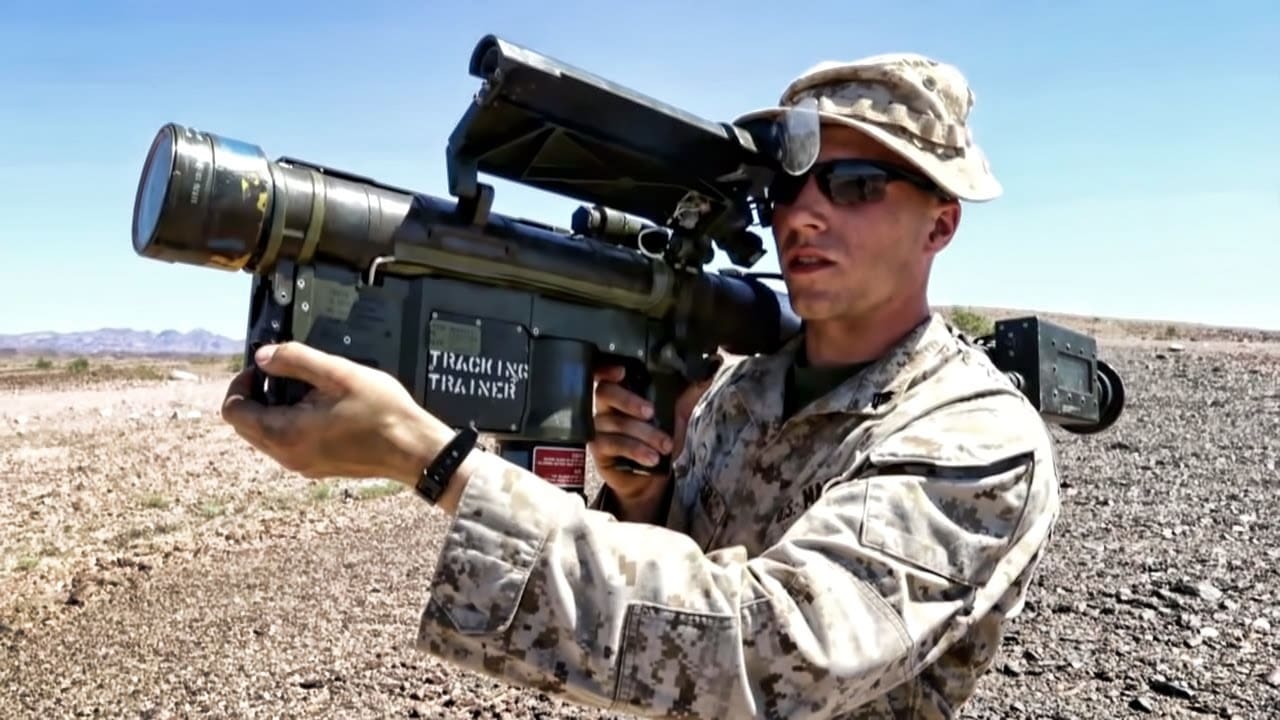
The Polish plans are particularly revealing because they translate the abstract concept of security guarantees into military actions. According to the Polish Ministry of Defense, the maneuver is intended to test the command and control system, logistical support, and troop deployment. France and the UK are acting as framework nations. Poland also sees itself as a logistical and infrastructural hub for a Multinational Force Ukraine. This is factually plausible: Without Polish railways, roads, depots, air defense, and border infrastructure, any European Ukraine mission would be politically impressive but operationally thin.
This is exactly where the Weber problem begins. A coalition can act faster than the EU and be politically more visible than NATO. But it lacks both the legal quality of Article 5 and the permanent planning routine of an integrated NATO command structure. London and Paris can be framework nations, but they cannot automatically replace the strategic depth that has so far consisted of US intelligence, US airlift, US air defense, and American nuclear assurance. Anyone wanting to secure a mission in Ukraine after the war must not only send soldiers. They must guarantee escalation management, supply, spare parts, air defense, medical chains, and political decision-making speed. But is that format sufficient for this?
Poland's East Shield Shows Europe's Realistic Side
Poland is investing 10 billion Zloty, around 2.6 billion US dollars, in East Shield. The program concerns approximately 800 kilometers of border with Belarus and the Russian exclave of Kaliningrad. Importantly, Warsaw is not selling the project as a nostalgic bunker line. According to Defense News, it is about a distributed defense infrastructure with logistics hubs, material depots, shelters, obstacles, and drone reconnaissance through radar, thermal imaging, and acoustic sensors. This is one of the rare European measures where money, geography, and tactical lessons from Ukraine actually fit together.
The German involvement is also politically noteworthy. A Bundeswehr engineering component is rotating to support Poland in expanding the infrastructure. For Berlin, this is not a major capability program, but an important step away from the usual German symbolic politics. German soldiers are not building an abstract deterrence narrative in Lithuania, but concrete infrastructure on Poland's northeastern NATO flank. This is less spectacular than a new brigade announcement, but militarily more honest.
Nevertheless, the asymmetry remains. Poland is building spaces, nodes, and sensors. Germany is providing engineering support. France and the UK are providing the political framework for a Ukraine coalition. The US is simultaneously examining which forces it wants to maintain in Europe in the future. Four movements, four decision logics. The alliance is approaching a European division of labor, without it being clear who will have the final operational authority in a crisis.
The Europe Posture Review is the Real Lever
The American Europe Posture Review is therefore more important than many European statements. If Washington merely transfers tasks to European allies but retains key enablers in Europe, a controlled burden-sharing emerges. However, if the review significantly reduces US presence, air defense, strategic transport, or command support, burden-sharing becomes a capability gap with a European flag. This distinction is too often blurred in European debates.
The figures from Poland's East Shield appear robust, but they only answer the border question. They do not address who will conduct reconnaissance in the Black Sea, who will provide long-range air defense, who will prioritize satellite data, who will control the escalation ladder in the event of a Russian provocation, and who will politically bear the losses. An autumn exercise can test command processes. However, it cannot simulate a political guarantee if the involved governments have not yet decided which risks they are willing to accept in a serious situation.
This is the difference between capability and capacity. Europe possesses individual capabilities: French expeditionary routine, British command staffs, Polish logistics spaces, German engineering forces, Nordic-Baltic border experience. What is lacking is capacity in depth and a robust mechanism to bundle these national capabilities under time pressure. PESCO has not yet provided a hard answer for this. The EU Battle Groups have proven for years that availability on paper is not the same as operational capability. And NATO remains a strong military integration machine as long as the American axis is not thinned out.
Why the Mission Comes Politically Sooner than the Structure
For Ukraine, the development is still significant. When EUCOM hands over tasks to European NATO allies, it signals to Moscow that support does not automatically end with American domestic politics. When Poland conducts an exercise with France and the UK, the term security guarantee for the first time becomes a logistical and command issue. For Kyiv, this is better than European summit rhetoric.
For Europe, it is more uncomfortable. The political temptation is to sell these exercises as proof of strategic maturity. In reality, they primarily show how late the institutions react. If Europe had consistently integrated ammunition production, air defense, military mobility, and C2 standards since 2022, the current task shift would be a natural consequence of grown strength. Instead, it appears as a reaction to American pressure and the uncertainty of upcoming US troop planning.
This does not mean that the Coalition of the Willing is wrong. On the contrary: it is likely the only realistic way, as EU unanimity and NATO consensus for a Ukraine guarantee are politically too slow. But a coalition is a bridge, not a foundation. It can connect national contributions but cannot resolve institutional ambiguity. The more Europe treats it as a substitute for NATO structure or EU decision-making capability, the greater the discrepancy will be between announcement and endurance.
Europe's New Responsibility is Not Yet European Action Capability
August 2026 therefore does not mark a major European turning point but a sober moment of accounting. Poland is building border infrastructure. Germany is providing practical support. London and Paris are testing a coalition role. Washington is reviewing its European presence. Each part is logical. The problem lies in the lack of a common mechanism.
Europe is gaining more responsibility before it has learned to institutionally store responsibility.
That is the strategic paradox. Without a European takeover of Ukraine tasks, the alliance remains politically dependent on Washington. With a European takeover without a clear structure, a new vulnerability arises: more European visibility, but not automatically more European action capability. More responsibility is necessary. However, it is not yet a capability as long as it is not translated into command authority, logistics, air defense, and political risk-sharing.
EUCOM is transferring Ukraine support to NATO allies by August 2026, with Poland preparing military exercises alongside British and French forces. The U.S. is reviewing its troop presence in Europe, while Poland invests in border defense infrastructure against Belarus and Kaliningrad. This shift indicates a growing European military responsibility amid ongoing consultations on military logistics and capabilities.
- EUCOM is gradually transferring Ukraine support to NATO allies by 2026.
- Poland is preparing military exercises with British and French forces.
- The U.S. is reviewing its troop presence in Europe.
- Poland is investing in border infrastructure for defense against Belarus and Kaliningrad.
- The report highlights the need for a coordinated European military response.