
European troops set to train in Poland for postwar Ukraine deployment
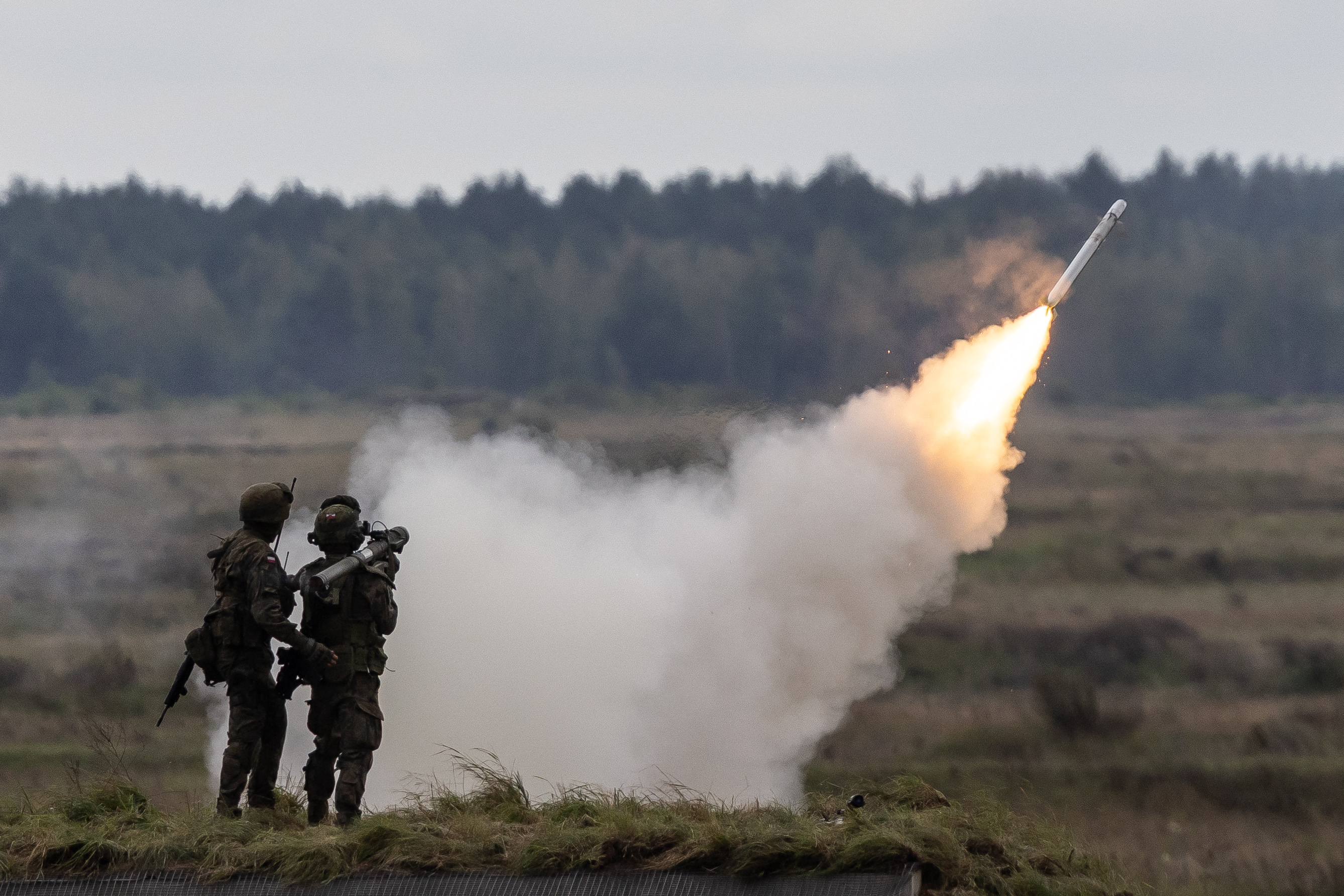
KYIV, Ukraine — Thousands of European troops will gather in Poland next week for the Coalition of the Willing’s first major military exercise, a rehearsal for deploying a multinational force to Ukraine once the war with Russia comes to an end, European officials announced this week.
The exercise comes as U.S., Russian and Ukrainian negotiators are set to meet in Abu Dhabi on Nov. 10 and 11, special envoy Steve Witkoff said Monday. The meeting caps a tumultuous year for Ukraine’s peace talks, which stalled after the U.S. and Israel began striking Iran in February and revived only in September, when Witkoff and fellow envoy Jared Kushner met Putin in Moscow before traveling to Kyiv for their first visit as negotiators.
Britain and France will jointly lead KOALICJA 26.2 from Nov. 9 to 22, bringing together 2,800 troops from 11 nations for coordinated activities in Poland, France and Turkey under the coalition’s military arm, the Multinational Force-Ukraine (MNF-U). American troops will not participate.
The drills will combine air, land and sea forces to “test how to move, protect and supply a force that would help rebuild Ukraine’s Armed Forces once the fighting ends,” according to a British Ministry of Defence statement.
Belgium, Estonia, France, Germany, Lithuania, the Netherlands, Spain, Sweden, Turkey and Britain are also taking part.
The training will prepare troops for the force’s eventual missions, which could include securing critical infrastructure, training Ukraine’s military, helping protect the skies and clearing mines from the Black Sea, as part of a broader package of security guarantees for Ukraine, according to the French ministry’s statement.
“This exercise shows the UK is stepping up, alongside France and our allies, to prepare for the day peace comes to Ukraine. This isn’t a hypothetical plan; it’s a real force, ready to help Ukraine once the fighting stops,” British Defence Secretary Wes Streeting said in the ministry’s release.
The MNF-U will reportedly not have a peacekeeping or ceasefire-monitoring mandate or operate under NATO command. It would move into Ukraine only after a ceasefire and at Kyiv’s request.
Ceasefire monitoring “would be a different task from that of the multinational force, whose aim is different in nature because it is meant to support the Ukrainian army in its ability to be beefed up,” former French Ambassador to Ukraine Gaël Veyssière told Military Times in April.
The drills will also test “command-and-control arrangements for the force” and assess “how different components can integrate and operate effectively as one multinational force,” according to the British release.
Britain is sending 300 personnel, including soldiers from the British Army’s 7th Light Mechanised Brigade, known as the “Desert Rats,” to rehearse logistical movements. Warsaw will manage the movement of MNF-U troops after the war but will not send its own soldiers into Ukraine. Nearly 2,000 Polish soldiers will take part in addition to the foreign forces, the Polish ministry said.
France is sending “hundreds” of troops, including a unit equipped with about 50 “contact drones,” the second of its kind after one deployed to Romania, Army Chief of Staff Gen. Jacques de Montgros’s told lawmakers last month.
Turkey will not send troops to Poland, the French ministry said, but will stand up the MNF-U’s maritime element in Istanbul, “testing arrangements for maritime mine clearance to allow commercial shipping to safely return to Ukraine’s ports,” according to the British release.
“This exercise will show that the Multinational Force-Ukraine is a real, capable, readily deployable force that represents a serious commitment from Coalition of the Willing nations to Ukraine’s long-term stability and security,” said the commander of MNF-U, British Lt. Gen. Tom Bateman.
The exercise announcements do not specify the final size of a force that could deploy to Ukraine, but Britain and France said earlier this year that they were prepared to contribute roughly 5,000 troops each.
Even a minimal “tripwire” presence would require 10,000 to 25,000 troops, the Center for Strategic and International Studies assessed last year. Because only a third of any force is frontline-ready at a given time, rotations push that number far higher, Ed Arnold, a senior research fellow at the Royal United Services Institute and a former British military officer, told Military Times.
Russian President Vladimir Putin has rejected allowing a foreign troop presence in Ukraine, and he warned in September 2025 that Western forces deployed there would be legitimate targets.
Although the MNF-U is not a peacekeeping force, Polish defense officials said its presence is meant to ease Ukrainian fears of a renewed Russian attack once the war ends.
Ukrainian President Volodymyr Zelenskyy pressed allies on Wednesday to move quickly, pointing out that Russian forces continue to batter Ukraine’s power grid and other critical infrastructure as the country braces for its fifth winter of full-scale war.
“Peace has no alternative, and postwar security guarantees must be truly cast-iron,” he said.
Thousands of European troops are gathering in Poland for the Coalition of the Willing's military exercise from November 9 to 22, 2023, preparing for a potential deployment to Ukraine post-war. The exercise involves 2,800 troops from 11 nations, led by Britain and France, focusing on logistics and command integration. The Multinational Force-Ukraine will not have a peacekeeping mandate and will only enter Ukraine at the request of the Ukrainian government.
- 2,800 troops from 11 nations will participate in the exercise in Poland.
- The exercise is a rehearsal for deploying a multinational force to Ukraine after the war.
- Britain and France are leading the exercise, which will run from November 9 to 22, 2023.
- The MNF-U will not operate under NATO command and will only enter Ukraine at Kyiv's request.
- The exercise aims to test command-and-control arrangements and logistical movements.