
Europe's HYDIS Interceptor 2026 Achieves Concept Readiness and Reveals the 100 Million Euro Gap
 Dr. Klaus Weber
Europe's HYDIS Interceptor 2026 Achieves Concept Maturity and Reveals the 100 Million Euro Gap
On July 10, a European program reported a progress that sounds greater than it is militarily at first: HYDIS, the hypersonic defense interceptor system led by MBDA, has passed its Final Concept Review. Four countries — France, Germany, Italy, and the Netherlands — have thus confirmed a preferred design for a future interceptor missile against hypersonic glide vehicles, hypersonic cruise missiles, and maneuvering ballistic missiles. However, the crucial sentence lies deeper in the OCCAR announcement: In the last program year, critical technologies are to be brought to at least Technology Readiness Level 3. TRL 3 means experimental proof of a concept, not pre-series, not procurement, not protection of European cities.
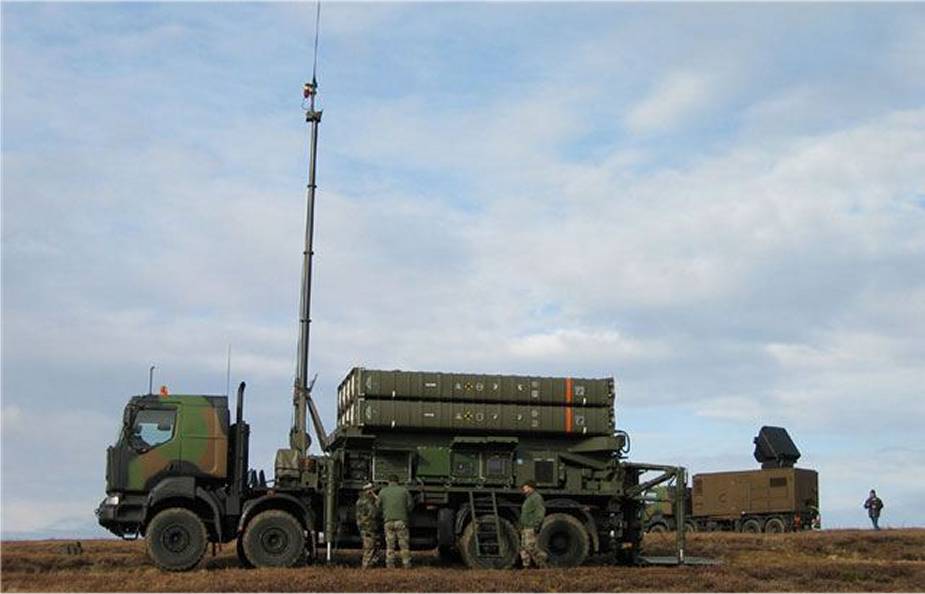
It is precisely in this gap between political language and technical maturity that the real issue lies. Europe has understood that Patriot, SAMP/T, and Aegis Ashore are only partially sufficient against the new threat class. However, it has not yet decided whether it can timely create a capability from two competing European hypersonic defense projects. HYDIS is the French-multinational path through MBDA and OCCAR. HYDEF, led by Diehl Defence and coordinated from Spain, is the German-Spanish counterproposal. Both programs cannot be permanently funded in parallel if the logic of the European Defense Fund indeed only provides about 100 million euros for the next endo-atmospheric interceptor step in 2026.
A Concept is Not Yet a Capability
OCCAR describes the HYDIS process as a funnel. In December 2024, several solution spaces were examined, including in-dive and in-glide interception approaches. By October 2025, two candidates remained. Now a single concept has been confirmed, whose terminal phase was tested against representative threat models. These models came from CIRA in Italy, ONERA in France, and TNO in the Netherlands. This is methodologically sound and politically important. It prevents a project from consisting solely of industrial self-presentation.
But the methodology does not replace maturity. An interceptor system against hypersonic weapons must simultaneously master sensors, fire control, boosters, kill vehicles, thermal resilience, maneuverability, and maritime as well as land-based integration. The solid rocket motor mentioned by MBDA, the work of Avio, ArianeGroup, Roxel, Lynred, Thales, and GKN Fokker shows a serious industrial base. Yet this enumeration also highlights the European problem: many excellent components do not yet constitute a European air defense architecture.
The Competition with HYDEF is Politically More Useful than Militarily Convenient
HYDEF initially won the EDF competition for a hypersonic interceptor in 2022. France and MBDA did not accept this decision as strategically sufficient because MBDA was already working with Aquila and related technologies. The Commission therefore effectively financed a second line with HYDIS. From the perspective of innovation policy, this can be defended: competition forces both consortia to better designs. From the perspective of military planning, it is riskier. Europe loses time if it does not decide after the concept phase which system will be transitioned into a common development and procurement logic.
The numbers are revealing. HYDIS received about 80 million euros from the EDF, plus about 60 million euros from the four partner states. HYDEF received 100 million euros from the EDF and another approximately 10 million euros from Belgium, Germany, Norway, Poland, and Spain. This is significant for research and technology, but small for a capability against hypersonic threats. For comparison: even a limited Patriot follow-on procurement consumes billions. Europe is thus debating a threat against which Moscow, Beijing, and Washington have maintained billion-dollar programs for years, with project budgets that are more suited to demonstrators than to operational systems.
TWISTER Remains the Right Framework, but No Automatism
HYDIS and HYDEF are connected with TWISTER, the PESCO project for timely warning and interception with space-based surveillance. The connection is crucial. A hypersonic interceptor without early warning architecture is just an expensive endpoint. Hypersonic glide vehicles shorten reaction times, change flight paths, and undermine classical ballistic prediction models. To intercept them, one needs a chain: space sensors, ground and sea radars, data fusion, command decision, fire release, and finally an interceptor that can maneuver in seconds.
Europe possesses parts of this chain, but not the chain as a politically tested structure. France traditionally thinks more in terms of national strategic sovereignty, Germany in alliance integration and industrial balance, Italy and the Netherlands in maritime and air defense policy niches. This does not have to fail. But it means that the most difficult question is not the geometry of the kill vehicle, but the governance of the capability. Who decides on rules of engagement? Who pays for series production? Which navy gets VLS integration in MK41 cells first? Which army receives the land-based version? And will NATO integrate the European solution into its Integrated Air and Missile Defence in such a way that it does not remain just an EU showcase?
Germany's Role is More Uncomfortable than Berlin Admits
For Germany, HYDIS is particularly interesting because Berlin stands in both political worlds. Germany is a HYDIS partner state, but the German industry is centrally involved in HYDEF through Diehl. This can be wise if Berlin acts as a bridge builder. However, it can also reinforce the known German tendency to postpone difficult decisions through parallel financing. After FCAS, Main Ground Combat System, and European Sky Shield, this danger should not be underestimated.
The German security policy reflex often states: first involve as many partners as possible, then secure industrial balance, then talk about capabilities. In hypersonic defense, this order is dangerous. The threat forces a system decision before all national preferences are satisfied. If Germany truly claims a European leadership role, it must state in 2026 whether it prioritizes HYDIS, HYDEF, or a hard fusion of both lines. Silence would not be European sensitivity, but procurement delay.
The Strategic Lesson
HYDIS has made real progress. It would be unfair to dismiss the Final Concept Review as symbolic politics. A validated design, shared threat models, and a concretely named industrial architecture are more than many European programs can demonstrate at this stage. But the progress also shows the limits of the European defense model. Europe is good at generating technological options. It is weaker at turning options into a common operational system in a timely manner.
The 100 million euro decision of the EDF for 2026 will therefore be greater than its sum. It will not only decide on an interceptor. It will determine whether Europe can break out of the logic of competing demonstrators. More money would be helpful, but it does not automatically resolve the institutional question. Less money would be honest if Europe admitted that it continues to rely on American or Israeli layers of missile defense. The worst path would be the familiar European middle way: keeping two programs alive, not upsetting anyone, and ultimately realizing that hypersonic weapons fly faster than Brussels compromises.
Source Situation
- OCCAR, HYDIS Final Concept Review, July 10, 2026.
- Defense News, Europe’s HYDIS project settles on concept for hypersonic interceptor, July 13, 2026.
- European Defense Fund and PESCO framework for HYDIS, HYDEF, and TWISTER.
The HYDIS hypersonic defense interceptor system, led by MBDA and involving France, Germany, Italy, and the Netherlands, passed its Final Concept Review on July 10, 2026. The program aims to develop an interceptor against hypersonic threats, with a budget of around 100 million euros for the next steps. Competing with the HYDEF program, the report emphasizes the necessity for a unified European air defense strategy to address emerging threats effectively.
- HYDIS has passed its Final Concept Review on July 10, 2026.
- The program involves four countries: France, Germany, Italy, and the Netherlands.
- A budget of approximately 100 million euros is allocated for the next interceptor step.
- HYDIS is competing with another program called HYDEF, led by Diehl Defence.
- The report highlights the need for a cohesive European air defense architecture.