
Expanding Aspides to Hormuz with Four European Ships Reveals the Inability to Protect a Fifth of Global Energy in 2026
 Ahmed Al-Rashid
Expansion of Aspides to Hormuz with Four European Ships Reveals Inability to Protect Five Percent of Global Energy by 2026
On May 28, 2026, Kaja Kallas emerged from a meeting of foreign ministers in Limassol with a short statement that suffices to explain Europe's predicament in the Gulf: freedom of navigation in the Strait of Hormuz after the end of the Iran War will require more ships. This statement is not new in principle; every crisis in the Gulf ends with the same phrase, but this time it was issued while the European Aspides mission has only three ships in the Red Sea and promises to add one more, in a corridor through which nearly five percent of the oil and gas used globally passed before the war.
The issue here is not that Europe has been slow to recognize the importance of Hormuz. Europe has known this for decades and understands that insurance and shipping prices do not wait for Brussels' data. The issue is that the war has retested the Europeans' ability to convert economic anxiety into real naval power, and the result so far is modest. Militarily, the term freedom of navigation is insufficient unless backed by air defense destroyers, mine sweepers, armed helicopters, continuous maritime intelligence, and nearby supply bases. Any military personnel who has served in the region knows that the strait does not open with statements but with the number of vessels capable of remaining at sea when risks rise.
From the Red Sea to Hormuz: One Mission or Two Different Gaps
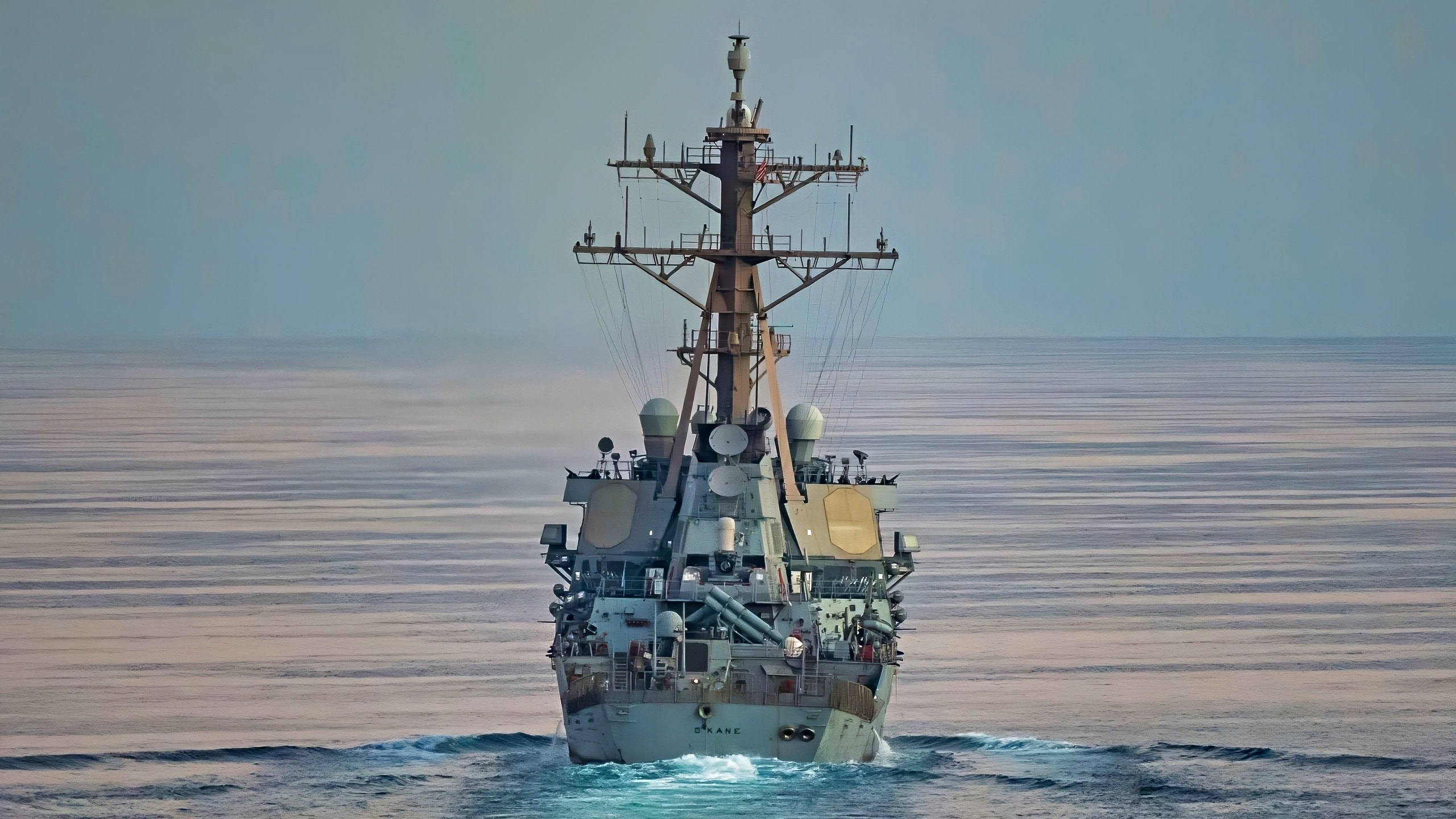
The Aspides mission was originally established to protect shipping in the Red Sea from Houthi attacks. This is a difficult theater, but it does not compare to Hormuz. Bab el-Mandeb faces threats from missiles, drones, and explosive boats, while Hormuz adds the possibility of naval mines, fast Revolutionary Guard boats, coastal missiles, navigation jamming, and Iranian political management of the passage through authority or crossing protocols. Therefore, when Kallas says that Aspides plans may need to be adjusted to include ships specialized in mine clearance, she is not talking about a technical detail but about a transition from a limited escort mission to a partial maritime control mission.
The other difference is that Hormuz is not a passage far from the heart of the conflict; it is part of Iran's negotiating tools. Tehran knows that Europe does not want a naval war, that Gulf states do not want their ports to become daily targets, and that Washington is trying to reduce the cost of involvement after months of operations. This gives Iran room to exert pressure without completely closing the strait. Allowing certain ships, delaying others, imposing confirmation of passage, or creating ambiguity around insurance are all cheaper tools than launching a missile and more impactful in the market.
Four Ships Do Not Create Deterrence
The number to focus on is not the additional 15 million euros to extend the mandate until February 2027, but the number of ships. Three ships, and perhaps a fourth, do not create a protective network for a corridor of this size. Even if Europe integrates Aspides with a potential French-British force, as some capitals discuss, the issues of command, rules of engagement, and air cover will remain. Will the force operate under the EU flag or under French-British command? Will it respond to an Iranian boat approaching rapidly? Will its ships enter the mine threat zone before ensuring the removal of a significant portion of them? These are practical questions, not just legal ones.
Le Monde reported in April harsh estimates about the symbolism of the proposed European force, some of which are true despite their harshness. Europeans have professional navies, but they do not have a large maritime surplus. The frigate sent to the Gulf is not in the Atlantic, Mediterranean, or Baltic. A destroyer needing maintenance does not become ready because a minister wants a stronger political statement. In my view, the problem is not courage but the cold calculation of capability. Naval power is a long daily task, not a public relations campaign.
The Gulf Hears the Message Differently
From Riyadh, Abu Dhabi, Doha, and Kuwait, the European call seems useful but insufficient. Gulf states are not looking for a new flag on an escort ship but for assurance that ports, energy facilities, and insurance lines will not remain hostages to an Iranian decision or American hesitation. Here, the triangle of capability that I often repeat returns: equipment, training, and institution. The Gulf has purchased air defense, missiles, and radars for billions of dollars, but it cannot manage the security of a global corridor alone if the rules of engagement, naval cover, and space intelligence are in the hands of external powers.
This does not mean that the Gulf is without options. Saudi Arabia has an east-west line to the Red Sea, the UAE has the Fujairah outlet outside the strait, and Qatar can use its weight in the gas market to raise the cost of continuing the crisis. But these alternatives do not eliminate Hormuz; they only mitigate the shock. If insurance remains high for an entire year, as a European official told the AP, the problem will not only be the price of oil but the market's confidence in the Gulf's ability to export under pressure.
Insurance May Defeat Small Fleets
One of the most overlooked aspects of the crisis is that commercial ships do not move solely based on military risk but based on the calculations of insurance companies and owners. If circumventing Africa becomes cheaper than passing through the Red Sea or Hormuz, this is a practical defeat for any naval power claiming to have reopened the corridor. Therefore, Europe is considering government guarantees for shipping companies to reduce insurance premiums. This is an important step, but it means that deterrence is no longer solely military but also financial.
The attack on the CMA CGM ship in early May, as reported by Reuters through maritime reports, was a sufficient message to shipping companies. Iran or its proxies do not need to sink a giant tanker every week. One hit, an injured crew, and widespread navigation jamming are enough to divert commercial routes. Practically, Europe is now trying to build a bridge between the navy and insurance companies, and this bridge is fragile if not supported by a capable force for rapid response.
Beyond Hormuz
The Arab lesson from this crisis is clear: those who leave their maritime passage to others will find themselves waiting for a meeting of foreign ministers in a distant city to know whether an additional ship will come or not. This is not a romantic call for complete Gulf maritime self-sufficiency, as that is unrealistic in the short term. But it is a call to recognize that reliance solely on the United States is no longer comfortable, and betting solely on Europe is less comfortable.
If Aspides expands to Hormuz, it will be a useful political step and a message of solidarity with the Gulf, but it will not redefine energy security unless it transforms from four ships into a continuous system. Mines do not respect EU statements, and the Revolutionary Guard does not assess risks the way insurance companies in London do. And between the Gulf's desire for independence and its need for external protection, the contradiction remains the same: we buy the most expensive defense systems, then wait for an additional ship to guard the front door.
Sources
The European Aspides mission is expanding to include four ships to enhance protection for shipping in the Strait of Hormuz as of May 28, 2026. This expansion aims to address the challenges posed by Iranian military threats and ensure freedom of navigation in a critical global energy corridor. The mission currently operates with limited naval assets, highlighting the logistical difficulties faced by European forces in the region.
- The Aspides mission currently has three ships in the Red Sea and plans to add one more.
- The European mission is aimed at ensuring freedom of navigation in the Strait of Hormuz.
- Iran's military capabilities pose significant threats to shipping in the region.
- European nations are considering adjustments to their naval strategy in response to the situation.