
F-35 parts tracking failures threaten jet readiness, GAO warns
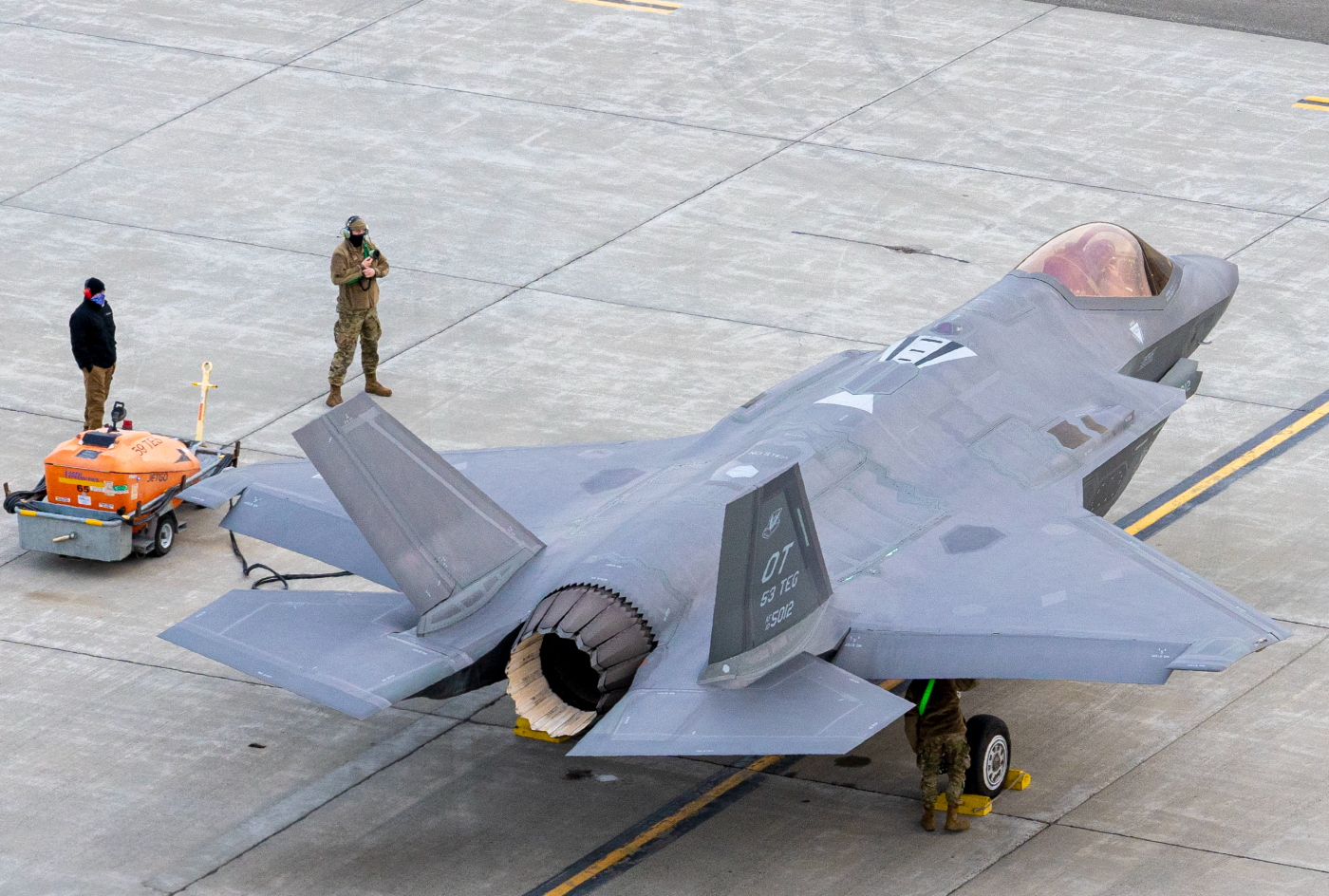
The U.S. Department of War cannot reliably track the roughly 26 million F-35 spare parts it owns, worth about $31 billion and stored at more than 700 government and contractor facilities around the world, the Government Accountability Office said in a report released Nov. 9. The congressional watchdog found that the F-35 Joint Program Office’s records do not reflect real-time changes, are “inaccurate and incomplete,” and leave the program unable to account for parts that have gone missing.
Among the clearest gaps, the program office had not entered about 17,000 parts that were in maintenance or repair into its accountable property system as of March 2026. GAO valued those parts at roughly $1.3 billion, and Pentagon officials told the watchdog the figure could be as high as $2.5 billion. The office also still did not know the status of lost F-35 parts valued at more than $85 million that GAO first reported in 2023.
“DOD has long-standing and ongoing deficiencies related to the accountability and financial reporting of F-35 parts,” GAO analysts wrote in the report, which Stars and Stripes reported on the day of its release.
Most of the problem lies outside military bases. About 70 percent of the parts sit at government-managed facilities and 30 percent at contractor sites, and the program office cannot see in real time what contractors hold. GAO found that the prime contractors themselves “do not have visibility of parts held beyond the subcontractor level,” so the Pentagon could not always physically verify parts at lower-tier suppliers, and as of August 2026 officials did not know when the primes would provide a list of those locations. Parts moving through commercial shippers may not be tracked in any government or contractor system and can drop out of the inventory records used for physical counts.
The program office told GAO it was testing an interface with one prime contractor and expected to establish “a live connection” between that company’s system and its own database in September 2026, with contracts for further interfaces expected in September and October. GAO said the office still has no procedures to check the accuracy of data contractors report, a gap the watchdog flagged in a 2022 report. The program agreed with that recommendation but has not fully acted on it.
The report is GAO’s third on F-35 financial management since 2019, and it found that the Pentagon has made “minimal progress” on earlier advice. Of the 34 recommendations GAO and the Department of War Inspector General have issued on F-35 parts accountability, 26 remain open, including a 2022 recommendation for periodic physical inventories of parts.
GAO also found no established procedures for reviewing losses of parts at government-managed facilities, which limits the Pentagon’s ability to detect fraud, waste or theft. It made four new recommendations: monitoring losses and analyzing trends, writing F-35-specific procedures for accountable property officers, training those officers, and determining how many officers the program needs, where, and how much of their time the job requires. The Department of War agreed with all four.
The accounting failures have a cost beyond the books. Department auditors have reported a material weakness tied to the F-35 program since fiscal 2019, and GAO said the parts problems “will continue to contribute to the disclaimer of opinion” on the department’s financial statements. The Pentagon has received a disclaimer, meaning auditors could not form an opinion, in every full audit from 2018 through 2025.
“Unless it takes steps to address the identified issues, DOD will continue to struggle with accountability of F-35 parts, which will affect warfighter readiness and DOD’s ability to report reliable information in its financial statements,” GAO analysts concluded.
Readiness is already the program’s weakest point. In June, GAO reported in a separate review that only 25 percent of F-35s were fully mission capable in fiscal 2025, down from 38 percent in fiscal 2021, and that the mission capable rate had fallen from 67 percent to 44 percent over the same period. That report found the program must rely on industry for more than $7 billion in additional parts and materials, and cited a 2025 Lockheed Martin study identifying 48 parts the supplier base cannot produce in sufficient quantities, including canopies, one of the leading causes of grounded jets.
The program office estimated in June that it would need $13.7 billion more than planned through fiscal 2031 to meet its readiness goals of an 80 percent mission capable rate and a 65 percent fully mission capable rate by 2030. The F-35 is the most expensive weapons program in U.S. history, with a life-cycle cost GAO estimates at more than $1.9 trillion, and more than 800 of the jets are in service with the U.S. Air Force, U.S. Navy and U.S. Marine Corps.
The F-35 findings add to wider spare-parts problems across U.S. military aviation. The U.S. Air Force’s own fiscal 2027 budget documents show that only 8 of 24 aircraft fleets meet its parts supply standards, and the service has asked for $4.25 billion to buy critical spares. The F-35 line in that request carried no money, because the jet’s spares are managed through the F-35 Joint Program Office and its contractors, the same system GAO now says the Pentagon cannot fully see.
GAO did not estimate how many of the 26 million parts are actually missing, and the report does not say whether the live connection with the first prime contractor went into service as planned in September.
Content preview only. Full article available at source. View Full Article
The U.S. Department of War reported significant tracking failures of 26 million F-35 spare parts, valued at approximately $31 billion, stored globally. The Government Accountability Office highlighted that the F-35 Joint Program Office's records are inaccurate and incomplete, affecting military readiness. As of November 9, 2023, 26 out of 34 accountability recommendations remain unaddressed, contributing to ongoing deficiencies in parts management.
- The U.S. Department of War cannot reliably track 26 million F-35 spare parts worth about $31 billion.
- About 70% of the parts are stored at government-managed facilities, and 30% at contractor sites.
- GAO found that 26 out of 34 recommendations for F-35 parts accountability remain open.
- Only 25% of F-35s were fully mission capable in fiscal 2025, down from 38% in fiscal 2021.
- The F-35 program has a life-cycle cost estimated at more than $1.9 trillion.