
Finland Closes Airspace as Drones Make NATO's Border War Real
 Alexandra Reeves
Finland Closes Airspace as Drones Make NATO's Border War Real
Finland did not close part of its airspace because a Russian tank crossed the border. It did it because a drone might wander into the wrong patch of sky.
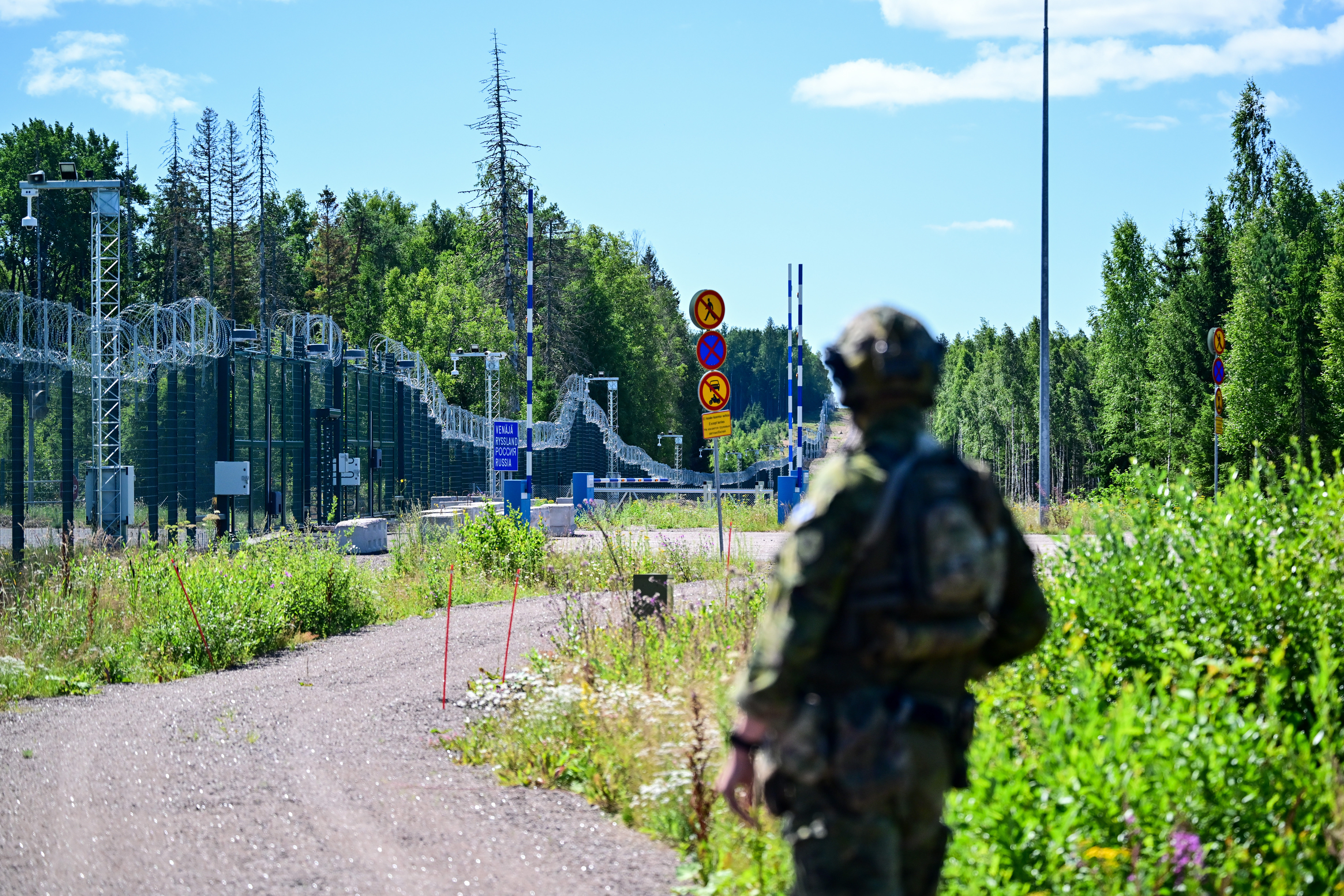
That is the uncomfortable new geography of the Ukraine war. On Tuesday, Finland's military closed a section of airspace and restricted maritime traffic off the country's southern coast near Russia, citing the risk of stray drones. According to Reuters, carried by Defense News, a Finnish military spokesperson said the measures were meant to let authorities operate safely if drones entered the area, including possible countermeasures and the protection of bystanders. The military did not disclose the source of the warning, calling it operational information.
For a country that joined NATO in 2023 and shares roughly 1,340 kilometers of border with Russia, this is not a minor aviation notice. It is a practical test of how the alliance handles incidents that are not quite attacks, not quite accidents, and not quite ignorable.
A Border Incident Without a Border Crossing
The Finnish case matters because it sits at the intersection of three trends NATO has been slow to fuse together: Ukraine's expanding long-range strike campaign, Russia's electronic warfare environment, and the legal-political caution of countries living beside the war.
Defense News reported that Ukrainian military drones targeting Russia have strayed into the airspace of Finland, Estonia, Latvia, and Lithuania this year. That list should make Brussels nervous. These are not faraway observers of the war; they are NATO members on the alliance's northern and Baltic front. The issue is whether NATO has a coherent playbook when those drones, or their debris, or Russian attempts to divert them, cross into allied territory.
Kyiv and several NATO countries have blamed Russian signal jamming for diverting some Ukrainian drones into allied airspace. Moscow says Ukraine is steering them there deliberately. Both claims serve obvious political purposes. But the operational problem exists either way. A cheap one-way attack drone, pushed off course by jamming or navigation error, can force a NATO state to close airspace, clear maritime traffic, alert local authorities, and decide whether to shoot down an object that may not be hostile in the strict legal sense.
That is exactly the kind of grey-zone mess Russia prefers.
The Drone War Is Moving North
Everyone in Washington likes to talk about deterrence as if it is a clean line on a map. Finland's closure shows the line is becoming an airspace management problem.
ISW's July 27 Russian offensive campaign assessment gives the wider context. Russia launched 147 drones against Ukraine overnight from July 26 to 27. Ukraine, in turn, continued long-range strikes against Russian infrastructure, including an export terminal in Rostov-on-Don, roughly 68 kilometers from the border and about 200 kilometers from the front line, and targets in Udmurtia and Yaroslavl more than 1,300 kilometers from Ukraine's border. ISW also cited open-source reporting that Russian authorities have built about 24 new Pantsir air-defense towers around Moscow in the last two months.
That pattern tells us something important. Russia is trying to harden its interior against Ukrainian drones, while Ukraine is proving that range and persistence can turn Russian logistics, oil infrastructure, and political centers into active defence problems. The spillover into Finland and the Baltic states is what happens when both sides fight a drone war across continental distances under heavy electronic warfare pressure.
NATO's traditional air-policing model was built around identifiable aircraft, radar tracks, fighter intercepts, and clear command decisions. A drifting drone is different. It may be small, slow, low, cheap, and ambiguous. It may carry explosives, or it may be empty. It may be Ukrainian, Russian, spoofed, jammed, damaged, or simply lost. The political cost of doing nothing can be high. The political cost of shooting it down can also be high.
Finland Is Better Prepared Than Most
Here is the thing: if this is hard for Finland, it is harder almost everywhere else.
Finland brings a serious border-security culture, wartime mobilisation habits, and a public that has never needed much persuading about Russia. Its armed forces understand dispersal, territorial defence, reserves, and civil preparedness in a way many older NATO members are now trying to relearn. It also sits beside the Gulf of Finland, where air, sea, energy infrastructure, shipping routes, and military surveillance are packed into a narrow corridor.
That makes Tuesday's restrictions a useful warning rather than a Finnish failure. Helsinki acted early, limited traffic, and framed the step as a safety and countermeasure issue. That is what competent states do when the risk is real but attribution is uncertain. Not every ally has Finland's instincts or geography-driven seriousness.
The alliance is being asked to manage the consequences of Ukraine's defence without pretending it controls every Ukrainian strike, every Russian jammer, or every malfunctioning drone. That is a delicate position, and delicate positions are not where NATO looks strongest.
The Article 5 Problem Nobody Wants
Article 5 is usually discussed in dramatic terms: missiles, armored columns, sabotage teams, nuclear threats. The harder 2026 question may be smaller. What happens when a drone crosses into NATO airspace, kills nobody, damages little, but forces repeated closures and normalizes military disruption inside allied territory?
One incident can be managed. Ten incidents become a pattern. A pattern becomes a test of credibility.
Russia does not need to fire a missile into Finland to create political stress for NATO. It can jam, deny, accuse Ukraine, accuse NATO, and watch allied governments argue over thresholds. Ukraine, meanwhile, has strong military reasons to keep striking Russian rear infrastructure. Nobody should expect Kyiv to stop attacking targets that support Russia's war because NATO is uncomfortable with the airspace consequences.
That leaves NATO with three practical tasks. First, it needs a shared counter-drone protocol for border states, including when to warn, when to close civilian routes, and when to engage. Second, it needs better low-altitude detection and electronic warfare mapping across the northern and Baltic front. Third, it needs political language that distinguishes support for Ukraine's lawful defence from automatic ownership of every drone incident near Russia.
The alliance can handle this, but only if it stops treating drone spillover as a nuisance. Finland's closure is the signal. The next one may last longer, involve debris, or happen over a port, power line, ferry route, or crowded suburb.
What To Watch Next
The key indicator is not whether Finland reopens the restricted zone quickly. It probably will. The indicator is whether NATO turns these incidents into doctrine before Moscow turns them into leverage.
Watch for Baltic and Nordic coordination on counter-drone rules, new procurements of short-range air defence and sensors, and more public discussion of Russian jamming near NATO borders. Also watch how Moscow narrates the next incursion. If Russia can make every stray drone feel like Ukraine's recklessness and NATO's weakness at the same time, it has found a cheap political weapon.
Finland's airspace closure was measured, temporary, and sensible. That is precisely why it should worry people. The alliance is no longer defending only territory. It is defending the routine functioning of borders, skies, ports, and publics against a drone war that refuses to stay neatly inside Ukraine.
Finland closed a section of its airspace and restricted maritime traffic due to the risk of stray drones from the Ukraine war. This action reflects the challenges NATO faces in managing airspace security amid increasing drone activity. The Finnish military's measures are a proactive response to potential threats, highlighting the intersection of military operations and political considerations in the region.
- Finland closed part of its airspace due to the risk of stray drones.
- Ukrainian military drones have strayed into the airspace of NATO members.
- Russia is accused of jamming signals to divert Ukrainian drones into allied airspace.
- Finland's military measures are a response to the evolving drone warfare situation.
- The closure of airspace is a test of NATO's response to non-traditional military threats.