
"Flamingo Missiles Strike Saratov and Perm — Russia's Rear Becomes an Industrial Front 2026"
 Dmitri Volkov
“Flamingo” Missiles Strike Saratov and Perm — Russian Rear Becomes an Industrial Front 2026
【Belgrade】Typically, war is measured in kilometers of front lines, but on September 11, 2026, a more telling figure became 1,530 kilometers — the approximate distance from the line of combat contact to the chemical plant “Uralchem Azot” in Berezniki, Perm Krai. During the same period, the Saratov Oil Refinery, located about 460 kilometers from the Ukrainian border, also came under fire. This is no longer an episode of “long-range attacks,” but a systematic test of Russia's ability to defend its industrial depth.
What Happened on September 10–11
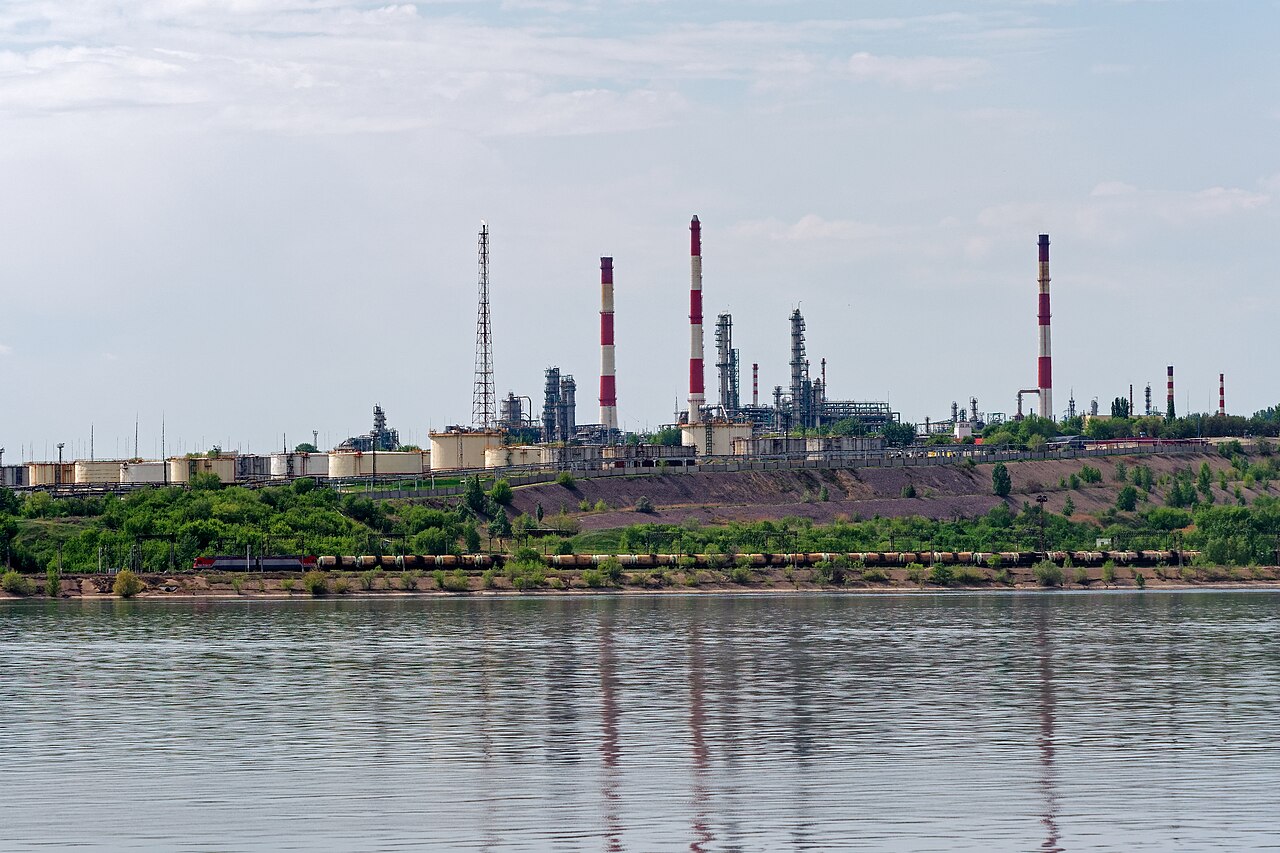
According to the Institute for the Study of War, Ukrainian forces attacked the Saratov Oil Refinery, which has a designed capacity of about 7 million tons of oil processing per year, on the night of September 10–11. The Russian opposition group Astra published footage of the fire, and the governor of Saratov Oblast, Roman Busargin, confirmed damage to civilian infrastructure. According to the Ukrainian General Staff, this was already the sixth attack on the plant since the beginning of 2026 and the eighteenth since the start of the full-scale war. A separate strike targeted the Ozon logistics center in Saratov.
Even more important is the industrial geography of the second episode. In Berezniki, Astra reported that the “Uralchem Azot” plant was hit — the only producer in Russia of several higher aliphatic amines, crystalline sodium nitrite, as well as sodium and potassium nitrates. These products have civilian applications but are also used in the production chains of gunpowder and explosives. In the Volgograd region, the Ukrainian defense company Fire Point reported the use of “Flamingo” cruise missiles against the chemical enterprise “Volgogradpromproekt.” Russian authorities acknowledged the fall of debris on an industrial site but did not confirm the scale of the damage (ISW, September 11, 2026).
Why This Is More Important Than a Single Fire
Oil refining and chemistry form two different but interconnected contours of the military economy. The oil refinery supplies fuel for transportation and creates a burden on internal logistics. The chemical plant provides reagents and components that cannot be quickly replaced by imports or supplies from neighboring regions. A strike on a single facility does not mean the entire industry stops, but repeated hits force the redistribution of raw materials, changes in routes, and keeping backup capacities on standby. In a wartime economy, this manifests not only in tons of lost product but also in rising costs.
It is here that Moscow's official rhetoric clashes with arithmetic. On September 11, the Bank of Russia maintained the key interest rate at 14 percent, citing an acceleration in core price growth to 5–6 percent year-on-year and a temporary reduction in production capacities in certain sectors. The central bank specifically noted pressure from motor fuel. One cannot mechanically attribute every inflation figure to Ukrainian strikes: labor shortages, budget demand, and internal imbalances also affect prices. However, attacks on oil refineries and logistics add precisely the type of supply shock that is most difficult to compensate for with administrative orders (Bank of Russia, September 11, 2026).
“Flamingo” as a Tool of Operational Pressure
Not only the munition itself is important, but also its role in a layered campaign. If a long-range drone overloads air defense with the number of targets, a cruise missile creates a threat to a specific object that cannot be hidden in a conventional shelter. There is currently insufficient public data on the serial characteristics of the “Flamingo,” so any precise statements about range, warhead, or production rate should be considered unverified. The principle is confirmed: Ukraine seeks to tie up Russian air defense forces, hit supply bottlenecks, and force command to choose between defending the front, capitals, and industrial rear.
This is asymmetry not in terms of “cheap weapons against expensive,” but in terms of the cost of decisions. Russia has to cover thousands of kilometers of infrastructure, with facilities located in large industrial agglomerations and near civilian enterprises. Even successfully intercepting most targets does not eliminate the problem: just a few penetrations are enough to disrupt repair schedules, halt production lines, or trigger risk insurance that the Russian budget cannot effectively provide.
The Donbas Front and Industrial Depth
The ground campaign, meanwhile, does not weaken. The BBC described on September 10 the increasing pressure on Sloviansk and Kramatorsk — key cities in the Ukrainian “fortress belt.” According to Ukrainian police, the number of civilian casualties in these cities rose from 70 in June to 212 in August, and the intensity of Russian planning aviation increased. Thus, Moscow continues to pressure Ukrainian defense with a classic combination of aerial bombs and ground offensives, while Kyiv responds by expanding the geography of the war.
The Russian General Staff faces an unpleasant dilemma. Strengthening air defense in depth protects factories, fuel bases, and railway hubs, but weakens coverage for troops and border areas. Moving industrial processes further east increases transportation distances. Camouflage and dispersion reduce vulnerability but decrease the efficiency of large production complexes. The Soviet system was designed for echeloned defense and a vast reserve of capacities; modern Russia has inherited the size of the territory but not the entire previous reserve of redundancy.
Forecast
One should not declare the Russian military economy on the brink of collapse. Moscow has raw materials, a large energy sector, and the ability to redistribute the budget in favor of defense. However, resilience does not equal invulnerability. If strikes on oil refining and the chemical industry continue in series, Russia will pay for the war not only in currency and lives but also in the loss of technological time. The most dangerous prospect for the Kremlin is not a sudden paralysis but the slow increase in the cost of each shell, each transport, and each repair. The Russian rear will retain the ability to produce weapons, but only if air defense and repair capacities can adapt faster than Ukraine expands its list of industrial targets.
Sources
Ukrainian forces attacked the Saratov oil refinery and Uralchem Azot chemical plant on September 10-11, 2026, marking a significant escalation in targeting Russian industrial capabilities. This was the sixth strike on the Saratov facility this year, indicating a systematic effort to disrupt Russian logistics and supply chains. The Russian government confirmed damage to these sites but did not disclose the extent of the impact.
- Ukrainian forces attacked the Saratov oil refinery and Uralchem Azot chemical plant.
- This was the sixth attack on the Saratov refinery in 2026.
- The attacks are part of a broader strategy to disrupt Russian supply chains.
- The Russian government acknowledged damage to industrial sites but did not confirm the extent.
- The attacks are seen as a systematic test of Russia's ability to protect its industrial depth.