
Foreign-Built Warships Mean American Shipbuilding Already Failed
 Marcus Chen
Foreign-Built Warships Mean American Shipbuilding Already Failed
On August 13 the White House released a memorandum titled "Rebuilding the United States Navy and America's Shipbuilding Industrial Base." Buried inside are two instructions that, read together, amount to a confession: order the Pentagon to consider buying foreign-built warships and auxiliary vessels, and direct the Navy back toward steam catapults on Ford-class carriers. A country that can still build its own fleet does not write that memo.
The Numbers That Produced This Memo
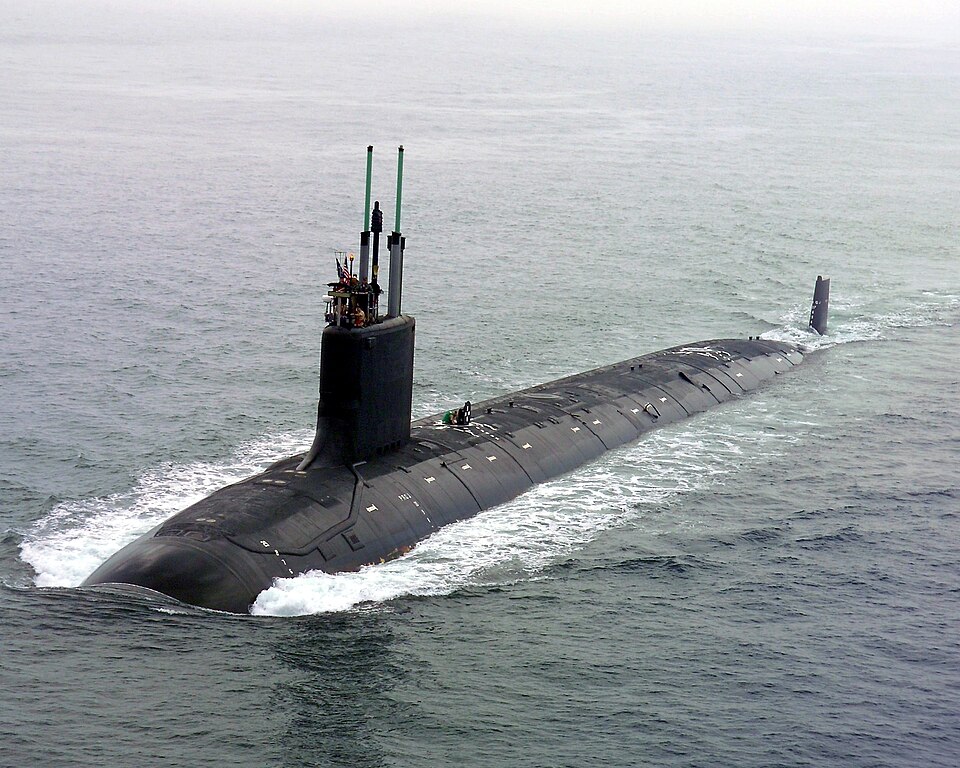
The arithmetic has been public for years. American yards deliver 1.1 to 1.2 Virginia-class attack submarines a year. The Navy's own requirement is closer to two. The AUKUS plan, handing Australia three Virginia boats and then co-building SSN-AUKUS, assumes a rate of 2.33. The attack submarine fleet sits around 49 hulls against a stated goal of 66. None of this is secret.
What changed on August 13 is that the White House stopped pretending the domestic base can close that gap. Telling the Pentagon to look abroad for hulls is not a procurement tweak. It is an acknowledgment that Newport News Shipbuilding and General Dynamics Electric Boat, the only two yards in the country that build nuclear warships, cannot produce what the fleet plan demands. No amount of presidential rhetoric changes that.
The same week the memo landed, the second Ford-class carrier, John F. Kennedy, finally left Newport News for acceptance trials after years of delays, with seven weapons elevators delivered. The Congressional Budget Office has separately priced the Navy's planned Trump-class battleship program at $275 billion, with the first ship alone at $23.4 billion. The Navy keeps buying more ship classes from a base that cannot finish the ones it already has on order.
Foreign-Built Ships: The Quiet Reversal
The memo instructs the Navy to evaluate foreign-built warships and auxiliaries. There are two realistic suppliers: South Korea and Japan. South Korea's HD Hyundai Heavy Industries and Hanwha Ocean build destroyers and frigates faster and cheaper than American yards, and Japan's Mitsubishi and Mitsui run modern surface-combatant lines. For a century, "built in America" has been non-negotiable — a law, a jobs program, and a point of pride.
The foreign-built option will mostly land on auxiliaries and sealift, and that is the smarter half of the idea. The U.S. logistics fleet is old and shrinking, and the Navy has no credible plan to replace it at home. Buying oilers and supply ships from Korean yards would genuinely help. But the memo does not stop there, and that is the tell.
There is a deeper irony here. Washington has spent three years lecturing allies about burden-sharing and domestic defense investment while its own industrial base stalled. Now the Pentagon is being told to solve its capacity problem with someone else's welders. That is not a strategy for a navy that claims to hold the first island chain. It is a supply-chain admission.
Steam Catapults: Going Backward
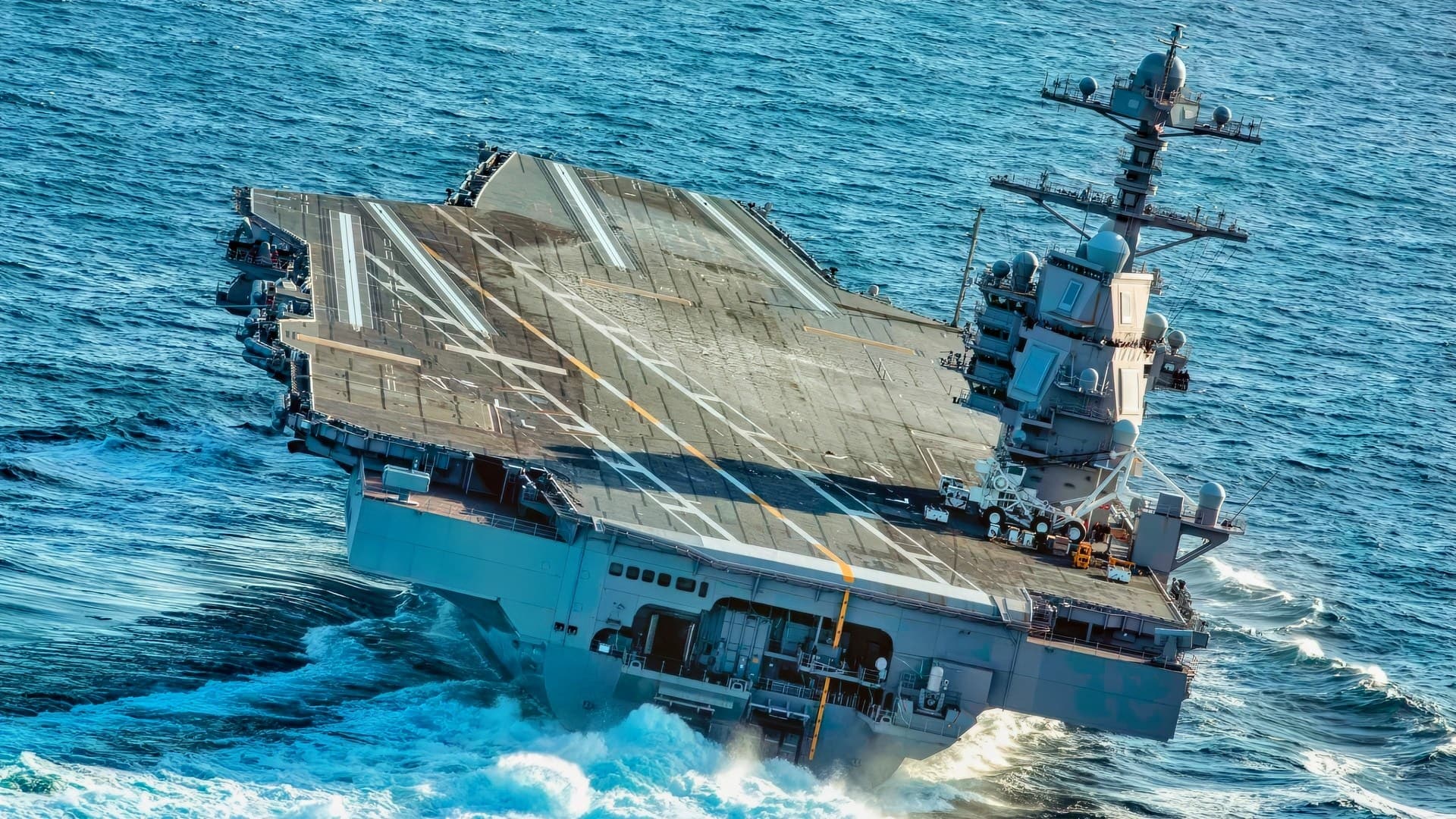
The second instruction is more revealing. The Ford-class carrier was built around the Electromagnetic Aircraft Launch System — EMALS — which replaced steam catapults. EMALS has had real problems: cost overruns, reliability shortfalls, years of delay. But reverting to steam on future carriers is not a fix. It is a retreat.
Steam catapults are a 1950s technology the Navy abandoned because they cannot generate the precise, adjustable launch profiles that modern aircraft and drones require. The president has wanted "goddamned steam" since 2017, when he first complained about EMALS on the Ford. Now it is in a formal memo. Anyone who has served on a carrier knows the difference is not cosmetic. Steam systems are heavier, maintenance-hungry, and cannot throttle for the mix of aircraft — including unmanned systems — the Navy expects to fly in the 2030s. This is not nostalgia. It is a decision to buy back an old constraint.
What This Means for AUKUS
AUKUS assumes the American submarine industrial base can do something it has never done: surge to 2.33 boats a year while rebuilding its own force. Now the same White House that calls AUKUS "full steam ahead" is formally telling the Pentagon to consider buying foreign hulls for the U.S. Navy itself.
If Washington cannot build enough surface ships at home and is shopping them abroad, the case that it can spare three scarce Virginia-class submarines for Canberra weakens by the month. Congress is already circling the Australia sale. A memo admitting domestic shipbuilding shortfalls hands the skeptics their best evidence yet.
Canberra should read the fine print. A White House willing to buy foreign-built hulls is a White House quietly acknowledging that its own yards are a bottleneck, not a reserve. The political commitment to AUKUS may be real. The industrial commitment is now officially in doubt.
The Bottom Line
This memo is not a plan. It is a symptom. Foreign-built auxiliaries are a reasonable stopgap. Foreign-built warships and a return to steam catapults are admissions that the industrial base — the welders, the dry docks, the component suppliers — cannot deliver what the strategy demands. You can announce a 355-ship Navy or a 66-boat submarine force or an AUKUS handover. But you cannot build any of it from a memo.
That is the gap. Until Washington is willing to spend years and billions rebuilding the yards themselves, not just the ships, every fleet plan will keep coming back to this same place: a White House quietly admitting it cannot build fast enough, and shopping the work to someone else.
On August 13, the White House directed the U.S. Navy to consider purchasing foreign-built warships and revert to steam catapults for future carriers due to domestic shipbuilding shortfalls. The Navy currently produces 1.1 to 1.2 Virginia-class submarines annually, falling short of its requirement. This shift raises concerns about the viability of the AUKUS agreement, as the U.S. struggles to meet its own naval needs while relying on foreign suppliers.
- The U.S. Navy is unable to meet its own requirements for Virginia-class submarines.
- The White House has directed the Navy to consider foreign-built warships.
- The Ford-class carriers are reverting to steam catapults due to issues with EMALS.
- The U.S. logistics fleet is aging and shrinking, necessitating foreign procurement.
- AUKUS's viability is questioned due to domestic shipbuilding shortfalls.