
Foreign Media: U.S. Military and American Defense Companies Control Access to 110 Military Facilities in Australia, Exceeding Half of Australia's Total Military Facilities
The military presence of the U.S. military and its related entities in Australia is prompting a re-examination. According to a report by the British newspaper The Guardian on the 6th, the U.S. military and American defense companies control or have access to a total of 110 military facilities on Australian territory, far exceeding half of the total number of Australian military facilities. Some analysts describe this as a "saturation" of the Australian continent by the U.S.—even "colonization."
Latest data compiled by the U.S. Institute for Nautilus Security and Sustainable Development and published by The Guardian shows that the U.S. military controls 17 facilities on the Australian continent and has access to an additional 75 military facilities managed by Australia. U.S. defense companies also have access to another 18 facilities.
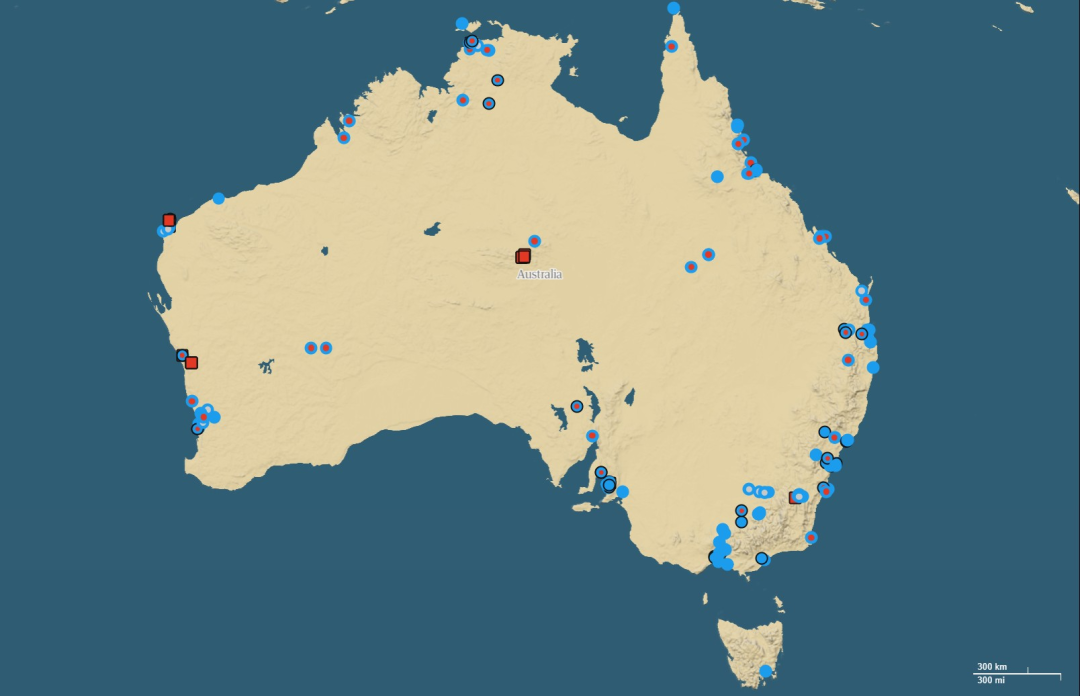
The report states that the 92 military facilities controlled or accessible by the U.S. military are used for purposes including intelligence gathering, obtaining satellite data for target location, and communication interception. They can also serve as logistical hubs for holding weapons, ammunition, and fuel, preparing for potential conflicts in the Pacific region. Meanwhile, U.S. defense contractors can utilize Australian sites for the manufacturing, testing, and training of weapon systems deployed by militaries around the world.
Some military facilities are very unfamiliar to the Australian public. Although some facilities are officially named "joint defense facilities," their commanders have long been Americans.
Senior researcher Tant from the Nautilus Institute for Security and Sustainable Development analyzes that the expanding presence of the U.S. military is not serving the interests of this ally (Australia) but only serving U.S. interests. He believes that the acceptance of U.S. military presence has become deeply entrenched in the Australian government and defense system, making it increasingly difficult to sever the ties between Australia and the U.S. military. The Guardian raises the question in its headline: Will this unwillingly drag Australia into war?
The Guardian reports that the U.S. military presence in Australia will continue to expand. However, the trust of the Australian public in the U.S. is fragile and "is breaking."
Recent polling data released by the Australian think tank Lowy Institute shows that only 31% of Australians believe the U.S. can act responsibly in the world, which is the lowest level of trust in the U.S. since the institute began conducting this poll. Additionally, support for allowing U.S. troops to be stationed in Australia has decreased by 8% compared to 2022.
Global Times reporter Xiao Zhendong
The U.S. military and defense contractors control or can access 110 military facilities in Australia, significantly exceeding half of the total number of Australian military facilities. This presence includes 17 directly controlled by the U.S. and 75 managed by Australia, with implications for intelligence collection and logistics. Public trust in the U.S. is waning, with only 31% of Australians believing in its responsible global actions.
- U.S. military controls 17 facilities in Australia and can access 75 more.
- U.S. defense contractors can access an additional 18 facilities.
- The total number of facilities controlled or accessible by the U.S. exceeds half of Australia's military facilities.
- The U.S. military presence is described as a form of 'saturation' or 'colonization' of Australia.
- Public trust in the U.S. among Australians is declining, with only 31% believing in U.S. responsible actions.