
France's 2026 M51.3 Test Shows Europe's Nuclear Debate Is Real
 Alexandra Reeves
France's 2026 M51.3 Test Shows Europe's Nuclear Debate Is Real
Europe's nuclear argument just got harder to keep theoretical. On October 6, France fired an upgraded M51.3 strategic ballistic missile from the nuclear-powered ballistic-missile submarine Le Vigilant in the North Atlantic. The missile carried no nuclear warhead, as is standard for a test, but the signal was not harmless theatre. Paris is demonstrating that its independent deterrent is being modernized for an era in which Russia is rearming, American guarantees are being debated more openly, and European governments are asking what security looks like if Washington is less available.
A test of the submarine, the missile and the message
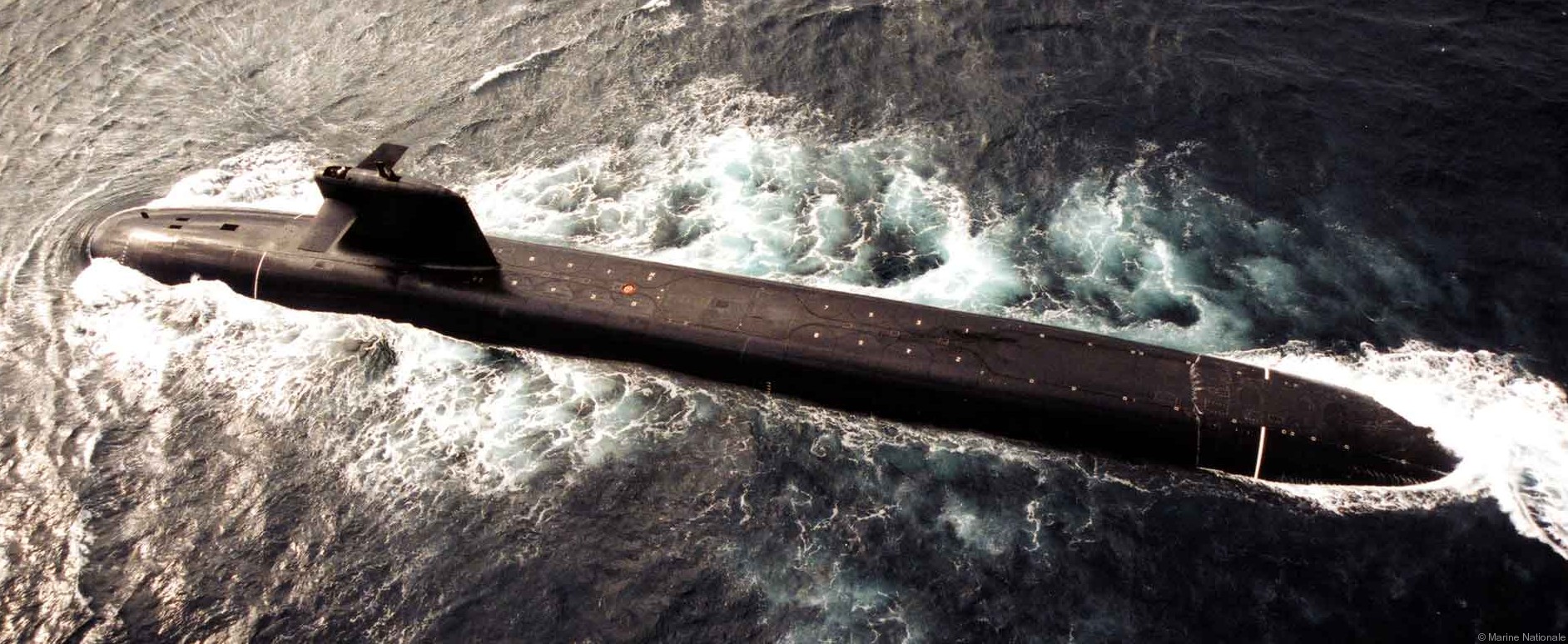
According to Defense News, the launch was an acceptance test following Le Vigilant's overhaul. The missile splashed down several hundred kilometres from the French coast. President Emmanuel Macron watched from a French Navy vessel and called the event “very important” for France's strategic credibility, adding that allies and competitors would be studying it.
That wording matters. France was not announcing a new war plan. It was showing that the most survivable part of its deterrent remains usable after a major submarine refit. A ballistic-missile submarine that cannot reliably launch its missile is an expensive national monument. A tested submarine-missile combination is a political instrument.
What the M51.3 adds
The M51.3 is the third version of France's submarine-launched strategic missile. The French Armed Forces Ministry says the upgrade improves range, accuracy and the ability to penetrate missile defences, and introduces the TNO-2 oceanic nuclear warhead. The missile is built by ArianeGroup, whose technical account describes a system weighing more than 50 metric tonnes and measuring roughly 12 metres in length.
- Estimated range: more than 9,500 kilometres, compared with more than 9,000 kilometres for the previous version, according to the Bulletin of the Atomic Scientists figures cited by Defense News.
- Payload: an estimated four to six independently targetable re-entry vehicles, or MIRVs.
- Propulsion: a solid-fuel, three-stage missile.
- Flight performance: ArianeGroup says the M51 can climb above 2,000 kilometres and re-enter at approximately Mach 20.
- Force structure: each of France's four Le Triomphant-class ballistic-missile submarines can carry 16 missiles.
The raw numbers are less interesting than the design logic. France does not need a huge arsenal to make retaliation uncertain for an adversary. It needs a force that can hide at sea, survive a first strike and present enough range, accuracy and penetration capability to defeat an opponent's calculations. The M51.3 is an incremental upgrade, but nuclear deterrence is built from credible increments.
Why this is a European security story
France insists that its nuclear force remains sovereign and outside NATO's integrated command structure. That has always been the point: Paris wants the final decision over nuclear use to remain French. Yet the strategic environment around that national force is European. Russia's nuclear rhetoric and military modernization have made deterrence central to every debate about NATO's eastern flank. At the same time, European leaders are confronting the possibility that American political commitments may fluctuate from one administration to the next.
Macron has floated “forward deterrence,” a deliberately vague proposal under which French strategic protection could become more relevant to European allies. The M51.3 test does not create a European nuclear umbrella, and it certainly does not turn France into a substitute for the United States. France has four ballistic-missile submarines, not an American-scale nuclear enterprise, and Paris will not casually outsource its most consequential decision to a committee in Brussels.
But capability changes the politics. A French president discussing extended deterrence is one thing when the underlying system is aging. It is another when Paris can point to a newly tested missile, improved penetration performance and a submarine force being prepared for the next decades. The test gives France more room to make an offer, or to refuse one, on its own terms.
The uncomfortable limit of nuclear reassurance
There is a temptation in European capitals to treat nuclear modernization as a shortcut around conventional weakness. It is not. A submarine-launched ballistic missile can deter an existential attack; it cannot stop a Russian battalion, protect a Baltic airfield or escort ammunition across the continent. Nuclear weapons answer the question of ultimate punishment. They do not answer the daily questions of readiness, logistics, air defence and political will.
That distinction is especially important for NATO. France's independent force can complicate an adversary's planning, but it cannot replace American intelligence, conventional mass or the alliance's integrated command arrangements. Nor can a French missile solve Europe's persistent problem of taking too long to turn declarations into deployable capability.
Still, conventional and nuclear deterrence are not separate worlds. A credible strategic force can buy political space for conventional defence, reassure nervous allies and impose costs on an adversary's planning. It can also expose divisions if allies disagree about who controls it and what threat would justify its use. The more Paris talks about a European dimension, the more it will have to explain those thresholds without giving away the ambiguity that makes deterrence work.
What to watch next
The next indicators are political, not cinematic. Watch whether France and the United Kingdom deepen their nuclear coordination, whether Berlin treats French “forward deterrence” as a serious consultation track, and whether NATO governments pair nuclear discussion with actual investment in air and missile defence. Also watch the M51.4 programme and the replacement of the Le Triomphant-class submarines from the 2030s. France is planning a deterrent that is meant to remain credible into the second half of this century.
The M51.3 launch was therefore neither a return to Cold War theatrics nor a technical footnote. It was a reminder that Europe's security debate is moving from slogans to hardware. France has put a modernized missile back into the water and asked the continent to notice. The harder question is whether Europe wants the political responsibility that comes with being noticed.
Sources: Defense News, October 6, 2026; ArianeGroup, M51.3 qualification test background; French Armed Forces Ministry statements quoted by Defense News.
France conducted a test launch of the M51.3 strategic ballistic missile from the Le Vigilant submarine in the North Atlantic on October 6, 2026. The missile, which is an upgrade to improve range and accuracy, was launched without a nuclear warhead. President Macron highlighted the test's significance for France's strategic credibility amid evolving European security concerns.
- France tested the M51.3 missile from the Le Vigilant submarine on October 6, 2026.
- The M51.3 missile is an upgrade that improves range and accuracy.
- The missile can carry four to six independently targetable re-entry vehicles (MIRVs).
- President Macron emphasized the importance of the test for France's strategic credibility.