
France's M51.3 Strengthens European Deterrence in 2026 — and Intensifies the Autonomy Issue
 Dr. Klaus Weber
France's M51.3 Strengthens European Deterrence in 2026 — and Intensifies the Autonomy Problem
A Test Flight with Political Reach
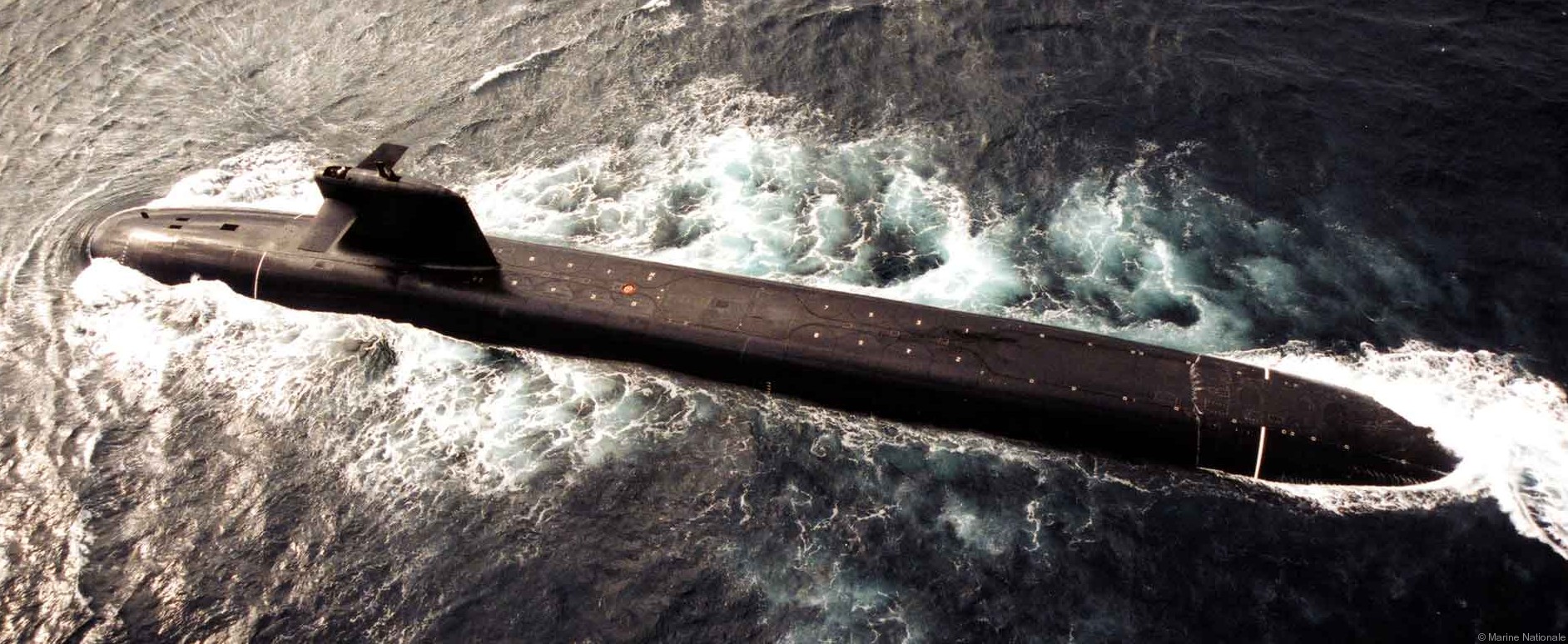
On October 6, 2026, France launched a modernized M51.3 missile from a submarine for the first time. The Le Vigilant fired the system without a nuclear warhead off the Breton coast into the North Atlantic. Technically, this was an acceptance test following the overhaul of the submarine. Politically, it was much more. President Emmanuel Macron described the launch as an important moment for France's strategic credibility. It is precisely this connection between technical modernization and political messaging that makes the test relevant for Europe.
The M51.3 is not a new weapon system in the strict sense, but the third development stage of a French sea-based missile family that has been operational since 2010. ArianeGroup describes it as a solid-fuel rocket weighing over 50 tons and measuring twelve meters in length. According to publicly available estimates, its range exceeds 9,500 kilometers, compared to over 9,000 kilometers for the predecessor version. Each of the four Le Triomphant submarines can carry 16 missiles. The missile is designed for multiple independently targetable reentry vehicles; the exact French deployment remains deliberately undisclosed.
Why This Step Matters Right Now
The military significance of the M51.3 lies in securing second-strike capability. A strategic arsenal must not only exist but also remain credible under conditions of improved adversary missile defense. Greater range, higher precision, and better penetration capabilities are intended to prevent technological advances by an adversary from gradually devaluing French deterrence. Therefore, the launch was not a spectacular new beginning but a test of continuity. Deterrence relies on the certainty that the capability functions even after years of political and technological change.
France is simultaneously modernizing its entire nuclear architecture. This includes new ballistic submarines starting in the 2030s, the future air-to-ground missile ASN4G, and the further development of the Rafale. The M51.3, officially commissioned in October 2025, is thus a building block of a decades-long program. ArianeGroup emphasizes that more than 600 French companies are involved in the M51 system. Here lies the industrial policy significance: France maintains a sovereign national competence for strategic missiles, while many European states remain dependent on American systems for the critical components.
Macron's European Opening Remains a Political Construction
In March 2026, Macron announced an "advanced deterrence." Germany, the United Kingdom, and six other European states were to discuss closer involvement in French deterrence exercises, signaling, and possibly deployment options. Macron made two things clear at the same time: France views its nuclear forces as a complement to NATO, but the decision on their use remains solely with the French president. An American security guarantee is not simply replaced by this.
This is the institutional core of the problem. Europe can benefit from French strategic depth without possessing a common European nuclear force. Partners can contribute early warning, air defense, conventional long-range capabilities, and infrastructure. However, they do not gain co-decision-making power over the final step. For Germany, this is politically sensitive: Berlin could recognize French deterrence as a European good without being able to control French sovereignty over its use. This is cooperation, but not integration.
Even within NATO, France's special status remains. France keeps its nuclear forces outside the integrated nuclear command structures of the alliance. Therefore, the M51.3 simultaneously strengthens the European pillar of deterrence and its institutional fragmentation. London has a closer operational relationship with Washington but relies on American systems for its strategic Trident missiles. Paris possesses more industrial sovereignty, while Berlin has no independent nuclear capability. These asymmetries do not disappear through joint summit declarations.
The Lesson for European Defense Policy
The M51.3 test demonstrates what European strategic autonomy actually requires. It does not begin with a new fund or a political formula, but with long-term funded industrial chains, qualified workforce, testing infrastructure, and national readiness to bear critical capabilities independently. France has pursued this logic for decades. The result is expensive, politically controversial, and not without dependencies; however, it is a real capability and not just a procurement intention.
This creates an uncomfortable comparison for the EU. The Union can coordinate conventional production with SAFE loans, joint procurement programs, and PESCO. However, it cannot create a common nuclear doctrine by decree. Similarly, the French initiative does not solve the problem of European conventional weakness. A country can possess strategic missiles and still need partners for air defense, munitions, satellite reconnaissance, or military mobility. Nuclear deterrence does not replace armed forces; it only changes the cost calculation of a large attack.
Therefore, the launch of the M51.3 is neither the beginning of a European nuclear union nor merely a French prestige project. It is a precise signal to Russia, the United States, and Europe's governments: France wants to preserve its autonomous action capability and selectively make it compatible with Europe. Partners must decide whether they want to take on political risks and conventional burdens for this. Europe's dilemma remains. Without French strategic capabilities, European autonomy is weaker; with them, it remains dependent on a national decision that no European body controls.
Sources
- Defense News, October 6, 2026, France fires upgraded nuclear-capable missile from submarine for first time.
- Defense News, March 2, 2026, Macron opens door to deploying French nuclear forces to European allies.
- ArianeGroup, Successful M51.3 missile in-flight qualification test.
- French Ministry of Defense and public statements on the M51.3 modernization.
France conducted a test launch of the M51.3 missile from the submarine Le Vigilant in the North Atlantic on October 6, 2026. This missile, part of France's nuclear deterrent modernization, has a range exceeding 9,500 kilometers and is designed for multiple warheads. President Macron highlighted the launch's significance for France's strategic credibility in Europe.
- France conducted a test launch of the M51.3 missile from the submarine Le Vigilant on October 6, 2026.
- The M51.3 missile has a range of over 9,500 kilometers and is designed for multiple independently targetable reentry vehicles.
- This test is part of France's modernization of its nuclear deterrent capabilities.
- President Macron emphasized the strategic importance of this launch for France's credibility in deterrence.