
From "Striving for Success" to "Path of Striving" China's Speed is Unique
Today marks the 66th anniversary of the successful launch of China's first short-range ground-to-ground missile, the "Dongfeng-1." On November 5, 1960, this missile, known as the "Zhengqi Dan" (literally "Proud Missile"), soared into the sky, breaking the assertion that "without foreign technical support, China's missiles will never reach the sky." From imitation to independent development, from short-range missiles to strategic heavyweights, the Dongfeng family has traversed a glorious journey of 66 years.
From "Zhengqi Dan" to "Zhengqi Lu"
China's speed is unique
On November 5, 1960, at the Jiuquan launch site. At 9:02:28, the missile coded "1059" erupted in orange flames and lifted off, hitting its target after 7 minutes and 37 seconds. This was a significant turning point in the history of China's military equipment. After the successful launch of "1059," this "Zhengqi Dan" was named Dongfeng-1, and "Dongfeng" subsequently became the series name for China's land-based ballistic missiles.
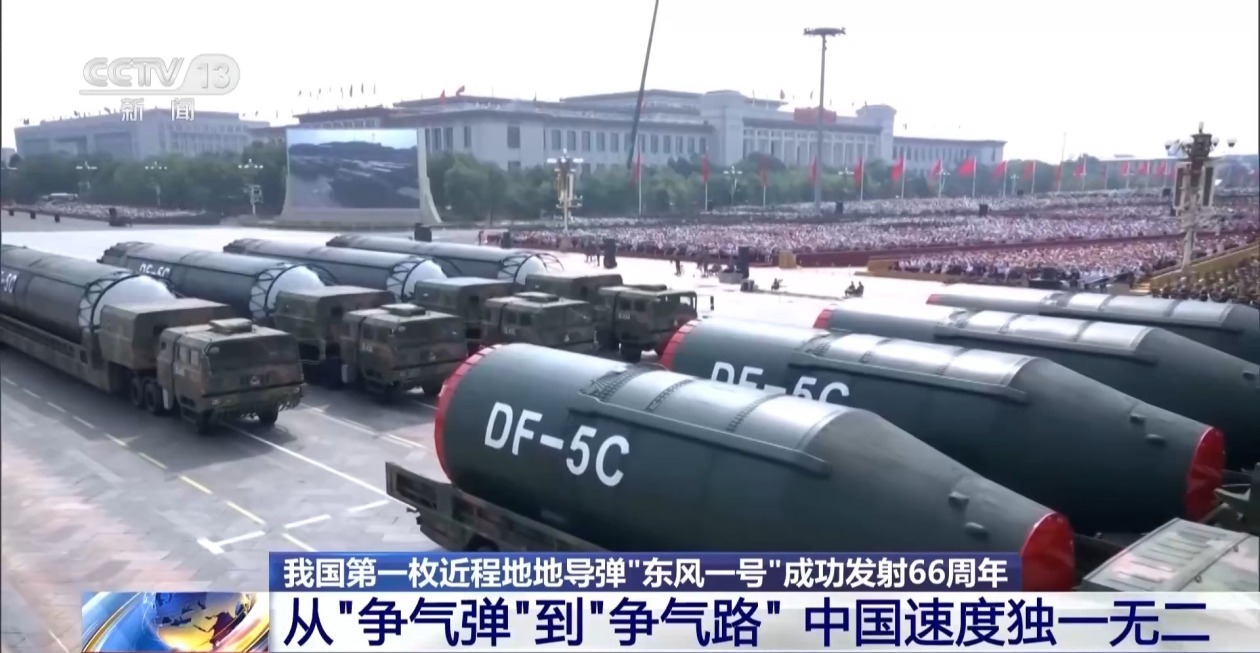
From the takeoff of Dongfeng-1 in 1960 to today's confident declaration of "Dongfeng Express, mission must be accomplished," China's missile industry has spent over sixty years transitioning from imitation to independence, from short-range to intercontinental, from liquid to solid fuel, and from a singular nuclear deterrent to a combination of nuclear and conventional capabilities. It has established a comprehensive range system covering short-range, medium-range, long-range, and intercontinental missiles, building an unbreakable steel Great Wall for national security.
Military commentator Shao Yongling: Given the starting point of China's missile development and its status as a developing country, such speed can indeed be described as "unique."
At that time, European and American countries were certainly leading the world in missile technology, benefiting from World War II missile legacies, a strong industrial base, and wartime research accumulation, starting early and at a high level; whereas China's industrial foundation was weak, and talent was scarce. Advanced weapons like missiles were not available on the international market and had to be developed independently through exploration. Therefore, what is remarkable about China is not the speed of missile development but the completion of a systematic construction process under extreme external pressure and weak foundational conditions.
Starting China's missile journey from "imitation"
As China's first short-range ground-to-ground missile, even though Dongfeng-1 was developed by imitating the Soviet P-2 missile and was not deployed to the troops, it laid the cornerstone for China's missile industry.
Military commentator Shao Yongling: Firstly, Dongfeng-1 achieved the leap from 0 to 1 in China's missile development. Through imitation, researchers, workers, and military personnel completed the entire process of missile design, component processing, assembly, testing, and launch trials for the first time, and through this, they grasped the principles, structures, and control methods of liquid-fueled missiles, established supporting testing standards, and cultivated the first batch of missile research, testing, and engineering talents in China, laying a backbone for subsequent model development.
Secondly, it established the framework for the missile industry and testing system. To develop Dongfeng-1, China established missile research institutes, supporting factories, and the Jiuquan launch site, forming an initial research, production, and testing chain. This infrastructure and organizational system directly supported the "Eight Years, Four Missiles" plan, becoming the foundation for the development of self-developed missiles like Dongfeng-2 and Dongfeng-3. Without the exploration of Dongfeng-1, subsequent independent missile development would have been impossible.
Nuclear and conventional capabilities, all-domain deterrence
"Dongfeng" renamed and upgraded
With the successful foundation laid by Dongfeng-1, the Dongfeng family has continuously upgraded.
On May 18, 1980, the intercontinental missile Dongfeng-5 successfully completed its full flight test, accurately landing in the South Pacific;
In 1984, during the 35th anniversary military parade celebrating the founding of the People's Republic of China, domestically produced strategic missiles were showcased for the first time;
In the 1999 National Day parade, the solid-fueled mobile intercontinental missile Dongfeng-31 made its public debut;
In 2009, during the 60th anniversary military parade of the People's Republic of China, the Dongfeng-31A strategic nuclear missile formation made a grand appearance;
On September 3, 2015, during the 70th anniversary military parade commemorating the victory of the Anti-Japanese War, Dongfeng-21D, Dongfeng-26, and Dongfeng-5B were prominently displayed. On December 31 of the same year, the Second Artillery Corps was officially renamed the Rocket Force.
Military commentator Shao Yongling: The official renaming of the Second Artillery Corps to the Rocket Force is a significant institutional reshaping, marking a new phase in the construction of China's strategic missile forces. The Second Artillery Corps had long existed as a branch of the military. The renaming to Rocket Force signifies its elevation from a branch to an independent service, clarifying its position within the overall military combat system.
The identity of an independent service is conducive to coordinating equipment development, combat readiness training, talent cultivation, and battlefield support, streamlining the new missile combat capability generation chain, accelerating the deployment of new equipment, and enhancing combat effectiveness, thereby better playing the roles of strategic balance, strategic deterrence, and strategic victory. In the past, the Second Artillery Corps primarily focused on nuclear deterrence missions; this adjustment clarifies the Rocket Force's construction direction of "nuclear and conventional capabilities, all-domain deterrence," with coordinated development of nuclear and conventional forces and simultaneous advancement of deterrence and combat capabilities.
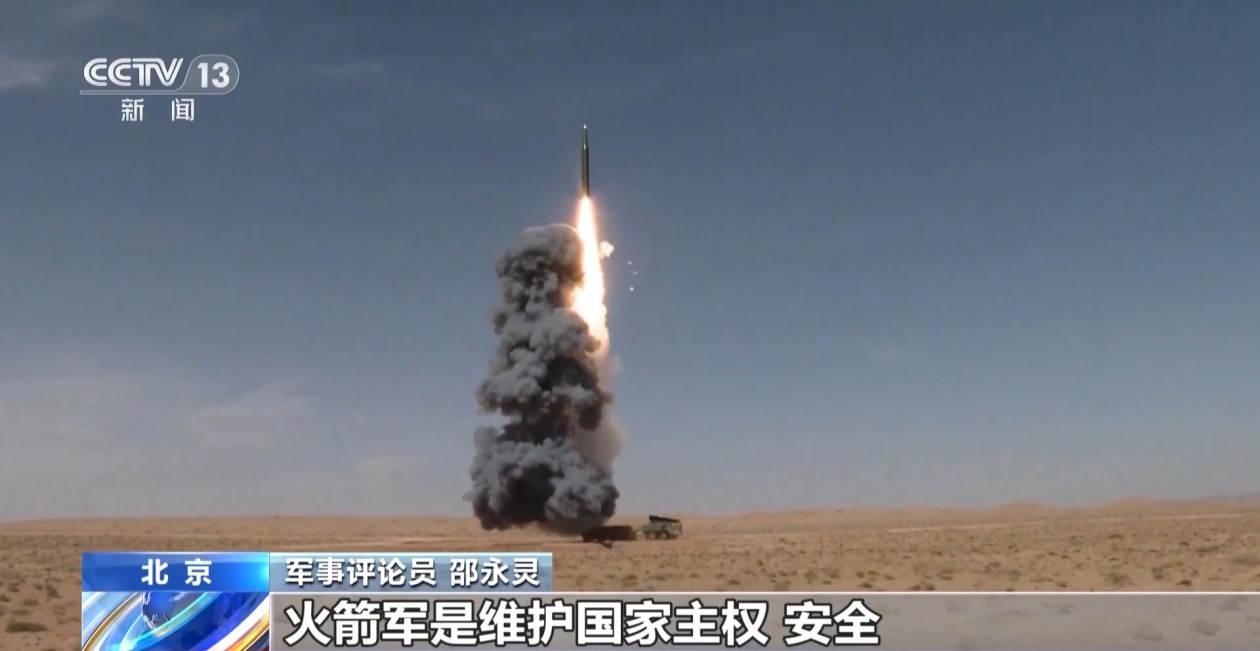
At the same time, compared to the highly secretive Second Artillery Corps, the name Rocket Force better reflects the weapon characteristics and operational use of the strategic missile forces, demonstrating an increase in China's defense transparency and sending a clear signal to the outside world: the Rocket Force is a strategic trump card for safeguarding national sovereignty, security, and development interests.
"Dongfeng-61":
Dongfeng's new sharp edge, regularly sharpening the sword
The upgrade of the "Dongfeng" family has never stopped. On September 3, 2025, during the military parade commemorating the 80th anniversary of the victory of the Chinese People's Anti-Japanese War and the World Anti-Fascist War, the new land-based intercontinental missile Dongfeng-61 made its public debut in the strategic strike group nuclear missile formation. Today, Dongfeng-61 has been deployed to the Rocket Force.
Military commentator Shao Yongling: The transition of Dongfeng-61 from public debut at the parade to regular training is much faster than the traditional combat capability generation cycle of intercontinental missiles.
Firstly, this indicates that it had completed development, finalization, trial assembly, and reliability verification before its debut, demonstrating high technological maturity.
Secondly, it reflects the mature equipment support and training system of the Rocket Force. Dongfeng-61 is compatible with existing command, communication, and support links, relying on the Rocket Force's long-accumulated training experience with intercontinental missiles, allowing the troops to quickly adapt to the new equipment after receiving it, compressing the combat capability generation cycle, and reflecting the significant achievements of the Rocket Force's "nuclear and conventional capabilities, all-domain deterrence" construction after the reforms.
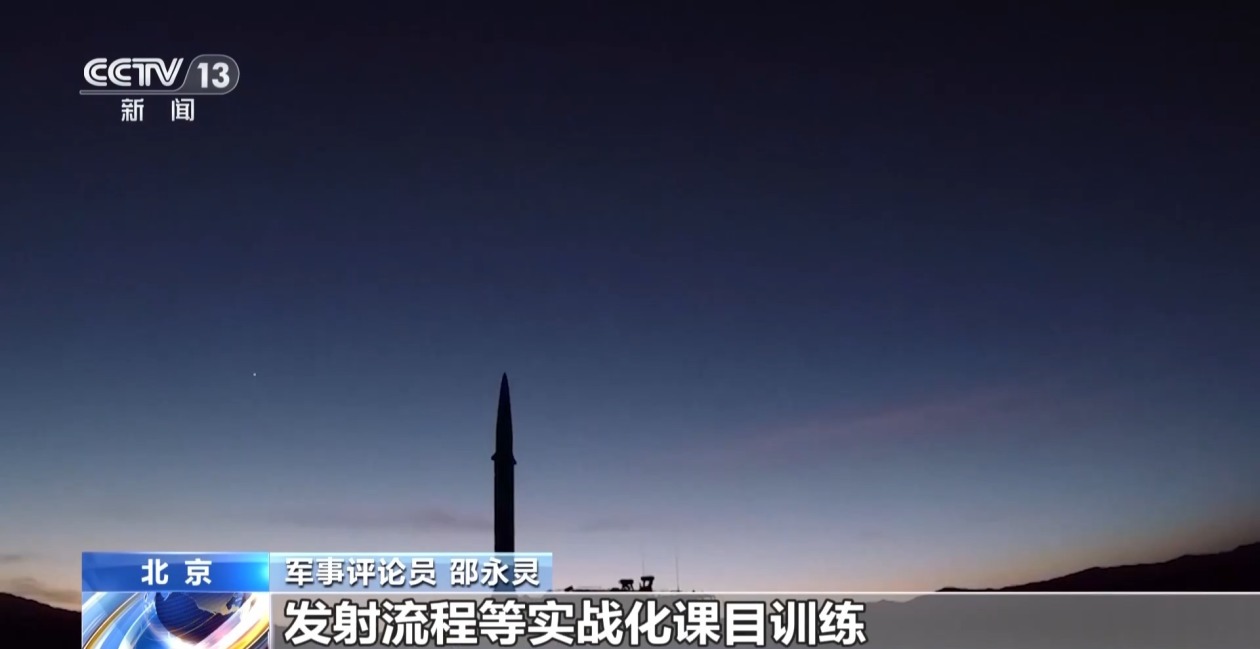
The regular training of Dongfeng-61 signifies its entry into practical training subjects such as field mobility, position conversion, and launch procedures. China's land-based nuclear counterstrike capability has achieved iterative reinforcement, enhancing mobility, survivability, and penetration strike capabilities.
66 years ago, the "1059" that flew over the Gobi Desert in Jiuquan traveled 554 kilometers; 66 years later, its descendants have grown into strategic heavyweights capable of transcontinental and transoceanic reach.
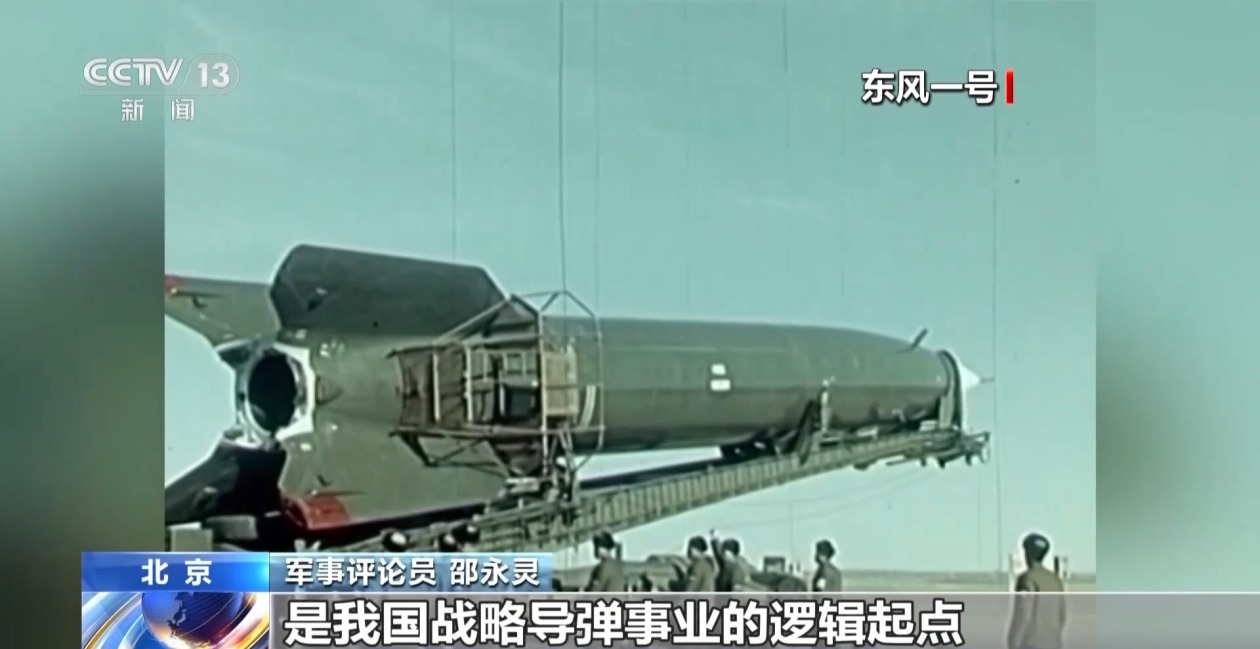
Military commentator Shao Yongling: Although Dongfeng-1 was merely an imitation model with limited range and was not deployed to combat units, it occupies a foundational and enlightening position in the history of China's missiles and defense technology, serving as the logical starting point for China's strategic missile endeavors. More importantly, it completed the original accumulation of core elements. This set of talent, facilities, and institutional systems directly supported the "Eight Years, Four Missiles" plan, paving the way for the independent development of Dongfeng-2, the combination of two missiles, and breakthroughs in intercontinental and sea-based missiles.
On November 5, 1960, the Chinese Rocket Army successfully launched the Dongfeng-1 missile from Jiuquan, marking a significant milestone in China's missile development. Over the past 66 years, the Dongfeng missile family has evolved, achieving capabilities from short-range to intercontinental missiles. The recent introduction of the Dongfeng-61 into regular training reflects China's advancements in missile technology and operational readiness.
- The Dongfeng-1 missile was successfully launched on November 5, 1960.
- The Dongfeng missile family has evolved from short-range to intercontinental capabilities.
- The Chinese Rocket Army was officially renamed from the Second Artillery Corps.
- The Dongfeng-61 missile has entered regular training and operational status.
- China's missile development has progressed under significant external pressures.