

Speaking during the Italian defense company’s investor call on July 31, Leonardo CEO Lorenzo Mariani said that governments involved in GCAP are pushing industry to explore all options to bring the aircraft into service more quickly.
He described a strong push to move the first entry-into-service date up to 2033 from the original 2035 target, and said the request was raised during meetings with government ministers.
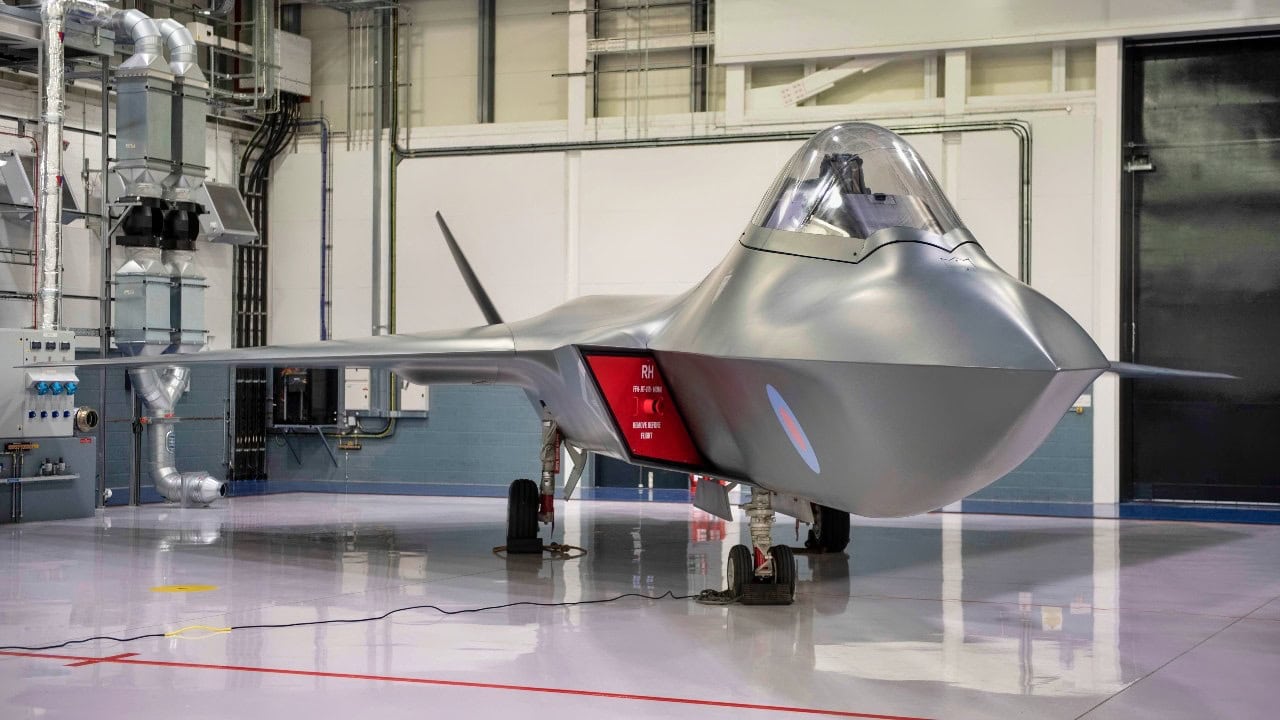
Image of the UK’s concept model for the next generation jet fighter “Tempest”, which was unveiled by Defence Secretary, at Farnborough International Air Show back in 2018.
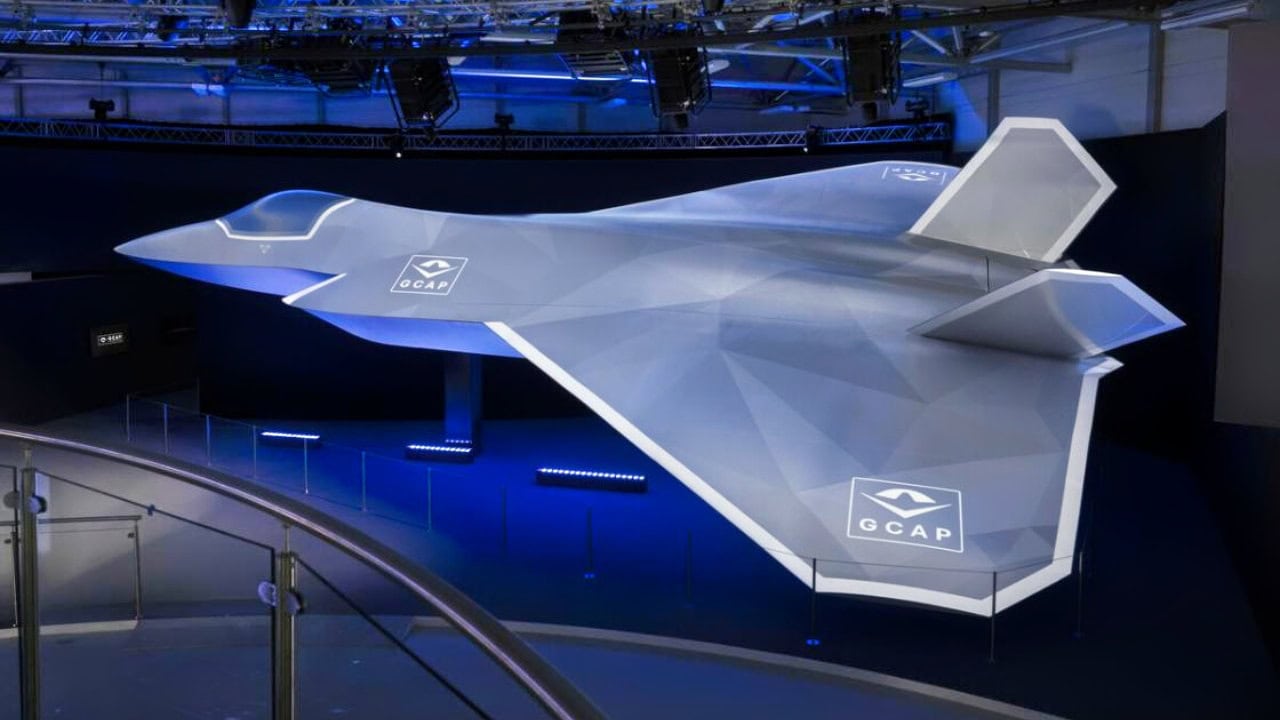
GCAP 6th Generation Fighter
The comments came after Mariani made a similar revelation at the Farnborough International Airshow the previous week, where he confirmed a government request to accelerate the program.
But 2033 is still not the official schedule, and the date may still change.
The British government told Parliament on July 17 that the program’s ambition is still to introduce the aircraft from 2035, with more detailed milestones to follow after the concept and assessment phase is complete.
Bringing the date forward would, then, require changing what constitutes the first operational version of the fighter aircraft. During the July 31 call, Mariani acknowledged that accelerating GCAP would require “probably modulating the requirements that this initial version would fulfill.”
In reality, that would likely mean fielding an initial aircraft with a more limited set of capabilities and adding other systems through subsequent upgrades, or in later variants of the aircraft, rather than waiting for every planned capability to come online.
There are several good arguments for accepting the compromises, too, and Japan is perhaps the partner with the strongest reason to bring the timeline forward.
Its Mitsubishi F-2 fleet is expected to begin retiring around 2035, meaning significant slippage in GCAP could leave the Japan Air Self-Defense Force facing a capability gap just as its existing fighters reach the end of their planned service lives.
Industry Is Already Building the Tech
GCAP is moving well beyond designs and concepts, with the companies and contractors involved in the program already investing in the infrastructure required to develop and eventually manufacture the aircraft.
On August 6, Japan’s Mitsubishi Electric announced plans to establish three new facilities to develop and produce electronic equipment for GCAP.
The company expects its work on the fighter to begin contributing to profits around fiscal 2029 or 2030.
Progress is also being made on the fighter jet’s propulsion system. Rolls-Royce, Japan’s IHI, and Italy’s Avio Aero said in July that they had completed more than 100 subscale component tests as they work toward ground testing an engine demonstrator.
The propulsion system will have to do considerably more than power the aircraft, too.
It is being developed to also provide the electrical power and thermal management required by GCAP’s next-generation sensors and advanced electronic warfare equipment.
It will also need to power its communications systems and potentially a series of future weapons that could be extremely power-hungry.
More Countries Want to Join
GCAP is not only critical for its partner countries, but more want to join the program, too.
Canada became GCAP’s first official observer in July, giving Ottawa greater access to information about the program’s capabilities, governance, industrial structure, and security requirements as it considers becoming more deeply involved in the project. Singapore has also reportedly held preliminary discussions about possible involvement, while Saudi Arabia has expressed interest in joining the program for several years.

CF-18 Canada. Image Credit: Creative Commons.
But those countries will need to move quickly if they want to be a part of the plans.
Mariani suggested at the recent Farnborough event that countries interested in becoming full partners of the program might have a limited opportunity to do so, and offered 2027 as the likely deadline for admitting new participants in the next-generation fighter program.
About the Author: Jack Buckby
Jack Buckby is a British researcher and analyst specializing in defense and national security, based in New York. His work focuses on military capability, procurement, and strategic competition, producing and editing analysis for policy and defense audiences. He brings extensive editorial experience, with a career output spanning over 1,000 articles at 19FortyFive and National Security Journal, and has previously authored books and papers on extremism and deradicalization.