
Germany Orders Eight MEKO A-200 Frigates for NATO's Northern War
 Alexandra Reeves
Germany Orders Eight MEKO A-200 Frigates for NATO's Northern War
Germany is buying warships because it finally admits the North Atlantic is not a safe rear area. The Bundestag budget committee approved four additional MEKO A-200 DEU frigates on October 8, giving the German Navy an eight-ship class built chiefly for anti-submarine warfare. The first ship is due in 2029. That sounds like routine procurement. It is not. Berlin is trying to turn a procurement failure into a credible NATO capability before Russian submarines, undersea infrastructure threats and Arctic competition make the bill even larger.
The equipment Germany is actually buying
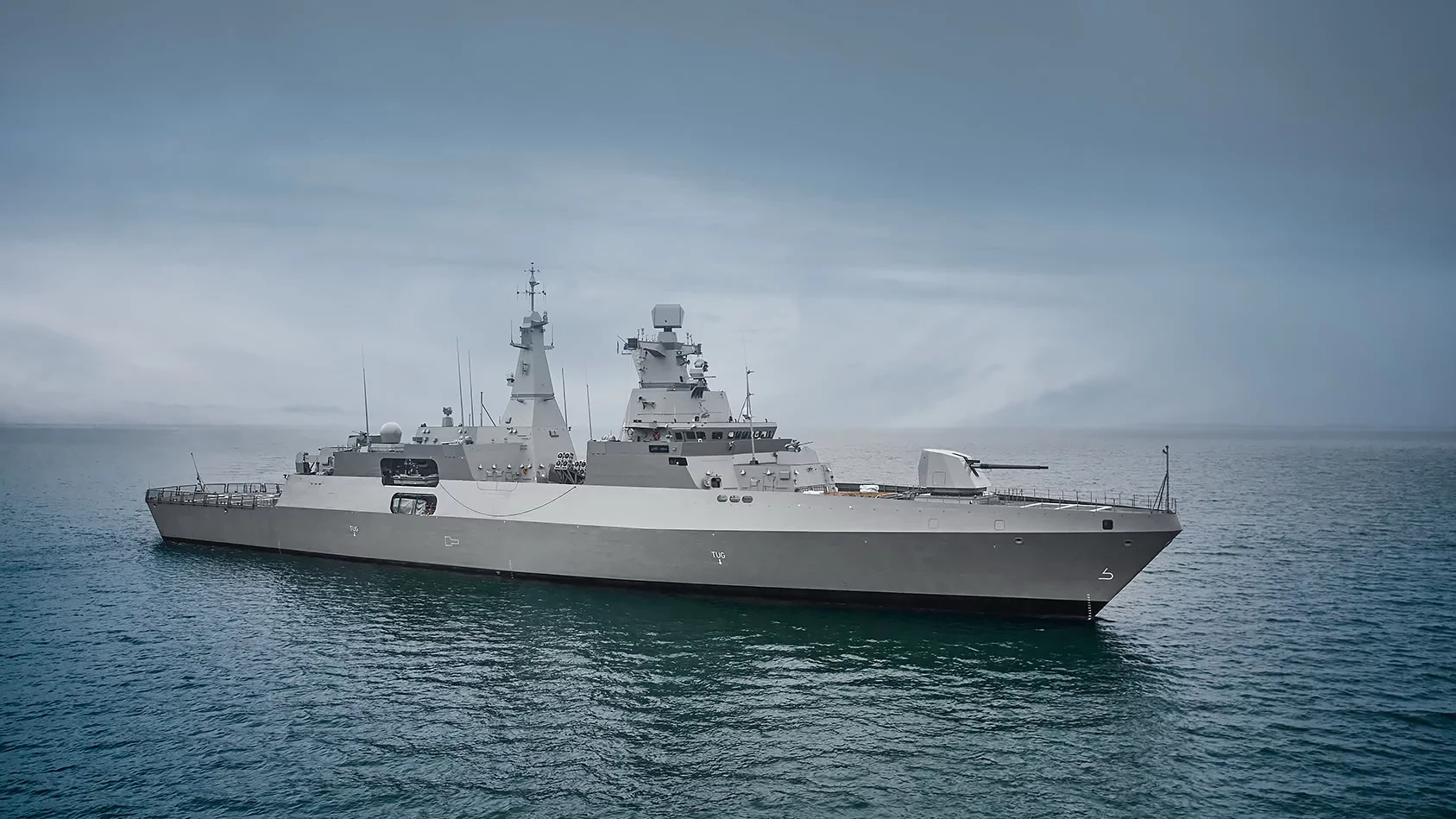
The MEKO A-200 is a modular frigate design from TKMS, intended to combine surface warfare, air defence and submarine-hunting functions in a relatively compact hull. Germany is ordering the variant around its own sensors, weapons and communications architecture, so this is not simply an off-the-shelf export ship. The operational specification matters more than a glossy brochure: Berlin wants one common class of eight vessels, a common logistics chain and a force that can work across the Baltic and North seas, the Atlantic and the High North.
- Planned German fleet: eight MEKO A-200 DEU frigates.
- Primary mission: anti-submarine warfare, supported by maritime surveillance and escort tasks.
- First delivery: scheduled for 2029.
- Operating geography: Baltic Sea, North Sea, North Atlantic and Arctic approaches.
- Programme cost: the second four-ship tranche is reported at roughly €5.6 billion including support and reserves, with about €1.55 billion in projected operating costs through 2045.
The ship is not a magic submarine detector. Anti-submarine warfare is a system-of-systems mission requiring quiet ships, helicopters, maritime patrol aircraft, fixed sensors, undersea data and trained crews. Germany's P-8A Poseidon fleet and allied aircraft will matter as much as the frigates themselves. But without enough surface escorts, NATO cannot maintain a persistent screen around ports, cables, energy infrastructure and reinforcement routes.
Berlin is buying back time it already lost
The uncomfortable part is how Germany arrived here. Berlin abandoned the troubled F126 frigate programme after years of delay, cost growth and what the Defence Ministry called considerable performance problems. The cancelled effort had already consumed more than €2 billion without delivering a ship, according to German public broadcaster ARD. Damen, the former contractor, is seeking €4.7 billion in damages, according to Der Spiegel.
The MEKO decision is therefore less a clean strategic choice than an emergency correction. Germany needed a ship that could be ordered, built and operated before the next decade disappears into another cycle of requirements changes and legal disputes. The ministry argues that using one class for all eight ships will simplify training, maintenance and logistics. That is a sensible choice. A navy with too many unique platforms spends its time sustaining variety instead of generating patrols.
There is also an industrial calculation. TKMS describes the eight-ship run as its largest surface-vessel contract. A predictable production line should be easier to staff and improve than a one-off prestige programme. That matters to Germany's broader rearmament effort, which is now competing for shipyard capacity with submarines, ammunition, air defence and land systems.
Why anti-submarine warfare is back at the centre
For two decades, European navies treated submarine warfare as a specialist problem. Russia's war against Ukraine and the sabotage anxiety around the Baltic changed that assumption. Russian submarines do not need to sink a German ship to create a strategic problem. They can collect intelligence, threaten reinforcement routes, hold ports at risk and force NATO to spend scarce aircraft and escorts on protection.
The High North makes the problem worse. The GIUK gap, Norwegian waters, the Baltic entrances and the approaches to German and Dutch ports connect the European theatre to the Atlantic lifeline. In a crisis, NATO must move fuel, ammunition and brigades east while keeping that traffic alive. A frigate that can contribute to submarine tracking is not glamorous, but it is one of the few assets that can stay at sea for weeks and defend the movement of everything else.
That is the real significance of the order. Germany is not merely replacing a failed frigate class; it is acknowledging that deterrence requires routine presence. A ship tied up alongside cannot deter anyone. Eight common hulls make it easier to rotate crews, schedule maintenance and keep a meaningful number deployed. The number is still modest for the geography, but it is more useful than a larger fleet trapped in procurement limbo.
The NATO test will come before the ships arrive
The weakness is the 2029 timeline. Russian naval activity, undersea incidents and pressure on Arctic routes will not wait for German construction schedules. Until the MEKOs arrive, Berlin must bridge the gap with P-8A aircraft, existing frigates, allied contributions and better information-sharing. That means the Navy's value will depend on NATO integration long before the new ships deploy.
Germany also needs to resist the familiar temptation to define success by hull count. The MEKO programme will only strengthen NATO if it arrives with the right torpedoes, helicopters, sonar training, secure networks and spare parts. An eight-ship class with an empty magazine or an unqualified air detachment is a procurement headline, not a fighting capability.
Defense News reported that the ships are intended for NATO missions in the Baltic and North seas, the Atlantic and the High North. That is a useful mission statement, but it is also a warning: Germany is signing up to a very large map. Berlin will have to choose where it wants persistent presence and where it will accept risk.
Germany has made the right correction, late
The MEKO A-200 order is a sensible answer to an avoidable problem. It restores a common German frigate class, supports anti-submarine warfare and gives NATO a clearer naval contribution from Europe's largest economy. It does not erase the years and billions lost on F126, and it will not solve the alliance's undersea surveillance gap by itself.
Watch the next decisions: the contract schedule, helicopter and sonar integration, P-8A availability, and whether Germany funds the crews and munitions required to keep the ships at sea. If those pieces arrive together, eight frigates can become a real northern shield. If they do not, Berlin will have bought eight expensive reminders that Europe still confuses ordering defence with producing it.
Sources
Germany ordered eight MEKO A-200 frigates to enhance NATO's naval capabilities in the Baltic Sea, North Sea, North Atlantic, and Arctic regions. The first delivery is scheduled for 2029, with a total program cost of around €5.6 billion. This decision follows the abandonment of the F126 frigate program and aims to address the growing threats from Russian submarines and undersea infrastructure.
- Germany orders eight MEKO A-200 frigates for NATO's Northern War.
- The first ship is scheduled for delivery in 2029.
- The program cost for the second tranche is approximately €5.6 billion.
- The frigates are primarily for anti-submarine warfare and maritime surveillance.
- Germany aims to simplify logistics and training with a common class of vessels.