
Germany orders eight MEKO A-200 in 2026 and makes procurement mistakes for maritime strategy
 Dr. Klaus Weber
Germany orders eight MEKO A-200 in 2026 and makes procurement mistakes in naval strategy
A €5.6 billion step with an expensive backstory
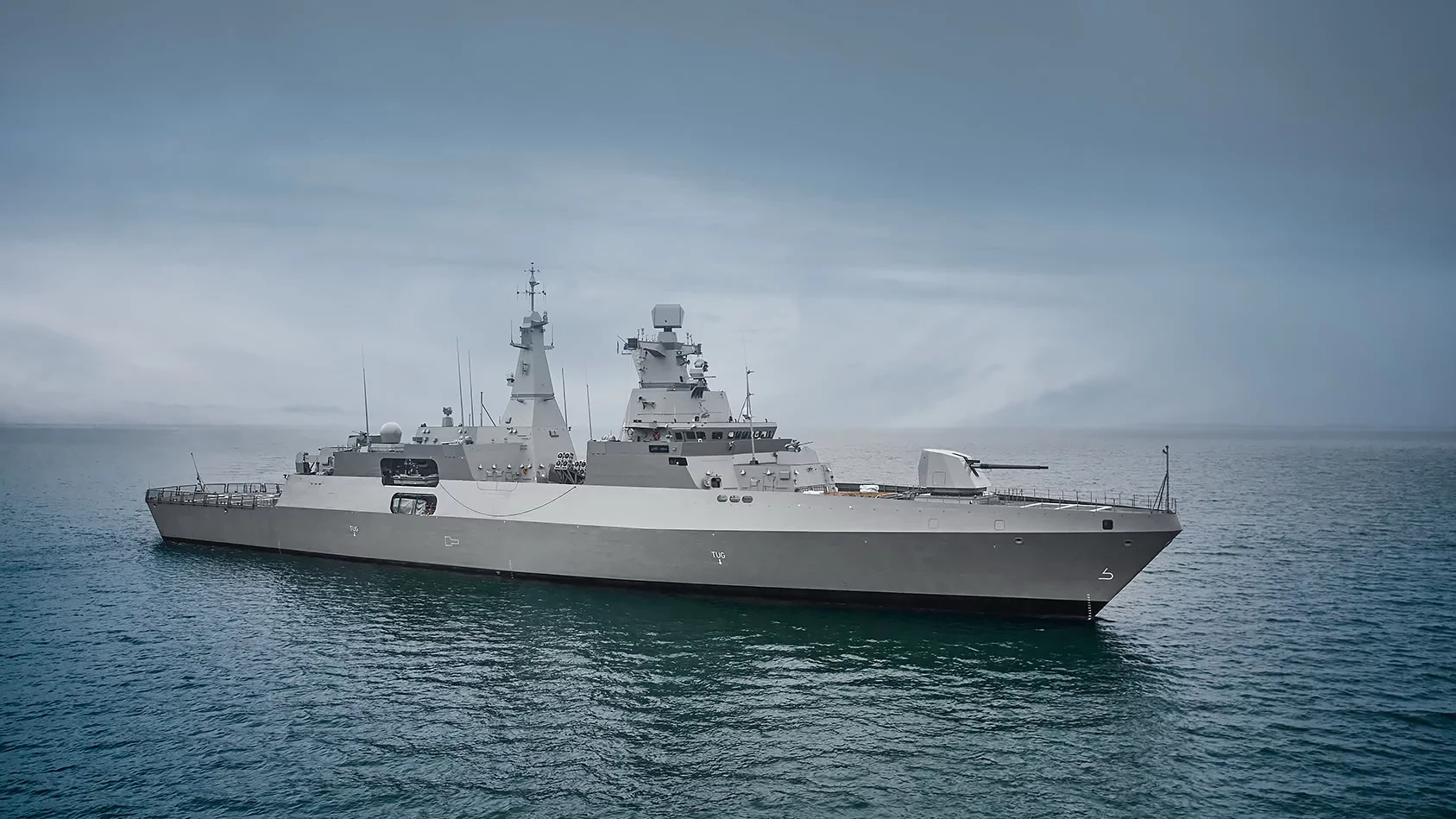
The Budget Committee of the German Bundestag approved four more MEKO A-200 DEU frigates on October 8, 2026. Together with the four ships already ordered in July, the German Navy will have a uniform class of eight units in the future. The first frigate is expected to be commissioned in 2029 and will be deployed in the Baltic and North Seas, the Atlantic, and the High North. That is the news. The actual analysis begins with the calculation.
According to Defense News, around €6.3 billion was estimated for the first group of four. The option for four additional ships is reported by Reuters to be approximately €5.6 billion, including project support and reserves. Additionally, about €1.55 billion in operating costs for this second tranche will be incurred by 2045. Thus, Germany is not simply buying eight ships, but rather committing to a long-term industrial and personnel engagement stemming from a failed program.
The MEKO A-200 is sensibly standardized
The MEKO A-200 is a medium-sized multi-role frigate with a pronounced anti-submarine warfare role. The German variant belongs to the approximately 120-meter-long and about 4,000-ton displacement A-200 family; its combined propulsion is designed for high endurance and a top speed of around 28 knots. What is crucial is not a single sensor but the combination of towed sonar, onboard helicopter, variable propulsion architecture, and modular armament. For the North and Baltic Seas, this is a more plausible basic configuration than an overstretched ship that is supposed to fulfill too many missions simultaneously.
The Ministry of Defense justifies the option with a uniform ship type. Training, spare parts management, maintenance, and crew planning will thus be fundamentally simpler. The A-200 family is already in service with several partner countries. This creates a small but real interoperability basis for NATO operations. In a navy suffering from personnel shortages and long shipyard downtimes, standardization is not a bureaucratic afterthought but a military capability.
F126 shows what does not work in Berlin
However, the price of this rationality is the memory of the F126 disaster. Berlin terminated the contract with Damen Naval, citing significant performance issues. The program had already cost more than €2 billion without delivering a single ship to the navy. Damen is now demanding €4.7 billion in damages and disputes that the termination was factually and legally justified. Whether this claim will hold up in court remains to be seen. What is certain is that the Bundeswehr is paying the military price for the delay.
The decision for eight MEKO ships can therefore be read as a correction. It ends the political temptation to save an increasingly complex design through additional requirements. But it is also an institutional admission: Germany was unable to adequately organize requirements, industrial responsibilities, and cost control before the contract was signed. A new ship is ordered faster than an old procurement model can be reformed.
The strategic significance lies below the waterline
The focus on anti-submarine warfare is understandable given the European security situation. Russia can threaten critical infrastructure, communication cables, and maritime supply lines with submarines and underwater vehicles. The Baltic Sea is not a closed German operational area; it connects NATO's northern flank with the North Atlantic. A frigate that can monitor, escort, and work with allies there permanently has a higher alliance value than a prestige project with unclear availability.
However, eight hulls do not yet equate to maritime superiority. Their effectiveness depends on crews, spare parts, aerial and space reconnaissance, and a functioning network with P-8A Poseidon aircraft and NATO partners. The navy gains a layer of capability, not the complete answer to the underwater threat. Those who view the frigates in isolation confuse platforms with armed forces.
A program change is not a reform
With the MEKO A-200 option, Berlin has taken a sensible operational direction. However, this must not become a political self-exoneration. The timeline still shows a long gap between decision and capability: the first delivery is scheduled for 2029, while the security risks already exist today. Moreover, the second group of four binds more than €5 billion before the experiences with the first batch are fully available.
The lesson from F126 is not that Germany should never buy large naval ships. It is that industrial large projects need clear accountability, realistic requirements, and robust acceptance conditions. Standardization can limit the consequences of poor governance, but it does not replace governance.
Sources and context
- Defense News, October 8, 2026, German lawmakers approve funds for eight-ship fleet of sub-hunting frigates.
- Reuters, October 6, 2026, information on costs of the second group of four.
- Der Spiegel, October 2026, damage claim from Damen Naval for €4.7 billion.
- ARD/Tagesschau, October 2026, previous costs of the F126 program.
Germany's navy is gaining a clearer structure with eight MEKO A-200. But the real test begins only afterward: whether Berlin turns a program change into a procurement reform. More ships do not solve the problem of German defense if the same institution continues to order them too late, too expensively, and with unclear responsibility.
Germany ordered eight MEKO A-200 frigates to enhance its naval capabilities, with a total cost of 5.6 billion euros. The first vessel is expected to be operational by 2029, following significant issues with the previous F126 program. This decision aims to improve anti-submarine warfare capabilities and streamline naval operations through standardization.
- Germany approved the purchase of eight MEKO A-200 frigates for 5.6 billion euros.
- The first frigate is expected to be operational by 2029.
- The decision follows issues with the F126 program, which faced significant delays and costs.
- The MEKO A-200 frigates will enhance Germany's anti-submarine warfare capabilities.
- Standardization of ship types is aimed at improving operational efficiency.