
Germany's 2026 FCAS Collapse Hands NATO a Fighter Problem
 Alexandra Reeves
Germany's 2026 FCAS Collapse Hands NATO a Fighter Problem
Europe did not lose a fighter programme this week. It lost a story it badly needed to believe: that Russia's war, American pressure, and years of underinvestment had finally made European defence cooperation serious.
The collapse of the Franco-German-Spanish Future Combat Air System is not just another procurement argument between Dassault and Airbus. It is a warning about NATO's European pillar. If Berlin and Paris cannot agree on the aircraft meant to dominate European air combat after the Eurofighter and Rafale age out, then the alliance has a much harder problem than a delayed demonstrator.
It has a political-industrial system that still behaves as if time is cheap.
The Programme That Was Supposed to Prove Europe Had Grown Up
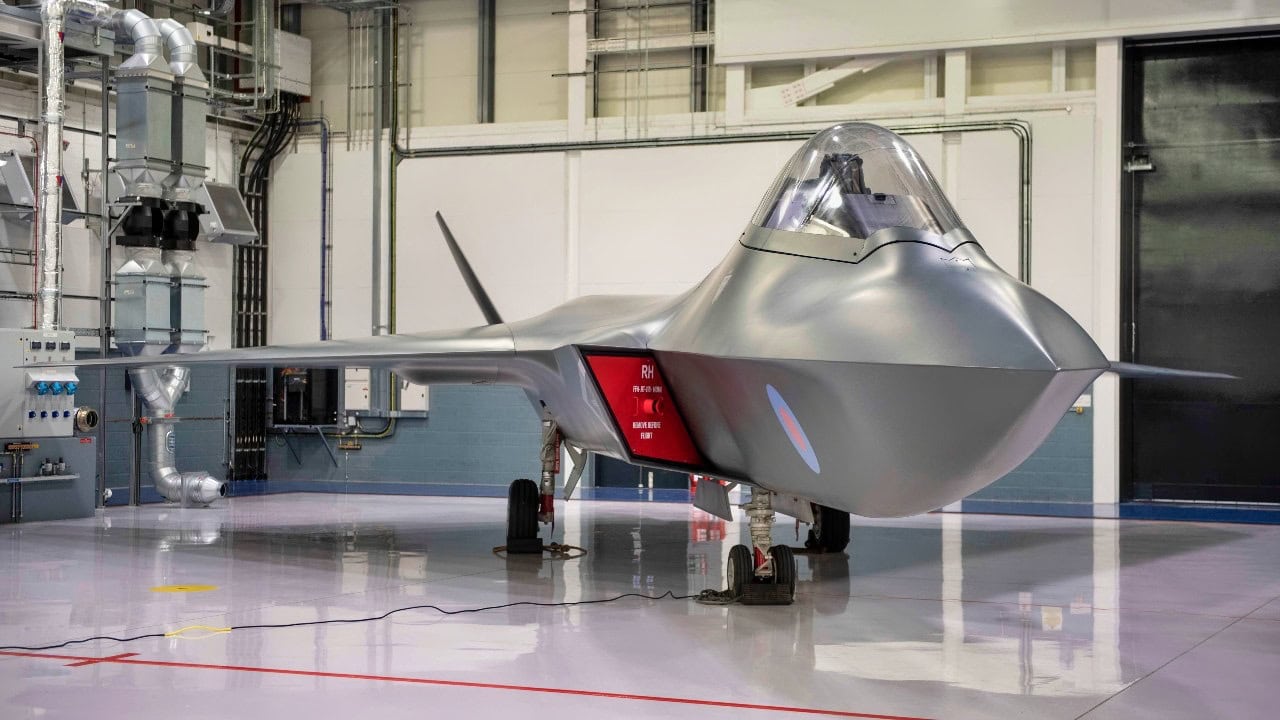
FCAS was launched in 2017 as the flagship Franco-German effort to build a sixth-generation combat aircraft and a wider system of systems. The fighter was never meant to be just a jet. The intended package included a New Generation Fighter, remote carrier drones, sensors, data links, and a combat cloud able to connect manned and unmanned assets across a contested airspace.
That architecture made sense on paper. Russia's war against Ukraine has shown that aircraft, missiles, electronic warfare, drones, and air defences now operate as one compressed kill chain. A future European fighter that cannot control unmanned systems or survive inside dense radar and missile coverage will not be a future fighter at all.
But paper architectures do not solve workshare. According to Defense News, the programme collapsed after months of disputes between French and German industry over industrial leadership, intellectual property, and requirements. Dassault had the strongest fighter-design pedigree and wanted authority over the core aircraft. Airbus, representing Germany and Spain, wanted a more balanced arrangement. That argument was not a footnote. It was the programme.
German Defence Minister Boris Pistorius has now put several options on the table. Defense News reported that Berlin could buy more U.S.-made F-35s, join an existing sixth-generation programme, or launch a German-led project with Airbus and other partners. The F-35 option is not theoretical. Germany already has 35 F-35As on order for its nuclear-sharing mission, and Spiegel previously reported a possible additional 15-aircraft purchase worth almost $3 billion.
That is the ugly logic of failure. When European programmes stall, American aircraft fill the gap.
GCAP Looks Like the Lifeboat, Not the Solution
The obvious alternative is GCAP, the Global Combat Air Programme led by the United Kingdom, Italy, and Japan. Leonardo chief Lorenzo Mariani told Defense News that Germany would bring money and expertise, but he also warned that adding a new partner could endanger GCAP's 2035 target date. His blunt line was the important one: Europe cannot afford too many sixth-generation fighter projects.
He is right, but the politics are worse than the engineering. GCAP already has three demanding partners. Japan wants the aircraft on time because China is the pacing threat. Britain wants sovereign combat-air work but is under fiscal pressure. Italy wants industrial weight without letting the schedule drift. Germany joining would bring scale, but also the same question that helped kill FCAS: who gets to lead?
If Berlin enters GCAP as a normal partner, it accepts that the post-FCAS answer is not German strategic autonomy but admission into someone else's timetable. If it demands a leading role, it risks slowing the one European-linked sixth-generation programme that still has a credible 2035 date.
That is not a clean choice. It is a choice created by wasting nearly a decade pretending a symbolic Franco-German project could survive without a shared military requirement.
The F-35 Bridge Could Become a One-Way Road
Buying more F-35s would be the fastest way for Germany to avoid a combat-air gap. It would also deepen Europe's dependence on U.S. software, sustainment, weapons integration, and upgrade decisions. The F-35 is an extraordinarily capable aircraft, but it is not a European sovereignty project. It is a U.S.-led ecosystem with European customers.
That distinction matters more after the past year of transatlantic strain. Reuters, in its coverage of the ILA Berlin Air Show, noted that the event opened under the shadow of the Iran war and FCAS's collapse, with European industry trying to narrow the gap with U.S. rivals as governments increase defence spending. More than 750 exhibitors from 37 countries came to Berlin to sell the future. The future on offer looked less unified than advertised.
There is a temptation in Washington and some NATO capitals to shrug at FCAS and say the alliance still gets capability if Germany buys more F-35s. In narrow military terms, that is true. More fifth-generation aircraft in German service would strengthen NATO air power in the 2030s.
But here is the thing: capability without industrial resilience is a rental agreement. Europe can keep buying American platforms, but it cannot then complain that it lacks strategic autonomy when the next crisis exposes U.S. priorities elsewhere.
Ukraine Has Made the Old Fighter Debate Look Stale
There is another uncomfortable point. Chancellor Friedrich Merz has reportedly questioned whether a manned sixth-generation fighter still makes sense for Germany's air force. That question would have sounded unserious ten years ago. After Ukraine, it deserves an answer.
The war has not made crewed aircraft obsolete. It has made expensive crewed aircraft more dependent on cheap uncrewed systems, electronic warfare, resilient communications, and mass production. A sixth-generation fighter that arrives late, in small numbers, with exquisite systems and fragile industrial politics may be less useful than a mixed force of fifth-generation jets, loyal wingmen, long-range missiles, attritable drones, and distributed sensors.
This is where FCAS's failure may accidentally help Europe. The programme's collapse forces Germany to ask whether it needs a prestige aircraft, a combat-cloud architecture, more F-35s, autonomous systems, or all of those in a more modest sequence. That is a better question than continuing a broken programme because it looked good in communiques.
The danger is that Europe answers by creating yet another national consortium with a new logo, new promises, and no discipline. FT reporting this week described German interest in a German-led next-generation effort, while Reuters noted Airbus's outreach toward Sweden's Saab. Those moves may produce a healthier coalition. They may also produce FCAS with different stationery.
NATO Should Read This as a Warning, Not a Procurement Story
NATO's European members are spending more money, but money is not strategy. The alliance needs aircraft, interceptors, drones, airbases, hardened shelters, munitions stocks, and command networks that can survive Russian strikes and Russian jamming. It also needs Europeans to stop treating industrial leadership as the main battlefield.
The immediate indicators to watch are simple. First, whether Germany buys the additional F-35s and turns a bridge into a long-term dependency. Second, whether Berlin joins GCAP without damaging its 2035 schedule. Third, whether France pursues a more independent Dassault-led route and leaves European combat aviation split between rival camps. Fourth, whether the drone and combat-cloud elements once wrapped inside FCAS survive in some practical form.
The key finding is not that FCAS failed because Airbus and Dassault argued. The key finding is that Europe's most important governments still have not built a defence-industrial model that can move at wartime speed. Russia will not wait for Europe to reconcile national pride with alliance needs. Neither will China, Iran, or the next U.S. administration.
FCAS was meant to show that Europe could build air power together. In 2026, it has shown the opposite. NATO can live with that for a few years because the F-35 exists. Europe cannot live with it forever.
Germany is facing a fighter aircraft gap following the collapse of the Future Combat Air System (FCAS) program in 2026. The German Air Force is considering purchasing additional F-35s or joining the Global Combat Air Programme (GCAP) to address this issue. The collapse of FCAS raises concerns about NATO's European defense capabilities and the need for a unified approach to military procurement.
- The FCAS program collapsed due to disputes between French and German industries.
- Germany is considering purchasing more F-35s to fill the combat-air gap.
- The Global Combat Air Programme (GCAP) is seen as a potential alternative for Germany.
- Chancellor Friedrich Merz questioned the need for a manned sixth-generation fighter.
- The report highlights the need for a cohesive European defense strategy.