
Greece's €3 Billion Israel Shield Is Really About Turkey
 Alexandra Reeves
Greece's €3 Billion Israel Shield Is Really About Turkey
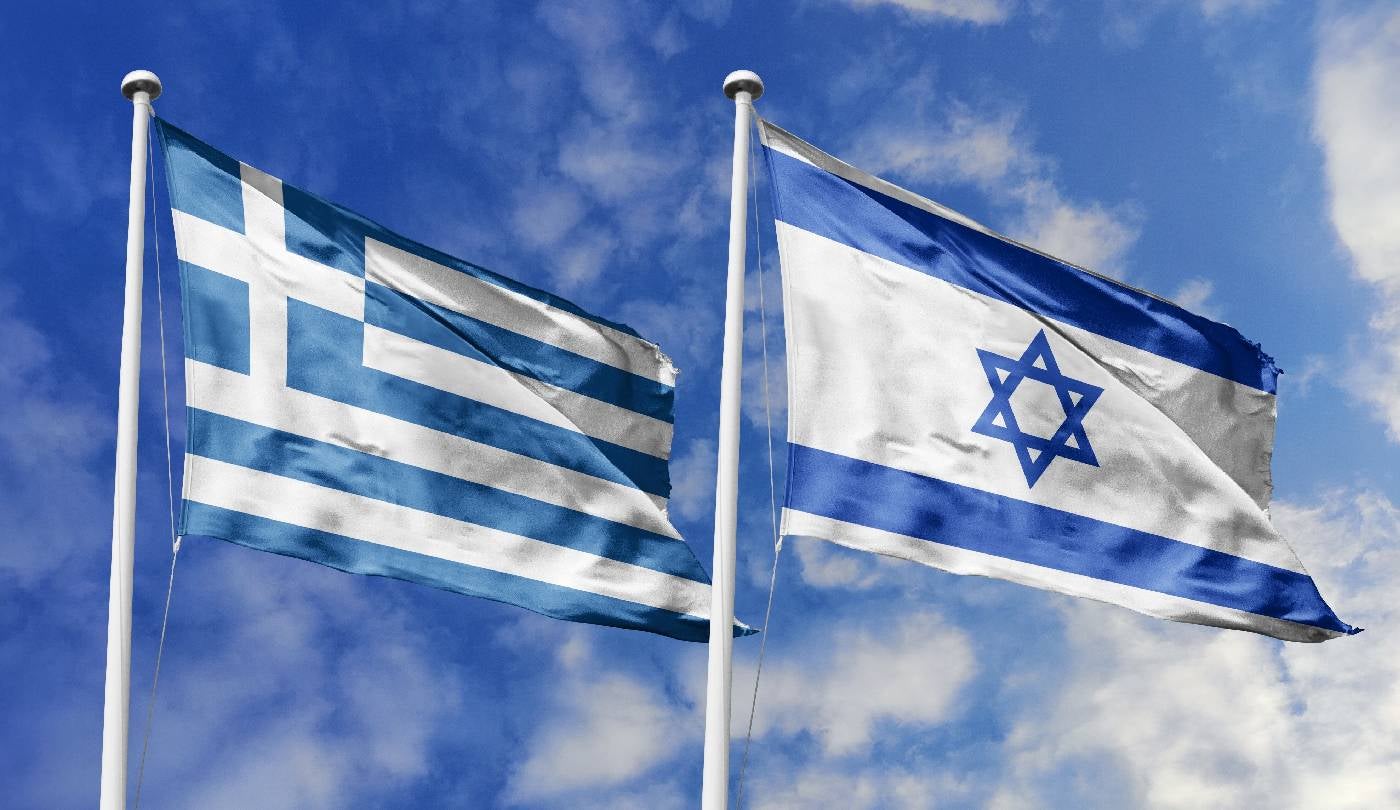
Three billion euros buys a lot of interceptors. What it does not buy is subtlety. Greece and Israel did not sign the Achilles Shield agreement on Monday because they suddenly discovered a shared love of integrated air defence. They signed it because the eastern Mediterranean is getting harsher, Turkey is pressing every seam in the regional order, and Athens has decided that waiting for NATO language about cohesion is a bad substitute for building a shield that it can actually control.
According to the Greek and Israeli defence ministries, the new package is worth about €3.035 billion, or roughly $3.5 billion, making it the biggest defence deal ever between the two countries and one of Israel's largest export agreements. The system will be built entirely around Israeli technology: Rafael's David's Sling and SPYDER interceptors, Israel Aerospace Industries' BARAK MX, and ELTA air-surveillance radars. Greece also says 19 domestic firms will participate, taking more than 25 percent of the programme, about €750 million, and helping establish a local production base with export potential.
What Athens Actually Bought
The technical menu matters because it tells you what problem Athens thinks it is solving. David's Sling is designed for the space between short-range systems and strategic missile defence. SPYDER covers fast-moving aircraft, cruise missiles and drones. BARAK MX adds a layered architecture that can be tailored across different ranges, while ELTA radars tie the picture together. That is not a symbolic purchase. It is a bid for a denser, more resilient shield against the mixed salvo problem that now defines modern air war: drones, cruise missiles and precision-guided munitions arriving together, forcing the defender to spend quickly and decide badly.
Greek officials also stressed that Greece would become the first European Union country to adopt a system of this kind. That line is not just marketing. It is Athens telling partners that the southern flank cannot rely on old point-defence assumptions while the region fills up with cheap drones, longer-range strike systems and a growing overlap between maritime disputes and land-based air power.
This Is a Mediterranean Alliance Story
Israeli Defence Minister Israel Katz framed the agreement in the language of shared strategic interests and unnamed actors with hegemonic ambitions. He did not need to say Turkey out loud. The context did it for him. Turkey and Greece remain locked in familiar disputes over airspace, maritime boundaries, territorial waters and Cyprus. At the same time, Turkish-Israeli ties have deteriorated badly over Gaza and over their competing interests in Syria. Reuters and Turkish Minute both noted that Israel's strike on the Abu Duhur airbase earlier this month was meant to stop a prospective Turkish deployment there. In other words, the deal lands in a region where Ankara is not a hypothetical variable. It is the pacing challenge.
That is why the most important part of Achilles Shield may not be the hardware list. It is the political geometry. Greece is weaving its deterrence posture through a minilateral network with Israel rather than waiting for NATO to produce a southern-flank answer that satisfies everyone and offends no one. That tells you something uncomfortable about the alliance. On the eastern flank, NATO has at least learned to talk seriously about Russia. In the eastern Mediterranean, it still struggles to admit that two of its own members can shape each other's force planning as much as any outside threat.
Europe's Defence Debate Keeps Missing the South
There is a wider European angle here, and it is easy to miss if you reduce this story to an arms sale. Europe has spent most of the past two years arguing about artillery output, long-range fires and Ukraine replenishment. Fair enough. But the air-defence lesson of Ukraine is not only about defending NATO's northeastern edge. It is about the brutal arithmetic of persistent attack. If a state cannot absorb repeated drone and missile pressure without exhausting its magazine or paralysing civilian life, then sovereignty becomes negotiable. Athens is reading that lesson through a Mediterranean lens.
The industrial piece matters too. A quarter of the programme is supposed to flow through Greek firms. That will not make Greece strategically autonomous. But it will make Athens less dependent on a pure off-the-shelf model and more serious about sustainment, repair and future export leverage. Europe talks endlessly about defence industrial capacity. Greece has chosen a version of that debate tied to an immediate operational problem instead of another summit declaration.
The Real Message
The easy read is that Greece just bought a very expensive anti-missile umbrella. The harder read is that Athens no longer trusts the regional environment to stay below the threshold where such an umbrella becomes necessary. It sees a Turkey willing to test boundaries, an Israel willing to act hard in Syria, and a NATO framework that is useful until the moment intra-alliance rivalry becomes the issue. That is a much more serious story than a procurement headline.
The uncomfortable conclusion is this: Achilles Shield is not really proof that NATO's southern flank is secure. It is proof that one frontline NATO member believes it needs an insurance policy partly against another regional power inside the same Western security ecosystem. Watch what happens next with Greek force integration, Turkish responses and whether other European states start shopping for similar layered systems. If they do, the real trend will not be interoperability. It will be the quiet fragmentation of European deterrence into regional sub-alliances that trust hardware more than alliance consensus.
Greece signed a €3.035 billion defense agreement with Israel to enhance its air defense capabilities amid rising tensions with Turkey. The deal includes advanced systems such as David's Sling and SPYDER interceptors, with significant participation from Greek firms. This move indicates Greece's shift towards a more autonomous defense strategy in response to regional threats.
- Greece signed a €3.035 billion defense deal with Israel for air defense systems.
- The deal includes advanced systems like David's Sling and SPYDER interceptors.
- Greece aims to enhance its defense capabilities amid regional tensions with Turkey.
- 19 domestic Greek firms will participate in the program, contributing to local production.
- The agreement reflects Greece's shift towards a more independent defense posture.