
Houthi Attack on 2 Saudi Oil Tankers Turns Bab al-Mandeb into Riyadh's Second 2026 Chokepoint
 Ahmed Al-Rashid
The Houthi Attack on Two Saudi Oil Tankers Turns Bab al-Mandab into the Second Bottleneck for Riyadh in 2026
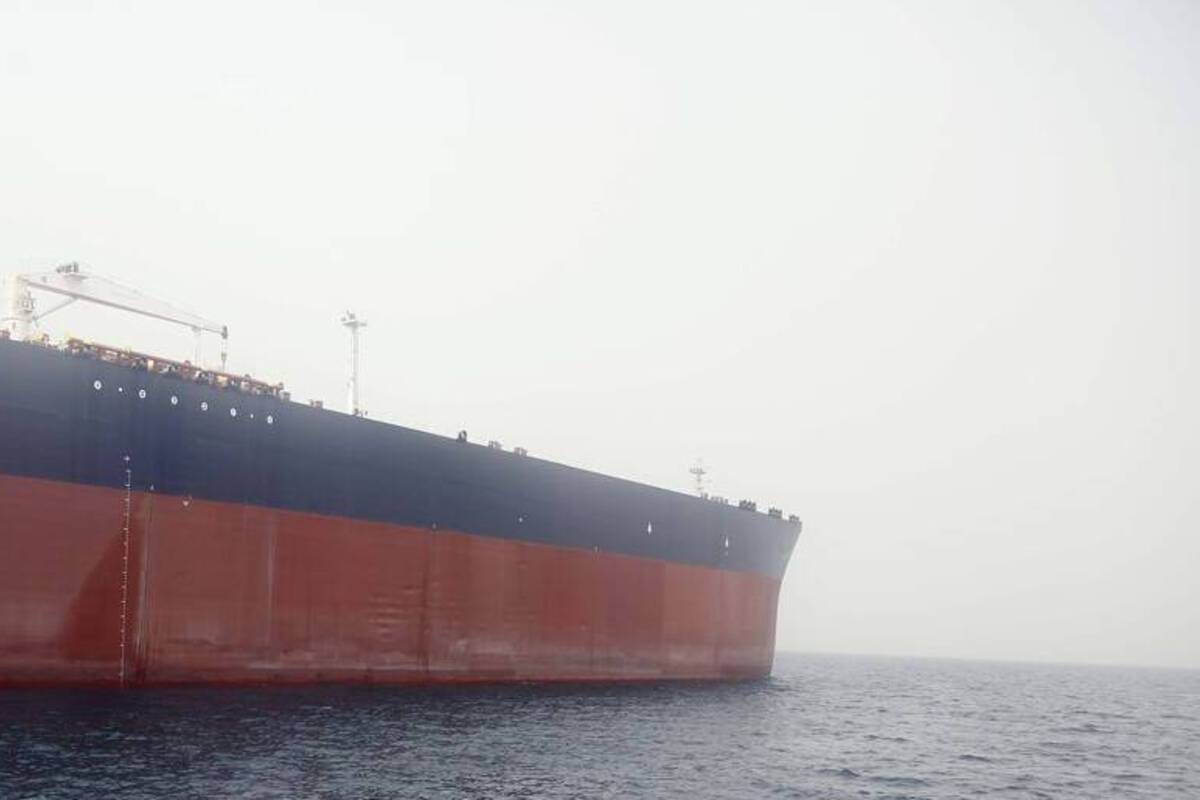
On July 22, Houthi military spokesman Yahya Saree announced that his forces targeted two Saudi oil tankers, Encelia and Layla, in the Red Sea. He stated that the attack was carried out using ballistic missiles, cruise missiles, and drones. The Saudi Press Agency acknowledged that Encelia was hit, confirming the crew's safety, while UKMTO reported that it received a notification about a tanker struck by an unknown projectile, and its crew was working to extinguish a fire. Militarily, this is not a separate maritime incident, but a direct test of Saudi Arabia's escape route from the Hormuz crisis.
Since the effective closure of the Strait of Hormuz due to the U.S.-Israeli war on Iran, Riyadh has attempted to shift the weight of its exports through the east-west line to Yanbu and then to the Red Sea and Bab al-Mandab. The idea was simple on paper: if the Gulf tightens, the barrels would exit from the west. But war does not respect clean maps. The Houthis announced a maritime blockade on Saudi ships on July 20, and two days later, they provided the first fireproof evidence that the threat was actionable.
The Maritime Incident and the Meaning of the Numbers
Bab al-Mandab is not a marginal passage. Its narrowest point is about 29 kilometers, connecting the Red Sea to the Gulf of Aden and the Suez Canal. Energy estimates reported by Al Jazeera based on shipping data indicate that approximately 4.1 billion barrels of crude oil and refined products will pass through it in 2024, accounting for nearly 5% of the global total. In June 2026, oil volumes transiting increased to about 7.4 million barrels per day, or around 7% of global production, as reliance on the Red Sea route grew due to the Hormuz crisis.
What is more sensitive for Saudi Arabia is that shipments from Yanbu recently reached about 4 million barrels per day, compared to about 973,000 barrels per day a year ago, according to Kpler and Signal Ocean data reported by Reuters in Al Jazeera's coverage. This means that the Houthis are not just attacking a passing tanker; they are pressuring the safety valve that Riyadh has built its calculations upon after the Gulf's disruption.
Houthi Capabilities Are Not Enough for a Full Blockade but Sufficient to Raise Costs
We should not overstate the Houthis' ability to close the Red Sea as a major maritime nation would close a strait it controls on both sides. The Houthis do not possess a surface fleet in the classical sense, nor can they impose continuous inspections on navigation. However, the repeated Saudi and Western mistake is measuring the threat in terms of complete control. In modern naval warfare, an armed group does not need to control the sea to force insurance companies and carriers to change their behavior. It is enough to demonstrate the capability to hit a ship and then repeat the threat at a politically sensitive time.
Practically, the Houthis' mixed arsenal of anti-ship ballistic missiles, cruise missiles, suicide drones, and fast or unmanned boats does not create a tight blockade, but it does create a risk area. This is an area where the captain, the insurance company, and the cargo owner become more important than a statement from the Ministry of Defense. If insurance premiums rise, ships are delayed, and routes change, Sana'a may achieve part of its goal without sinking dozens of vessels.
The Saudi Dilemma Between Air Defense and Naval Defense
Saudi Arabia has invested in recent years in Patriot, THAAD, APKWS II, and interception systems against drones, but most of this effort was designed to protect cities, bases, and fixed oil facilities. The Red Sea presents a different issue. A tanker is a moving target, the route is long, and the threat may come from the Yemeni coast or from a small platform that is difficult to classify early. Any military personnel who have served in the region know that protecting a facility in Dhahran is not the same as escorting a tanker near Bab al-Mandab.
Here, the triangle of capability that I often refer to emerges: equipment, training, and institution. Purchasing interceptors improves the first side. However, protecting maritime convoys requires a joint operational doctrine among the navy, air defense, intelligence, coast guard, and energy companies. It also requires clear rules of engagement with civilian vessels and the ability to distinguish the real target from the noise in a crowded environment. This is not just a weapons bill, but a daily exercise in managing a crisis that does not wait for a committee meeting.
Yemen Returns Through the Energy Gate, Not the Border Gate
The Houthi policy is clear in its timing. The movement claims it is responding to what it considers a Saudi blockade of Yemen's ports and airports, linking the escalation to the principle of an eye for an eye. Its opponents in Yemen see the decision as part of a broader Iranian service, especially after reports that Tehran asked the Houthis to prepare to close Bab al-Mandab if the U.S. strikes Iranian electrical infrastructure. In both cases, the result is the same for Saudi Arabia: the Yemen front is no longer a postponed file that can be frozen by a truce and mediations.
Since 2022, Yemen has lived in a state of neither war nor peace. This situation has been relatively comfortable for Riyadh as it reduced pressure on southern cities and the oil infrastructure, allowing a shift in focus to defense manufacturing and modernization deals. However, the attack on the tankers reminds us that stagnation is not a settlement. When war is not resolved, it turns into a reservoir of threats waiting for a suitable regional moment. The war with Iran provided that moment.
The Impact on Asia and Washington's Calculations
The Asian buyer is the silent party in this equation. China, Japan, South Korea, and India depend to varying degrees on Saudi crude, and most of the outflows from Yanbu need to pass south through Bab al-Mandab. If Hormuz is troubled and Bab al-Mandab is threatened at the same time, the energy market does not see two alternative routes but rather a pincers movement. Therefore, the attack cannot be read as merely a Yemeni-Saudi issue.
Washington is also facing a paradox. The United States strikes Iran at night while simultaneously wanting to keep global energy under control. However, the more it expands its target bank against Tehran, the more valuable the Houthi card becomes in the Red Sea. This is the price of interconnected wars: you strike in Bushehr or Sirik, and the result appears in Yanbu, Bab al-Mandab, and the insurance policy in Singapore.
At sea, fear does not require sinking a ship every day. It is enough for the market to believe that the next ship could be the target.
What Riyadh Can Do Now
A direct Saudi response to the Houthis is possible, but it comes with political and military costs. Striking missile and drone launch sites in Yemen may temporarily weaken the pace of attacks, but it will not eliminate the moving networks, small caches, or potential intelligence support. Escorting tankers with maritime protection lines is another option, but it requires fixed resources and American or European participation, and it may turn every oil trip into a declared military operation.
It is likely that Riyadh will combine three paths: diplomatic pressure through Oman and the United Nations, enhancing monitoring of the Yemeni coast, and expanding close defense of ships and facilities in Yanbu, Jeddah, and Jazan. However, these are risk management solutions, not decisive solutions. If Hormuz remains closed and Bab al-Mandab under Houthi threat, Saudi Arabia will find itself defending its exports from both ends of the map simultaneously.
Conclusion
The attack on Encelia and Layla reveals a deeper Saudi contradiction than just a tanker incident. The kingdom has purchased advanced equipment and built alternative pipelines and ports, yet it still faces a non-state adversary that can, at a limited cost, raise the price of using these alternatives. Here, the problem is not the absence of money or weapons, but that maritime security cannot be bought ready-made from abroad.
From Riyadh's perspective, Bab al-Mandab was supposed to be the solution when Hormuz chokes. From the Houthis' perspective, Bab al-Mandab has become the ideal place to prove that there is no free exit from an open regional war. Between these two logics, Saudi Arabia stands before an old dilemma in a new guise: it wants the independence of energy movement, but it relies on a maritime security system that it does not own alone.
Houthi forces attacked two Saudi oil tankers, Encelia and Layla, in the Red Sea on July 22, 2023, using ballistic missiles, cruise missiles, and drones. The attack highlights the strategic significance of Bab al-Mandeb as a chokepoint for Saudi oil exports. Saudi Arabia confirmed damage to the Encelia but reported no casualties among the crew. This incident escalates tensions in the region and poses a threat to maritime security.
- Houthi forces attacked two Saudi oil tankers, Encelia and Layla, on July 22, 2023.
- The attack was carried out using ballistic missiles, cruise missiles, and drones.
- Saudi Arabia confirmed that the Encelia was hit but the crew was safe.
- The attack is seen as a direct threat to Saudi oil exports and regional stability.
- Houthi forces declared a maritime blockade on Saudi vessels prior to the attack.