
Houthi Drones Strike Aramco Facilities in Jazan and Najran.. The Red Sea Siege Moves from Ships to Land
 Ahmed Al-Rashid
Houthi Drones Strike Aramco Facilities in Jazan and Najran.. The Red Sea Blockade Moves from Ships to Land
Just three days ago, the Houthi strike on the Egyptian cargo ship "Tehama" in Bab el-Mandeb was the top news in the region. Today, the message has shifted from water to land. The Ansar Allah group announced, via the "Saba" agency, that it attacked an Aramco facility in Najran in the south of the Kingdom, in response to what it described as Saudi aircraft violating the airspace of Saada Governorate. The same agency had previously reported an attack with two drones on the Aramco refinery in Jazan. Neither Riyadh nor Aramco has confirmed the extent of the damage as of the time of writing, but the military question does not require waiting for an official statement: when was the last time a missile or drone reached a Saudi oil facility on land?
The fundamental difference between these two attacks and all previous attacks on oil tankers is that the Houthis are no longer targeting passing cargo, but rather fixed infrastructure. A ship can change its course or turn off its tracking device, while a refinery remains in place, and whoever has a map of Jazan and Najran has endless options.
The Attacks That Changed the Rules
On August 13, the Houthi military spokesman stated that two drones targeted the Aramco refinery in Jazan, a refining facility located just a few kilometers from the Yemeni border, with a refining capacity of about 400,000 barrels per day. The following day came the Najran attack, which the Houthis justified as a response to Saudi aerial incursions into the airspace of Saada.
From a military perspective, I do not read these two attacks as a fleeting act of revenge, but rather as an announcement that the "blockade for blockade" declared by the Houthis on July 20 is no longer exclusive to water. When spokesman Yahya Saree announced the blockade on Saudi navigation, the first question in the Gulf corridors was: do the Houthis have the capability to implement it? The following weeks proved that they do, as the number of targeted tankers since July 22 reached at least eight. And now they have added a new layer: the fixed refinery does not need to be intercepted at sea; it just needs to be close to the border.
The Only Passage That Does Not Close
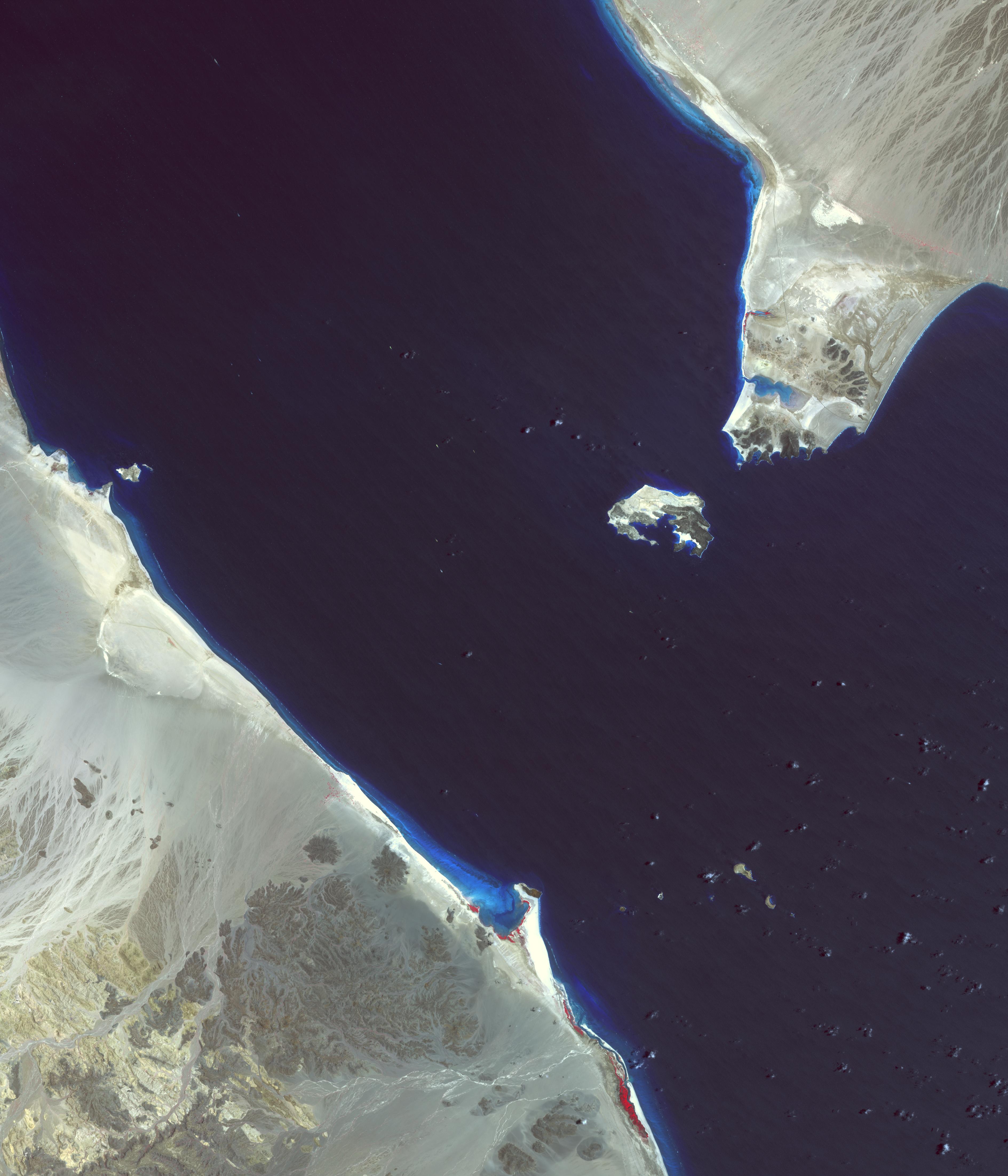
To understand why Jazan and Najran are specifically targeted, we must look at the Saudi oil map in the summer of 2026. With the Strait of Hormuz effectively closed, Riyadh has turned to its east-west line towards Yanbu on the Red Sea. But Yanbu does not serve alone: the oil that comes out of it must cross Bab el-Mandeb to reach the Suez Canal or Cape of Good Hope. Here the chokepoints meet: Hormuz is closed from the east, and Bab el-Mandeb is threatened from the west.
The figures published by "Kpler" summarize the true scale of the disaster: exports from Yanbu through Bab el-Mandeb dropped by about 90 percent in the first week of August, from 11 million barrels in the week of the blockade announcement to 1.3 million barrels. The only practical alternative, the "Sumed" pipeline through Egypt to the port of Sidi Kerir on the Mediterranean, saw its exports double to about 2.3 million barrels per day in August compared to about one million in July. However, this route, as Aramco CEO Amin Nasser stated, extends the journey to Asia by about 25 days, and the bills do not forgive anyone in times of war.
There is a detail that most readers overlook: the tankers that still dare to enter the Red Sea sail with their tracking devices turned off. This is not a logistical measure, but a silent acknowledgment that navigation in this passage has become an adventure insured by silence. When the ship disappears from tracking screens, part of the insurance companies' ability to assess risk disappears with it, and the insurance premium on every barrel rises, with the difference ultimately paid by the European and Asian consumer, not just the Saudi oil company.
The Triangle of Power That Has Not Changed
Any military personnel who has served in the region knows that air defense systems do not solve a geographical problem. Saudi Arabia possesses Patriot and THAAD systems and defenses at exorbitant prices, while the Houthis have Iranian-made drones that cost a few thousand dollars. The equation does not require an economics expert: shooting down a single drone may cost an interceptor missile that is dozens of times more expensive, while shooting down all the drones from Sanaa is not a matter of ammunition, but a matter of political will to pay the price of an open war with the Houthis, who are closest to Iran in this conflict.
Here the triangle of power is revealed in its harshest form: the equipment is available, but training on the new threat — cheap swarms and low-altitude drones — and the institutional structure that distributes priorities between protecting facilities, protecting cities, and protecting navigation, remain as deficient as they were ten years ago. Money alone did not close the skies over Jazan in 2019 when drones struck the facilities in Abqaiq and Khurais, and money alone does not close them today.
A Message That Goes Beyond Riyadh
These strikes are not only read in Riyadh, but also in Abu Dhabi, Doha, and Kuwait. If the Houthis have managed to turn Najran and Jazan into a fire zone while Washington is preoccupied with its war against Iran in the Gulf, what prevents them from directing their drones towards other infrastructure in the peninsula? The Saudi naval coalition that was announced to be activated a few days ago, led by Riyadh, has not yet included a single confirmed member on the ground, and this alone is enough to measure the gap between political statements and collective security capabilities.
In my estimation, the Houthis realize that they cannot completely stop Saudi oil exports, nor do they need to. What is strategically required is to raise the cost of every barrel that passes through the Red Sea to a level that makes Riyadh reconsider the equation of the blockade imposed on the ports of Hodeidah and the Yemeni ports controlled by the group. This is the logic of "blockade for blockade" in its simplest form: you blockade our ports, we blockade your oil wherever it is found.
The Conclusion That No One Likes
Riyadh has long bet on "multiple options": if Hormuz is closed, there is Yanbu, and if Bab el-Mandeb is closed, there is Sumed. But the Houthis read the same map, which is why they did not only strike the tankers, but also targeted the refineries near the border. The message is clear: every Saudi barrel that leaves via the Red Sea will be accounted for, and every fixed facility close to Yemen is a legitimate target in the logic of "blockade for blockade."
The structural contradiction remains, and it is harsher than any missile: the Kingdom buys security from Washington, signs defense agreements with Ankara and Islamabad, but the Houthis do not sign these agreements. They possess what Riyadh does not: the nearby geography and the will to pay the price. Until defense systems transform from slogans at exhibitions to the ability to close the skies over facilities, Jazan and Najran will remind us that a blockade does not need a fleet to be painful; a single drone that knows the way is enough.
Houthi forces launched drone strikes against Aramco facilities in Jazan and Najran, responding to Saudi air incursions. These attacks mark a significant shift from targeting maritime vessels to land-based oil infrastructure, with the refinery in Jazan being a key target due to its proximity to Yemen. The Houthi group aims to raise the costs of Saudi oil exports amid ongoing regional tensions.
- Houthi drones attacked Aramco facilities in Jazan and Najran.
- The attacks are a response to Saudi air incursions in Saada.
- The Houthi group claims to have shifted their focus from maritime to land-based targets.
- The refinery in Jazan has a capacity of approximately 400,000 barrels per day.
- The attacks signify a strategic shift in Houthi operations against Saudi oil infrastructure.