
How airmen are leading a ‘revolution’ in aircraft maintenance

Source: Task & Purpose
Loading...Strong SignalCredibility: 81%
Report Content
A new system developed by airmen could save billions of dollars, boost aircraft readiness, and improve the quality of life for maintainers. The Advanced Maintenance Analytics and Troubleshooting System (AMATS) lets maintainers “read the matrix” of C-130 fault data, letting them pinpoint exactly what broke, what the root cause of the failure was, and then forecast when it might happen next.
AMATS has already saved $180 million in maintenance costs and could save billions more as it expands across the C-130 fleet and potentially beyond. Retired Air Force Master Sgt. Aaron Cordroch, who helped develop AMATS, said it’s also giving maintainers a morale boost.
“One of the big root causes of maintenance morale issues is feeling like our time is being wasted,” he said. “We’ll spend 12 hours troubleshooting a system and still don’t know what’s causing the error or failure in some cases. This aims to get rid of that.”
Swaptronics
The C-130J is filled with sensors and computers that record performance data from the engines, avionics, hydraulic actuators, flight surface servos, and everything in between. Tapping into that data helps spot problems, such as whether an engine is overheating, a radar is malfunctioning, or if a part will fail during an upcoming deployment.
But when the Air Force first bought the C-130J, Cordroch explained, it did not buy access to high-fidelity system data, believing that the high-tech aircraft could essentially diagnose itself. The problem was that not even manufacturer Lockheed Martin could predict some of the errors that came up, and airmen had limited troubleshooting tools to isolate the issue or describe it to engineering support.
Cordroch said it was similar to a “check engine” light, where something is wrong, but it’s not clear exactly what.
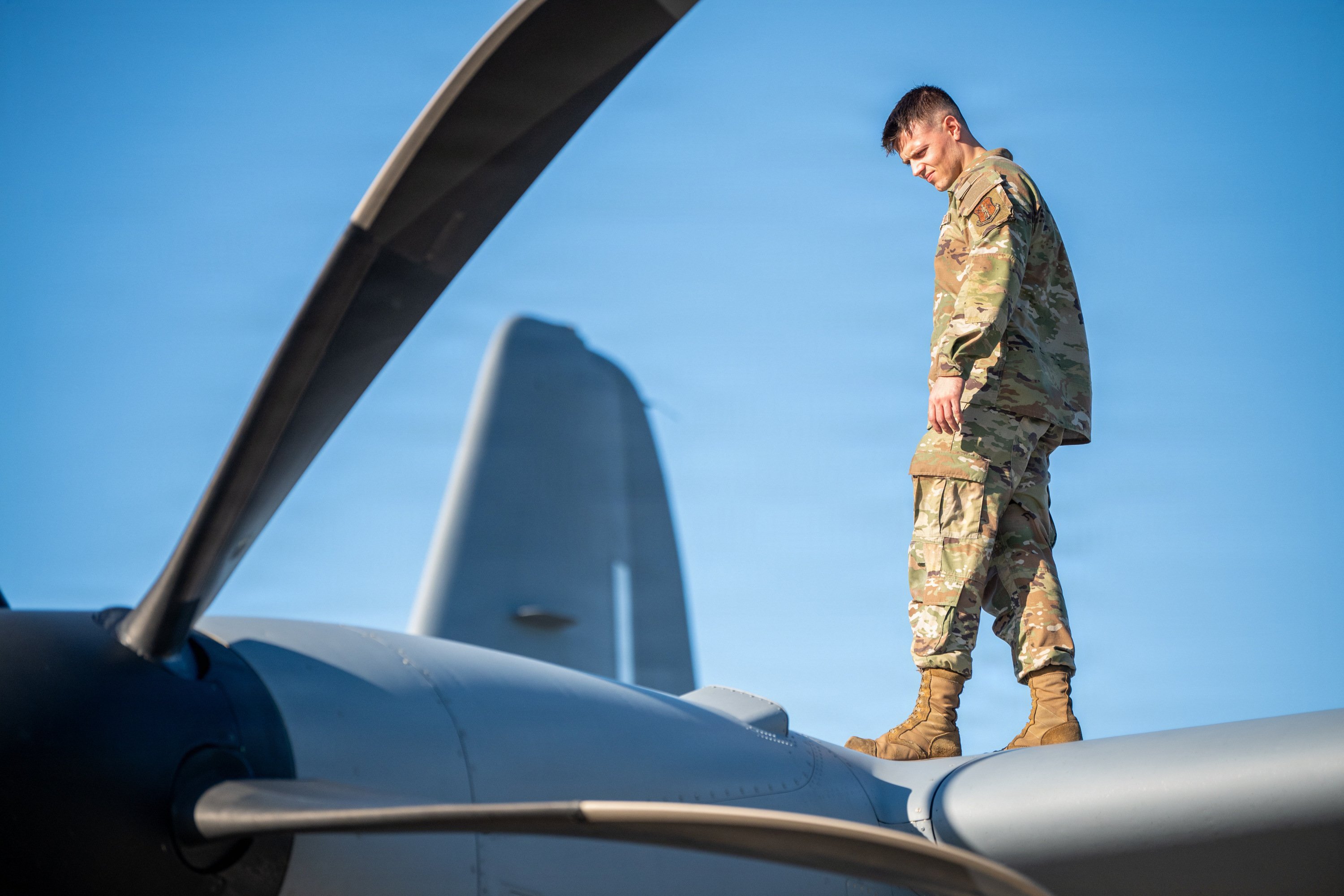 Air Force Staff Sgt. Ethan Hall, a crew chief with the 123rd Maintenance Squadron, 123rd Airlift Wing, Kentucky Air National Guard, inspects a C-130J Super Hercules aircraft during an airlift mission after its arrival to Bodø, Norway, on June 15, 2026. Air National Guard photo by Senior Airman Annaliese Billings.
This results in “swaptronics,” where airmen try to fix a problem by replacing parts. And if that doesn’t work, they try replacing the next most likely parts. Each of these parts often cost tens of thousands of dollars. In one particularly bad case, Cordroch and his fellow maintainers replaced every single part in a system–that’s millions of dollars of equipment–and the fail was still there.
“The end result was, after spending three shifts a day for like two weeks troubleshooting and chasing sparks and looking at voltages and replacing boxes, it turned out to be a software issue that had carried over that we weren’t aware of,” he said.
The Road to AMATS
Communications airmen wanted to put cyber protection on C-130s, but building those protections meant digging deep into all the data going back and forth across the databus — the spinal cord connecting the C-130’s computers.
The airmen needed a decoder ring that would let them read those gigabytes of data, and they realized they could build one themselves. Software engineers at Air Force Special Operations Command spent over a year downloading historical aircraft maintenance data and comparing it to live downloads, through which they learned exactly how the aircraft communicates.
The results are stunning. One example is the Fire Overheat Detection System, or FODS, which is triggered by special wires that burn up if the C-130 engine gets too hot.
Each of the C-130’s four engines has four FODS wires. The problem is that when the C-130 reports a FODS failure, the diagnostics system does not specify which wire is at fault. It then takes maintainers about 12 hours to pull off all the engine cowling panels, hunt down the burned wire, replace it, and check that it works.
But with AMATS, they can plug in a laptop and spot the exact bad wire in about 20 seconds, then have the wire replaced in less than an hour.
By analyzing the communication speeds between systems on the databus, maintainers can also predict exactly when a part will fail and replace it in advance, which is a massive improvement for pre-deployment planning.
Revolution has begun
Cordroch estimated that when he retired in 2024, the Air Force had invested about $3.5 million into AMATS. But it’s already saved $180 million because it cut down on swaptronics, increased aircraft availability, and allowed units to proactively schedule repairs.
Those savings come from just two AMATS kits, but now it’s been approved for permanent installation on all AC-130J gunships, HC-130J rescue aircraft, and MC-130J Combat Talon IIIs. That’s about 130 aircraft, so the savings could climb over $10 billion.
“This technology is truly nothing short of revolutionary,” Cordroch said.
C-130s might be just the start. The 1553 data bus that the C-130 uses is also found on Abrams tanks, F-16 fighters, C-17 transports, Navy destroyers, V-22 Ospreys, and many other platforms.
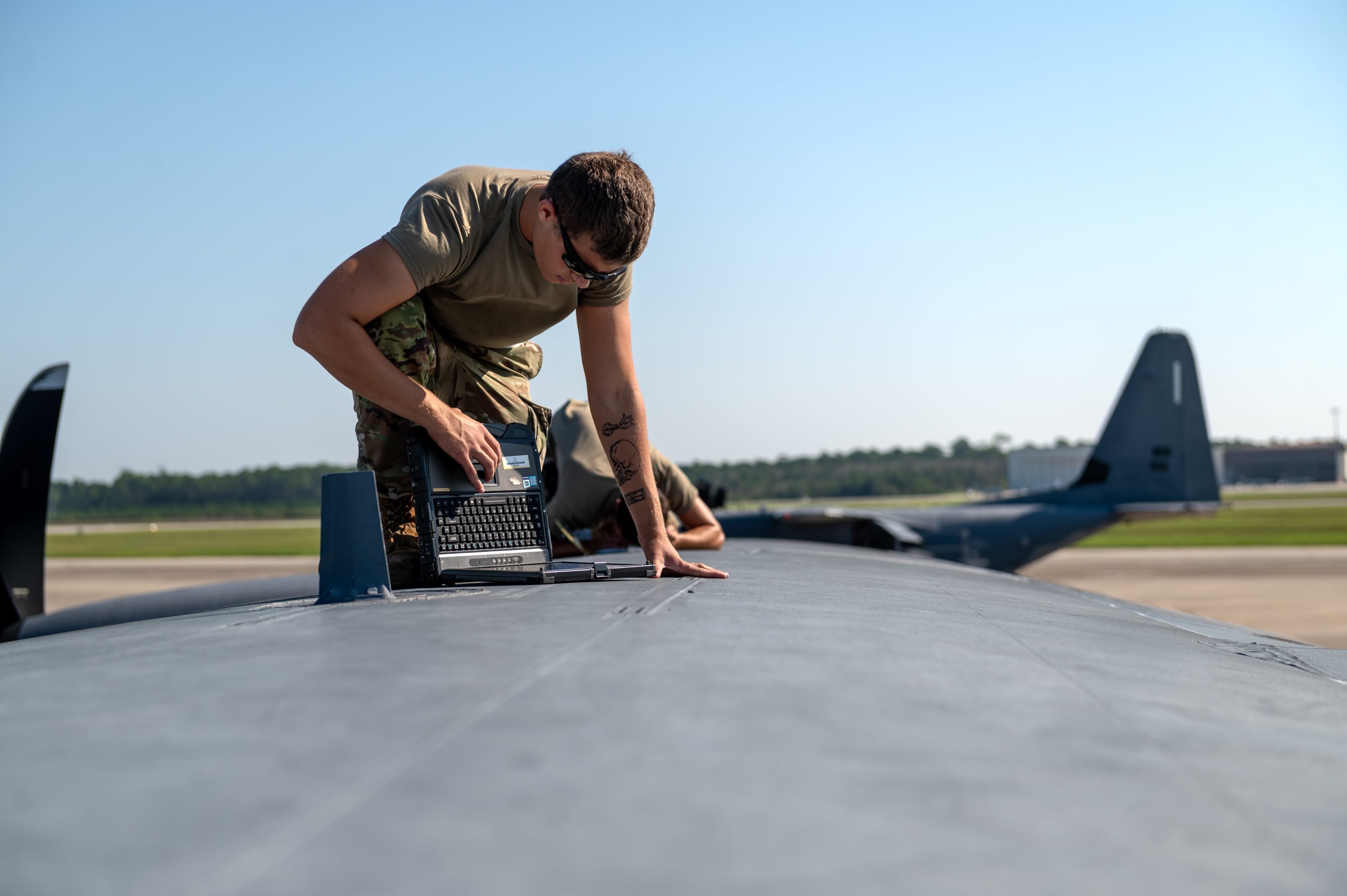 An airman with 15th Special Operations Aircraft Maintenance Squadron reviews tech data while on the wing of an MC-130J Commando II aircraft at Hurlburt Field, Florida, Sept. 19, 2024. Air Force photo by Airman 1st Class Raul Mercado.
For AMATS to grow, the Air Force needs more data scientists who can interpret the AMATS data, and more secure comms infrastructure to handle the amount of data it generates. AMATS would also need to become a fully adopted and supported program of record, Cordroch said, which would set up dedicated funding and a bigger budget for hiring staff.
These investments could cost millions, but Cordroch said it’s a drop in the bucket compared to the capabilities and savings it unlocks.
“This is how the Air Force finally takes a massive step towards the dream of predictive maintenance,” he said.
The post How airmen are leading a ‘revolution’ in aircraft maintenance appeared first on Task & Purpose.
Classification
Region
Europe
Analytical Domain
Operational
Primary Category / Secondary Categories
Logistics / Weapons & Equipment
SALUTE Report
Size
130 aircraft
Activity
Implementation of the Advanced Maintenance Analytics and Troubleshooting System (AMATS) to improve aircraft maintenance and readiness
Location
Bodø · Norway
Unit
123rd Maintenance Squadron, 123rd Airlift Wing, Kentucky Air National Guard
Time
June 15, 2026
Equipment
C-130J Super HerculesAMATS
Summary
Airmen implemented the Advanced Maintenance Analytics and Troubleshooting System (AMATS) on June 15, 2026, in Bodø, Norway, enhancing maintenance efficiency for the C-130J Super Hercules. The system has already saved $180 million and is projected to save over $10 billion as it expands across 130 aircraft. AMATS significantly reduces troubleshooting time and improves aircraft readiness.
Key Facts
- AMATS has saved $180 million in maintenance costs.
- The system allows maintainers to diagnose issues quickly, reducing troubleshooting time.
- AMATS is being implemented across 130 aircraft, potentially saving over $10 billion.
- The technology is expected to revolutionize aircraft maintenance and readiness.