
How autonomous weapons are changing the way brigades fight
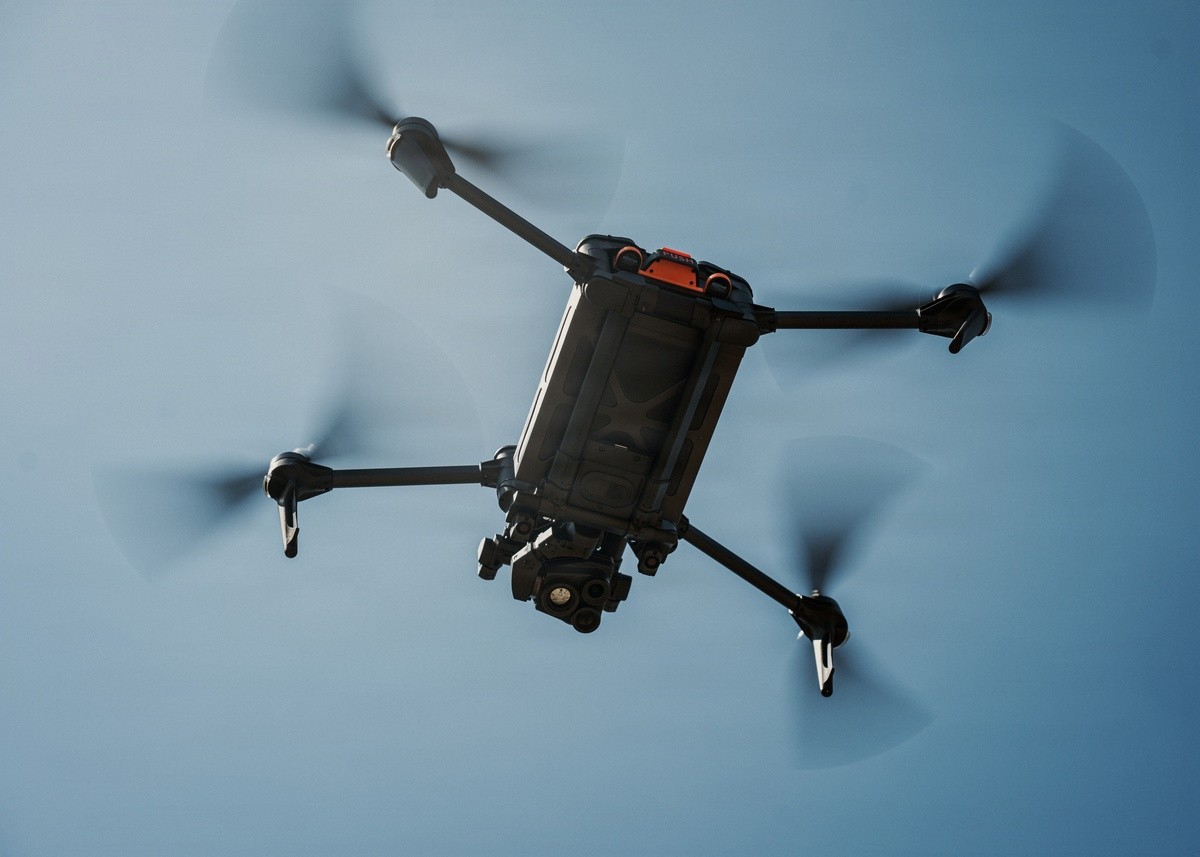
At Fort Bragg, soldiers recently tested how unmanned systems could help troops breach obstacles while reducing exposure to battlefield hazards.
During Project Sandhills 2.0, soldiers planned flight routes and operated Bumblebee V2 small unmanned aircraft systems at Range 63.
The project tested how unmanned systems could support contested obstacle breaching, while soldiers and industry partners collected feedback to inform future Army capabilities.
The Army said the effort included autonomous trucks, robotic breaching payloads, drone swarms, mine detection and counter-UAS tools operating on the same problem.
A counter-UAS turret used a human-authorized effector, underscoring that autonomy did not mean removing people from critical decisions. Human decision-making remains central to the Army’s approach.
The experiment illustrates the larger question raised by retired Army Col. Dave Rowland and retired Command Sgt. Maj. Brian Hester in a Sept. 29 Modern War Institute analysis: Autonomy becomes consequential not when the Army adds an individual robotic system, but when it has enough autonomous systems, performing enough missions, to change how an entire brigade fights.
That difference becomes more consequential as autonomous systems are integrated across a battlefield shaped by drones, sensors, electronic warfare and precision fires.
Rowland and Hester argue that persistent observation and long-range fires make large formations easier to find and attack, threatening the maneuver that allows combined-arms forces to concentrate combat power.
They envision autonomous systems moving ahead of manned formations to identify enemy positions, obstacles and usable routes. Other systems could provide counter-drone, electronic-warfare, sensing or deception capabilities, while autonomous platforms could move supplies through exposed areas.
Beyond experimentation
The Army is moving beyond experimentation into acquisition and organizational changes, with its fiscal 2026 budget justification including an “Autonomy Formation” effort intended to accelerate robotics for armored and infantry formations.
In July, the Army selected four companies for its Engineer Autonomous Breaching Capability program, which calls for prototypes capable of breaching complex obstacles and minefields under direct observation and fire using beyond-line-of-sight autonomous control. An assessment of the unit is planned for early 2027.
On Oct. 1, Acting Army Secretary Adam Telle signed a memorandum directing the establishment of the U.S. Army Futures and Autonomous Systems Command, or FASCOM. The Army announced the move Oct. 2, saying the command will integrate autonomous capabilities into aviation, armor, fires, sustainment, engineer and training formations.
It will also prioritize autonomous fires, combat vehicles, watercraft resupply, breaching, reconnaissance, surveillance and target acquisition, and crewed-uncrewed teaming for acquisition and fielding by fiscal 2028.
But the Army’s own research shows why turning that ambition into battlefield capability won’t be simple.
In a Sept. 30 Army Research Laboratory study, 13 soldiers operated a mixed air-ground formation during a two-week simulation. The formation included a manned control vehicle, two robotic combat vehicles, a Future Vertical Lift platform and shared launched effects, operating against a human-controlled opposing force under contested conditions.
Researchers found that the formation adapted rapidly, developed effective coordination patterns and maintained stable subjective workload as mission complexity increased. The findings suggest that air-ground teaming was feasible under the conditions tested and that soldiers could integrate autonomous capabilities without an unsustainable cognitive burden.
However, the study did not demonstrate autonomous maneuver by an operational brigade. It tested a specific human-machine formation in a simulation under defined conditions.
Another Army Research Laboratory study examining autonomous reconnaissance and screening identified soldier-robot trust, communications, shared understanding and cognitive load as areas requiring further research. Those issues become especially important when communications are degraded or denied.
That is where Rowland and Hester envision a fundamental change in command.
A brigade cannot scale autonomy if every unmanned vehicle requires a soldier continuously controlling it. The retired Army leaders describe a progression from operating individual systems, to supervising multiple systems, to coordinating mixed manned-unmanned teams and eventually commanding autonomous formations through mission command.
Ukraine offers evidence of what unmanned systems can already do, but also a warning against overstating the technology.
Rowland and Hester point to Ukrainian use of unmanned ground systems for logistics and casualty evacuation while noting that most remain remotely operated or have only limited autonomy. Their use demonstrates the value of shifting dangerous work from people to machines; it does not establish that fully autonomous formations are ready for combat.
Acquisition isn’t the only issue
The Army faces a problem bigger than acquiring machines alone. It must determine how many systems formations can absorb, how soldiers should supervise them, how networks can support them under attack and what happens when a machine encounters circumstances its programming does not anticipate.
Rowland and Hester argue the Army should learn those lessons before the technology is perfected. They call for brigades to train with meaningful quantities of autonomous systems at home stations, identify failures and refine tactics before those systems reach combat training centers.
The Army is now aligning its organizations, acquisition efforts and training around that broader push. The unresolved question is whether those efforts can produce something more difficult than a successful demonstration: a repeatable way for a brigade to see, survive, sustain and maneuver when an adversary is actively disrupting its communications and attacking its forces.
The U.S. Army tested unmanned systems at Fort Bragg to enhance obstacle breaching and reduce exposure to battlefield hazards. Project Sandhills 2.0 involved various autonomous systems, including drones and trucks, and aims to inform future Army capabilities. The Army is transitioning to acquisition and organizational changes for these technologies, establishing the Futures and Autonomous Systems Command to integrate autonomous capabilities across military formations by fiscal 2028.
- The Army tested unmanned systems at Fort Bragg to breach obstacles and reduce battlefield hazards.
- Project Sandhills 2.0 involved various unmanned systems including drones and autonomous trucks.
- The Army is moving towards acquisition and organizational changes for autonomous systems by fiscal 2026.
- A new command, FASCOM, was established to integrate autonomous capabilities into various military formations.
- Research indicates that soldiers can effectively integrate autonomous capabilities without excessive cognitive burden.