
Summary and Key Points: The F-16 Fighting Falcon, originally conceptualized by the “Fighter Mafia” as a maneuverable alternative to heavy interceptors, has reached its peak in the Block 70/72 and Viper variants.
-By integrating the AN/APG-83 AESA radar—derived from F-22 and F-35 technology—the F-16 now possesses 5th-generation situational awareness within a 4th-generation airframe.
-With a reinforced service life of 12,000 hours and a modernized mission computer, the “Viper” serves as the ultimate cost-efficient solution for homeland defense and air interception.
-While lacking true stealth, its mature supply chain and multi-role versatility ensure the Falcon remains a formidable global deterrent.
50 Years of Flight: How the F-16 Block 70 Became a “Pseudo-5th Gen” Warrior
The F-16 has a long and storied history. Originally developed during the 1970s, the single-engine jet was a lightweight complement to the U.S. Air Force’s larger F-15 and the U.S. Navy’s F-14.
The F-16 design has proven particularly resilient, and though the aircraft is about 50 years old, it is still in service in the United States and with other air forces around the world. Many F-16s are upgraded variants of the original design, and the newest of these, the F-16 Block 70 and Block 72, will remain in service well into the future.
In the Beginning
The F-16 emerged after the Vietnam War. It was the brainchild of the Fighter Mafia, a loose group of fighter pilots and U.S. Air Force personnel who believed there was an acute need for highly maneuverable, lightweight aircraft. For aerial combat within visual range, these qualities could be the difference between victory and defeat.
The generation of aircraft at the time was typified by the F-4 Phantom II, a hugely powerful two-engined fighter that could outfly many aircraft in a straight line but was significantly less maneuverable than the F-16.
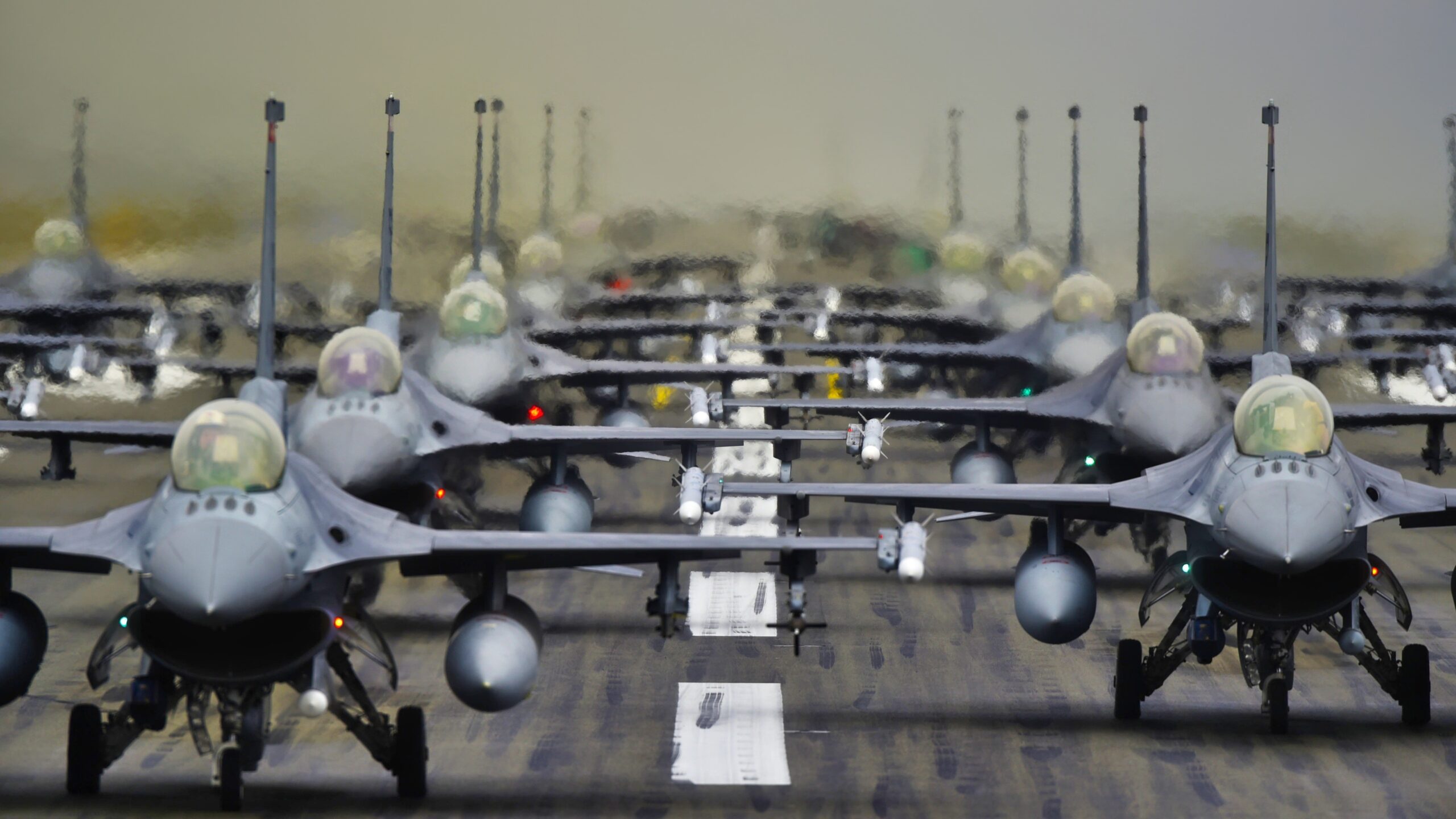
F-16 Fighter in a Elephant Walk. Image Credit: Creative Commons.
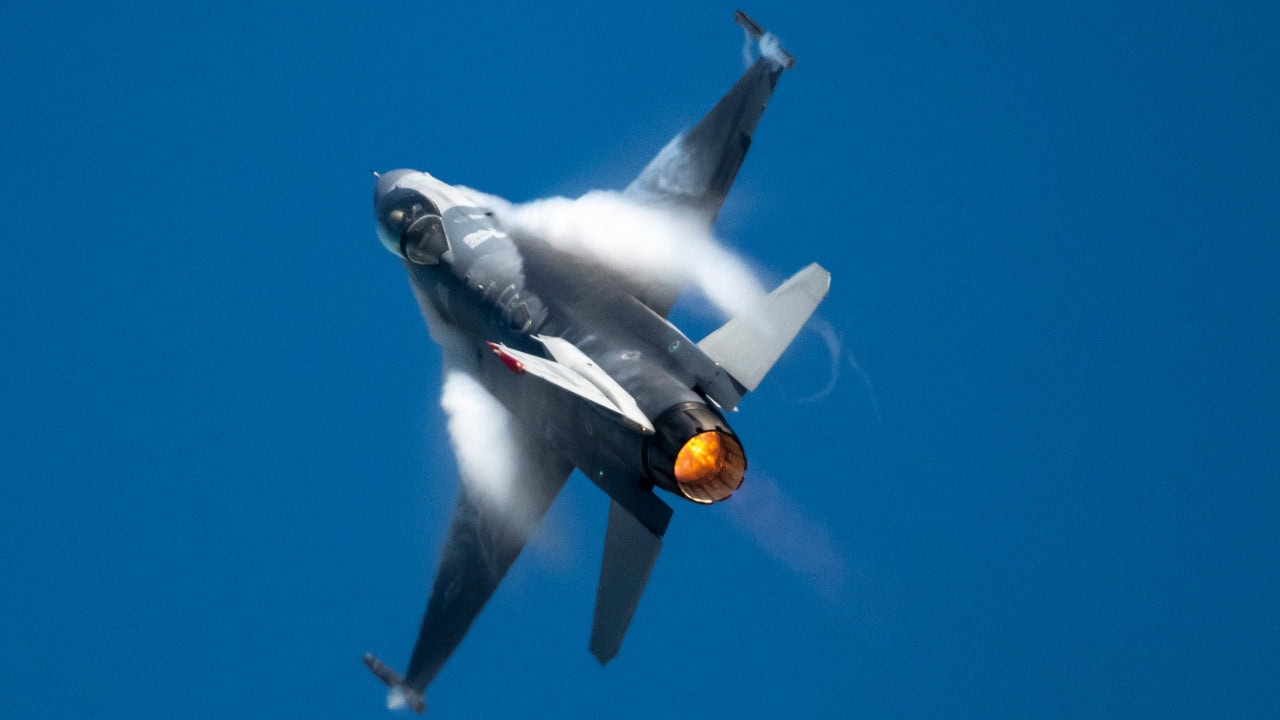
U.S. Air Force Capt. Ethan “Bantam” Smith, Pacific Air Forces F-16 Demonstration Team pilot, conducts a falcon turn during Misawa Air Fest at Misawa Air Base, Japan, Sept. 8, 2024. The demonstration team’s primary mission is to inspire goodwill and promote positive relations between the U.S. and partner nations across the Indo-Pacific region by showcasing displays of F-16 combat prowess and dedication to U.S. Air Force core values. (U.S. Air Force photo by Tech. Sgt. Peter Reft)
Concurrent with the new design philosophy was a recognition that a sophisticated fighter design could allow the Air Force to reduce its diverse selection of highly specialized aircraft in favor of a multirole aircraft capable of performing a wide variety of missions. It offered the prospect of broad standardization and simplified logistics.
In recognition of these priorities, the United States’ aerospace giants would develop the Teen Series of fighters—the F-16 was the smallest and lightest of the series. Small, relatively inexpensive, and extremely agile, the F-16 incorporated a number of design features that would be copied by later aircraft in the United States and abroad.
The F-16’s bubble canopy afforded pilots unprecedented visibility, and the jet’s unstable design—kept in level flight by the aid of a sophisticated fly-by-wire electronic flight control system—made the jet extremely maneuverable. These and other characteristics explain the jet’s enduring success despite its age.
Moving Forward
Successive upgrades yielded increasingly capable F-16 variants, affording the jet a profound multi-role capability.
The F-16’s radar was replaced with more powerful, modern alternatives; precision strike and electronic warfare capabilities were enabled by new electronic components; and optimized power plants gave the little fighter increased thrust, higher reliability, and improved fuel consumption. Conformal fuel tanks along the F-16 fuselage were another significant boon to the platform and did not compromise weapon space. Almost miraculously, parasitic drag did not dramatically increase, and the jet’s combat range rose dramatically.
Block 70, Block 72, and the Viper
Today’s Block 70, Block 72, and Viper aircraft are by far the most advanced F-16s. They are broadly similar. The Viper is an upgrade package that can be applied to older F-16 aircraft, whereas the Blocks 70 and 72 are new-build F-16s outfitted with General Electric or Pratt & Whitney engines, respectively.
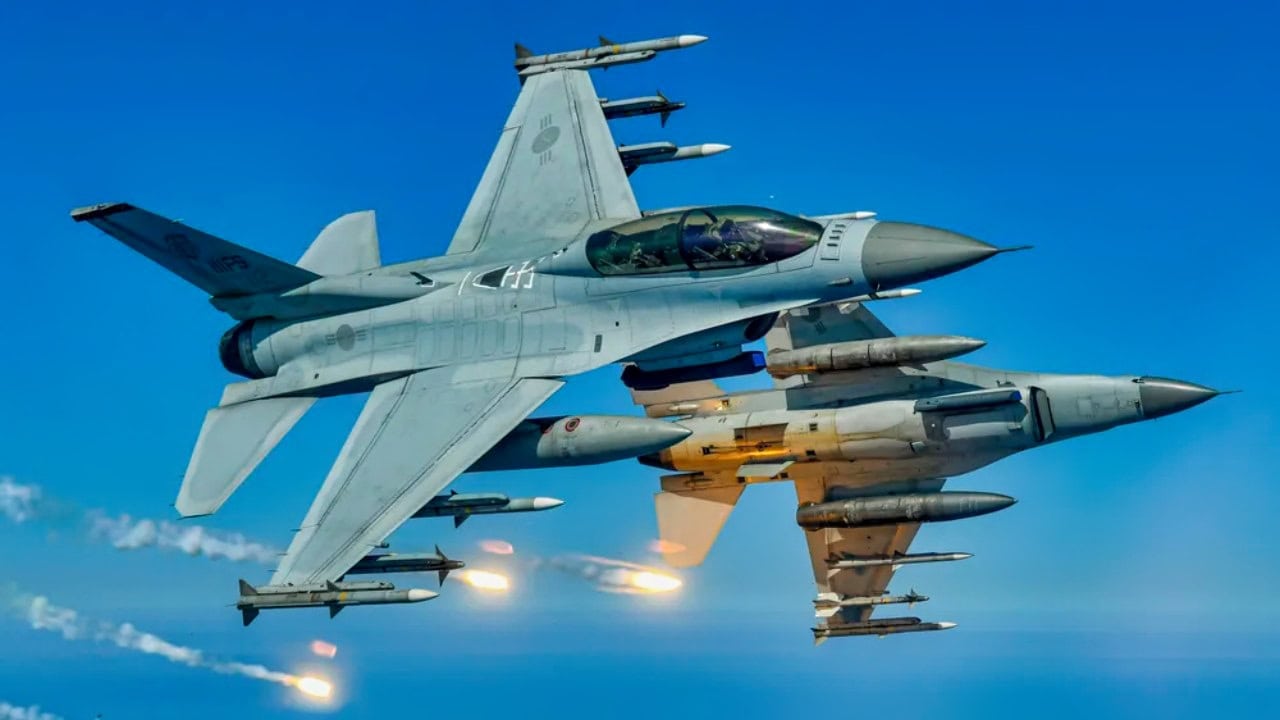
KF-16 Fighter. Image Credit: Creative Commons.
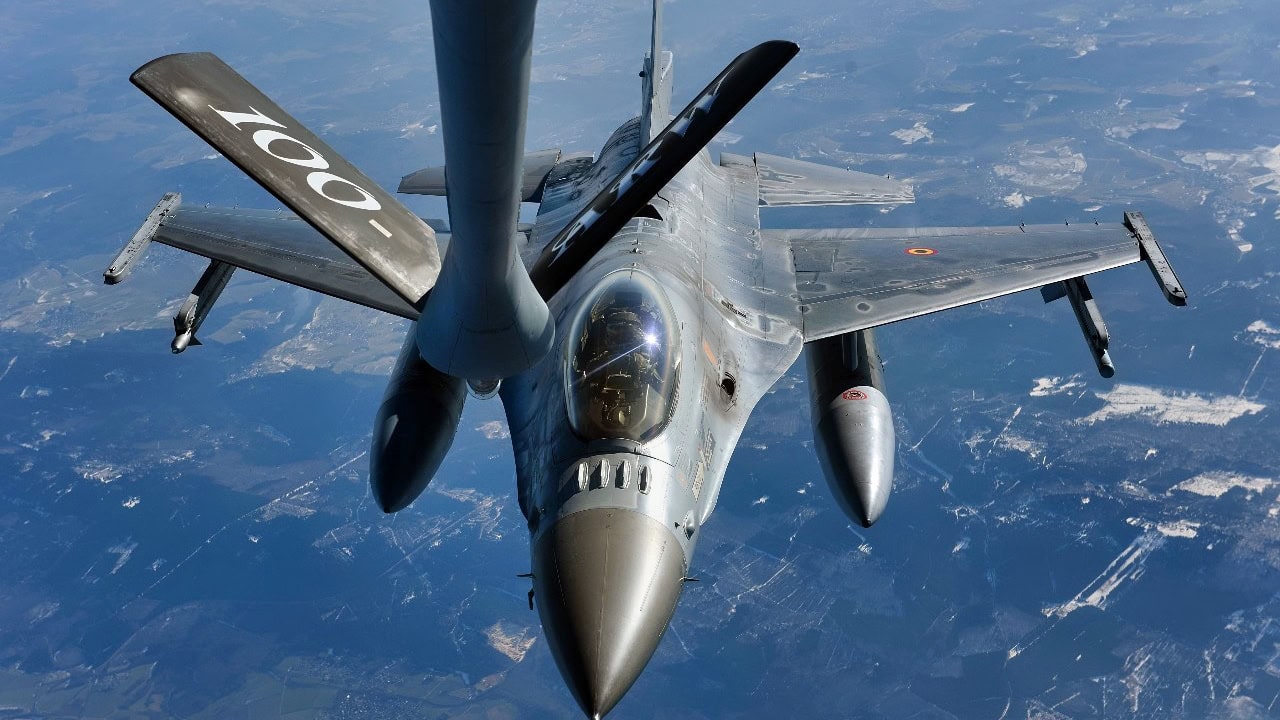
A Belgian Air Component F-16 flies behind a U.S. Air Force KC-135 Stratotanker from the 100th Air Refueling Wing, RAF Mildenhall, England, before receiving fuel over Germany, Feb. 23, 2018. The air refueling was part of a large force exercise with NATO allies including the Belgian, Dutch, French and German air forces. (U.S. Air Force photo by Airman 1st Class Luke Milano)
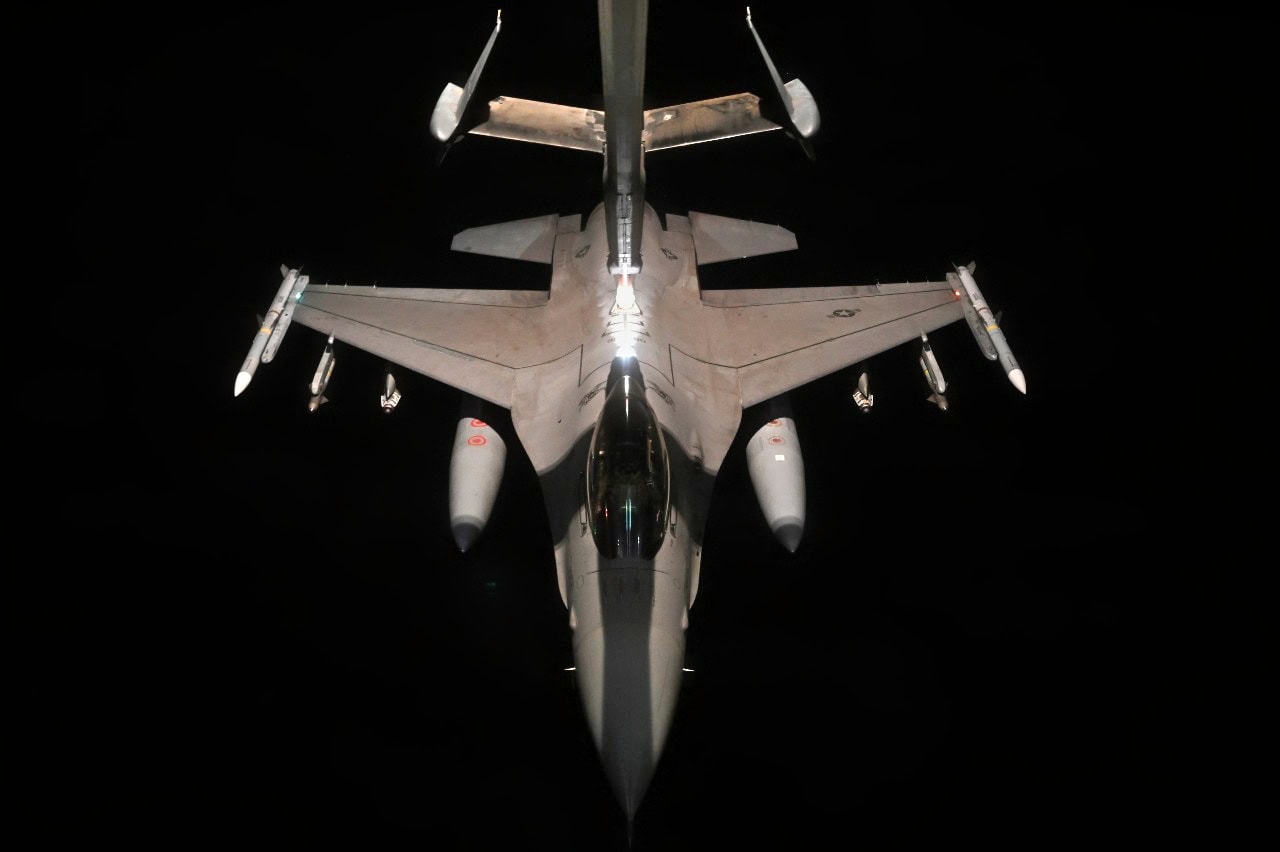
A U.S. Air Force F-16 Fighting Falcon assigned to the 77th Expeditionary Fighter Squadron, receives fuel from a KC-10 Extender assigned to the 908th Expeditionary Air Refueling Squadron, over an undisclosed location within the U.S. Central Command area of responsibility, Dec. 2, 2022. F-16 aircraft routinely conduct presence patrols within the CENTCOM AOR to reassure allies and ensure regional security. (U.S. Air Force photo by Staff Sgt. Gerald R. Willis)
The radar is one of the most significant upgrades to modern F-16s. Northrop Grumman, the firm that developed the radar, explains that the F-16’s “AN/APG-83 Scalable Agile Beam Radar (SABR) is an Active Electronically Scanned Array (AESA) fire control radar (FCR). It incorporates advanced technology and capabilities from Northrop Grumman’s family of fifth generation radars including the AN/APG-77 on the F-22 and the AN/APG-81 on the F-35.
“SABR was developed to provide the F-16 and other legacy platforms with a cost-efficient AESA modernization option, ensuring fleets remain operationally viable and sustainable for decades to come,” the firm explains. “Designed with a modular architecture and scalability in mind, SABR can be easily installed and integrated on a wide variety of aircraft with minimal modifications.”
The F-16’s mission computer and avionics are also modernized on new-build or upgraded F-16s, and they give the jet significantly increased processing power. But it is not just the F-16’s electric guts that have been upgraded: the jet’s airframe has also been strengthened and reinforced, extending its service life to 12,000 hours, or 500 days of continuous 24-hour flight.
The Skies Ahead
The F-16 has benefited from a concerted effort by Lockheed Martin to squeeze as much life as possible from a fourth-generation aircraft of 1970s vintage. The trend in combat aviation is toward stealthy fifth- and sixth-generation aircraft, and in that environment, the F-16 could struggle to survive, given its comparative lack of stealth capabilities. But in many other roles, the jet could thrive.
For countries that do not necessarily require a fleet of stealthy aircraft, the F-16 in its most upgraded variant is an attractive prospect. The F-16 benefits from decades of flight experience, robust supply chains, and a mature, reliable design.
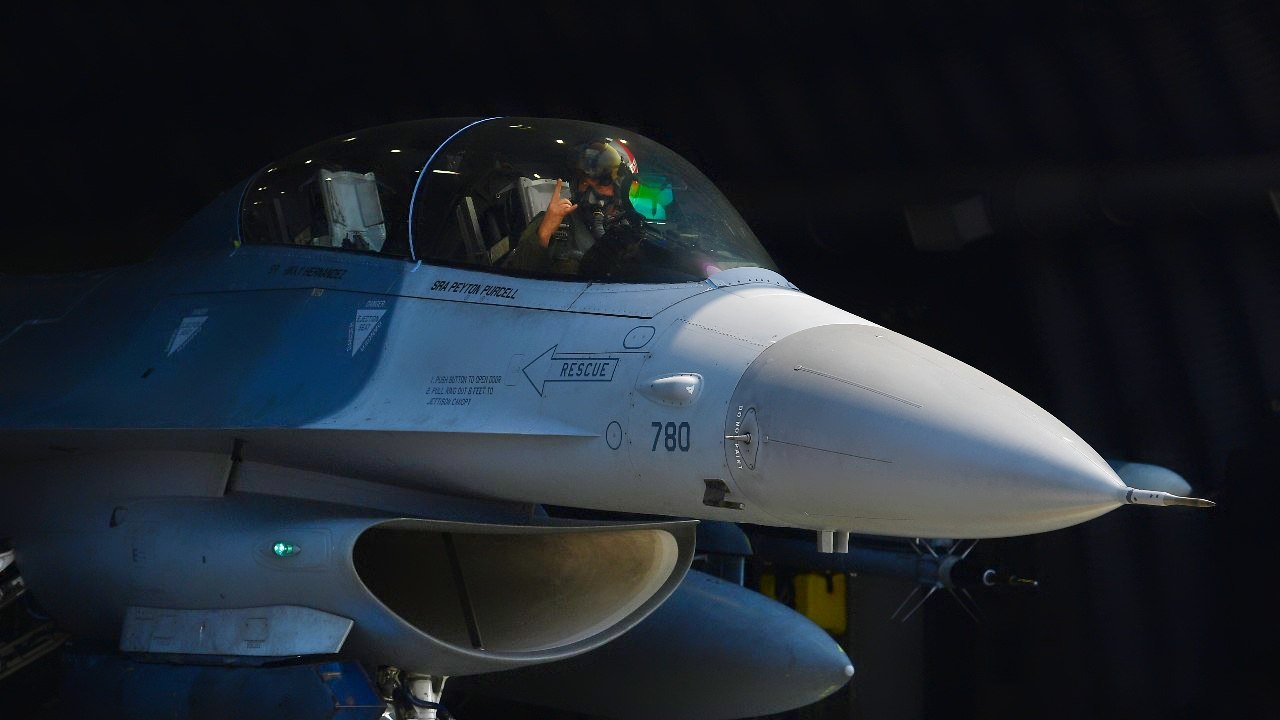
Capt. Michael Terry, 36th Fighter Squadron F-16 pilot, prepares to launch at Osan Air Base, Republic of Korea, July 9, 2020. The 36th Aircraft Maintenance Unit and the flight line operators wokred to make this aircraft mission-capable after being grounded for 186 days. (U.S. Air Force photo by Senior Airman Noah Sudolcan)
A brand-new Falcon would struggle to survive in highly-contested aerial environments, lacking the stealthy capabilities of more modern fighters like the multi-role F-35 or the F-22 Raptor.
But it can still perform air interception and homeland defense missions, as it does for some units within the National Guard, and for countries that don’t need or cannot afford stealthy aircraft.
About the Author: Caleb Larson
Caleb Larson is an American multiformat journalist based in Berlin, Germany. His work covers the intersection of conflict and society, focusing on American foreign policy and European security. He has reported from Germany, Russia, and the United States. Most recently, he covered the war in Ukraine, reporting extensively on the war’s shifting battle lines from Donbas and writing on the war’s civilian and humanitarian toll. Previously, he worked as a Defense Reporter for POLITICO Europe. You can follow his latest work on X.