
In 2026, 49 PLA Military Aircraft Approach Taiwan, Two Aircraft Carriers and Over a Hundred Ships Conduct Silent Blockade Drill
 Li Minghui
In November 2026, 49 PLA aircraft approached Taiwan, with two aircraft carriers and over a hundred ships conducting a silent blockade exercise
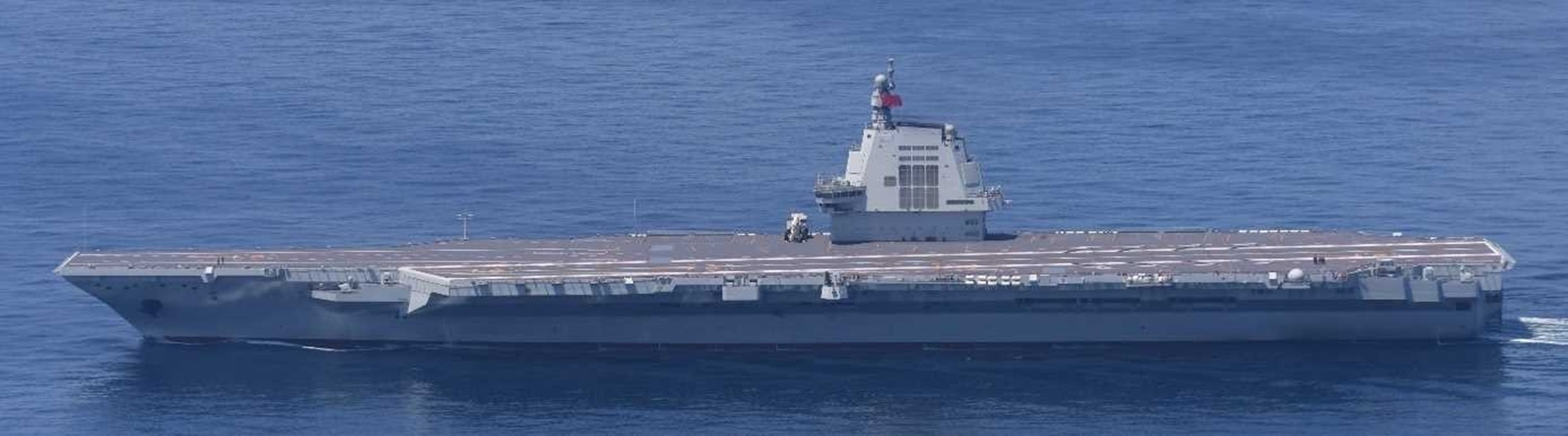
In early November, an unusual combination appeared around Taiwan: the Taiwanese defense department detected 49 PLA aircraft, 6 naval vessels, and 6 government ships within 24 hours, of which 31 crossed the median line of the Taiwan Strait and entered the airspace towards the main island of Taiwan; at the same time, Taiwan claimed that the Chinese Navy and Coast Guard had deployed over 100 vessels in the Western Pacific, with the Liaoning carrier group located in the Philippine Sea and the Fujian carrier operating in the South China Sea.
This is not an ordinary circumnavigation of Taiwan
The Taipei Times quoted Taiwanese defense expert Su Ziyun, who referred to this round of actions as a "silent exercise"—without a formal exercise code being announced, yet integrating air, naval, and Coast Guard forces within the same time window. This assessment is more significant than simply noting a "single-day record for aircraft numbers." While daily sorties can be manufactured through rotation, the simultaneous activity of aircraft carriers, naval surface vessels, and Coast Guard ships in multiple directions tests the PLA's scheduling, communication, and supply systems.
From an operational geometry perspective, the Liaoning in the Philippine Sea means that the PLA's carrier capabilities can exert pressure from the eastern side of Taiwan, while the Fujian in the South China Sea provides another direction of maritime presence. The presence of two aircraft carriers does not equate to two fully operational carrier strike groups, and publicly available information is insufficient to prove that they are both conducting high-intensity carrier operations. However, this division itself has already expanded Taiwan's early warning and maritime surveillance range to the east and south.
The real shortcoming lies in supply, not the number of vessels
The claim of over 100 vessels should be treated with caution, as it includes Coast Guard and government ships, which cannot simply be converted into combat formations. However, the inclusion of Coast Guard forces in a large-scale maritime deployment indicates that Beijing may not be testing the traditional notion of "strike first, then blockade," but rather layering military deterrence, law enforcement narratives, and gray zone pressure. For Taiwan, this increases the political costs of recognition and response; for the PLA, it requires stable maritime supply, maintenance, and command chains to support operations.
Public reports indicate that the number of military aircraft recorded by Taiwan subsequently fell back to 22, but naval vessels and government ships continued to operate in the vicinity. This fluctuating rhythm may be measuring Taiwan's response or could be a natural result of phased operations. The author believes that one cannot conclude from a single peak of 49 aircraft that the PLA has completed preparations for a blockade operation; however, if similar actions can be sustained over several days in the future, with signs of coordinated refueling, supply, and early warning aircraft, the nature would shift from "demonstrating presence" to "validating a closed loop."
Pressure in the Taiwan Strait is shifting from sortie competition to system competition
This operation also occurred after the United States, Japan, and South Korea reaffirmed their commitment to maintaining stability in the Taiwan Strait, and the political signals are clearly not just aimed at Taiwan. The PLA is more likely to use this to demonstrate that even without announcing large-scale military exercises, it can simultaneously maintain activities in multiple maritime and aerial directions in the Western Pacific. The issue is that the cost of such high-frequency operations is not low, especially concerning carrier aircraft support, long-range communications, and the coordination of rules between the Coast Guard and Navy.
The most noteworthy observation is not the number of 49 aircraft, but whether the PLA can transform a one-time peak into repeatable and sustainable maritime and aerial coordination.
Currently, publicly available information still cannot confirm whether the Fujian and Liaoning have conducted carrier aircraft training of equal intensity, nor can it confirm the complete formation of over a hundred vessels. The real question worth asking is: will the next "silent exercise" feature more stable supply nodes and an eastern early warning network—this would provide an answer closer to the PLA's actual blockade capabilities than a single day's sorties.
Sources
- Taiwan News, November 4, 2026, reporting on the deployment of over a hundred naval and Coast Guard vessels, the Liaoning, and the Fujian in the Western Pacific.
- TaiwanPlus, November 3, 2026, statistics on 49 aircraft, 6 naval vessels, and 6 government ships.
- Taipei Times, November 4, 2026, expert analysis on "silent exercises" and gray zone pressure.
The People's Liberation Army conducted military exercises near Taiwan in November 2026, involving 49 aircraft and over 100 naval vessels. The Liaoning and Fujian aircraft carriers were deployed in the Philippine Sea and South China Sea, respectively. This operation is characterized as a 'silent drill' aimed at testing Taiwan's military response capabilities. Following the initial surge, Taiwan noted a reduction in aircraft presence, indicating a potential assessment of Taiwan's reaction.
- 49 PLA aircraft approached Taiwan, with 31 crossing the median line of the Taiwan Strait.
- Over 100 Chinese naval and coast guard vessels were reported in the Western Pacific.
- The Liaoning aircraft carrier was positioned in the Philippine Sea, while the Fujian carrier operated in the South China Sea.
- Taiwan recorded a decrease in military aircraft presence to 22 after the initial surge.
- The PLA's actions are interpreted as a test of Taiwan's response capabilities.